
Make the Most of Your Trip
Compare the top tours, passes, and experiences — find what fits your travel style.
Short Excerpt
- Coffee can help you stay alert through a late airport departure or an early arrival, but caffeine taken too close to your intended sleep window can make already-fragile airplane sleep even harder.
- Caffeine has an average half-life of roughly five hours, so a cup that no longer feels stimulating can still leave a meaningful amount active in your body when you are trying to sleep.
- The best red-eye strategy depends on your goal: use caffeine earlier when you want to sleep onboard, or time it closer to the alert period you need when staying awake or functioning after arrival matters more.
Quick Take
- Decide when you actually want to sleep before deciding when to drink coffee; departure time alone is not enough.
- If you want meaningful sleep on the red-eye, stopping caffeine at least about six hours before your intended sleep window is a practical starting point, and sensitive sleepers may need a longer gap.
- Daily coffee drinkers who develop headaches or fatigue when they abruptly stop may do better with a smaller dose earlier rather than a strong cup close to boarding.
- Caffeine can improve alertness, but it cannot replace lost sleep or restore judgment and reaction time to the level you would have after adequate rest.
- If your red-eye crosses time zones, use caffeine to support the destination schedule rather than automatically drinking it whenever fatigue hits.
- Light, movement, food timing, hydration, and short destination naps can support alertness without leaving hours of stimulant activity competing with your next sleep period.
Coffee On a Red-Eye? Time Caffeine Around the Sleep You Actually Want
The wrong question before a red-eye is simply, “Should I drink coffee?”
The more useful question is, “When do I need to be awake, and when do I need to sleep?”
Coffee can be genuinely useful when you are finishing a workday, navigating a busy airport, managing children through boarding, or trying to remain functional after an early-morning arrival.
The problem begins when the caffeine helping you through the terminal is still active several hours later when you finally recline your seat and expect your brain to switch off.
Caffeine does not disappear when the buzz fades.
Its average half-life is roughly five hours, with considerable variation between people, which means a meaningful portion of an evening coffee can remain in your system during an overnight sleep attempt.
If sleeping on the airplane is your priority, work backward from the time you expect to close your eyes rather than from departure.
Stopping caffeine at least about six hours before that sleep window is a useful starting point for many adults, while people who already know that afternoon coffee affects their nighttime sleep may need to stop earlier.
That can make a 10:00 PM red-eye very different from an ordinary late night.
If you hope to sleep from roughly 11:00 PM until 4:00 AM, a strong coffee at 8:00 or 9:00 PM may solve airport fatigue while creating a much bigger problem once the cabin lights dim.
Daily coffee drinkers have another consideration: caffeine withdrawal.
Abruptly skipping the caffeine your body normally expects can contribute to headache, fatigue, irritability, and difficulty concentrating, so going from several daily cups to nothing on travel day is not always the most comfortable strategy.
A smaller coffee earlier in the day can be a better compromise when withdrawal is a concern.
You preserve some of your usual routine without stacking a large caffeine dose directly on top of the sleep period you are trying to protect.
There are also red-eyes where sleeping onboard is not the primary goal.
A short overnight segment, complicated connection, very early landing, or immediate work obligation may make sustained alertness more useful than chasing an hour of poor cabin sleep.
In that situation, caffeine can be used strategically, but remember what it cannot do.
Feeling more awake does not erase sleep debt, so driving long distances, handling demanding work, or making important decisions after landing still deserves caution when you have been awake most of the night.
Time-zone changes add one more layer.
If the red-eye is part of an eastbound or westbound trip, coordinate caffeine with the destination’s daytime whenever practical so it supports the schedule your body needs to adopt instead of extending the one you just left.
Coffee therefore works best on a red-eye when it has a job.
Use it to support a specific alert period, stop early enough to protect the sleep you want, and let light, movement, food, hydration, and your arrival schedule handle some of the work instead of asking caffeine to carry the entire night.
The Real Role Coffee Can Play on a Red-Eye
Coffee is not only a drink.
It is a timing decision that affects your nervous system for hours.
Caffeine changes alertness, reaction time, and perceived energy, which can be helpful when you are navigating airports or finishing work late.
It can also increase sleep latency, which is the time it takes you to fall asleep after you try.
If your goal is sleep on the plane, coffee too close to departure can push sleep farther away than you expect.
If your goal is staying awake until arrival, coffee can be the difference between steady focus and a foggy, irritable night.
The reason this decision feels confusing is that caffeine has two faces.
The first face is the immediate boost, which many people feel within about 15 to 45 minutes.
The second face is the lingering effect, which can persist long after you stop “feeling” caffeinated.
That lingering effect is shaped by caffeine half-life, which is the amount of time it takes your body to eliminate about half of the caffeine you consumed.
Half-life varies by person, but the practical takeaway is simple.
If you drink coffee late, a meaningful amount can still be active in your system when you want to sleep.
That is why coffee can feel like it “should be gone” while your brain still refuses to power down.
Coffee Is A Strategy
Caffeine timing is a planning lever, not a harmless habit, on an overnight flight.
Sleep Latency Is The Cost
Coffee close to bedtime often increases the time it takes to fall asleep.
Lingering Effects Are Real
Caffeine can still be active even when you no longer feel the buzz.
The Pros Of Coffee Before A Red-Eye
Coffee can be genuinely useful on a red-eye when you use it intentionally.
The airport environment includes bright lighting, constant movement, and a steady stream of small decisions.
If you are tired, those conditions can create mistakes like leaving items behind, boarding flustered, or missing key announcements.
Coffee can help you stay steady through that preflight complexity.
This is especially true for business travelers who are finishing a workday and heading straight to the airport.
It is also helpful for parents who want enough energy to manage bedtime routines for kids on the plane.
Coffee can also reduce stimulant rebound risk when you are withdrawing from your usual daily caffeine pattern.
Stimulant rebound is the crash you feel when stimulation fades, often including headache, irritability, and heavy fatigue.
If you are a daily coffee drinker and you skip caffeine entirely, you may feel that rebound during boarding or early flight.
That can increase anxiety, increase tension, and make the whole experience feel worse.
In those cases, a smaller coffee earlier can smooth your baseline without sabotaging sleep later.
The key is dose and timing, not an all-or-nothing approach.
Coffee can also be a tool for strategic wakefulness.
Some red-eye itineraries are not designed for sleep.
If you have a short overnight segment, multiple connections, or a landing time that requires immediate functioning, you may choose alertness over cabin sleep.
In that scenario, coffee becomes a way to keep your attention steady without relying on sugar snacks or constant screen stimulation.
If you choose this route, you should plan your landing recovery, because caffeine can mask fatigue while your body is still depleted.
The win is arriving functional, not arriving wired and depleted.
Coffee Can Stabilize
A small, timed dose can improve focus during busy airport steps and boarding.
Withdrawal Matters
Daily coffee drinkers may feel worse when they cut caffeine abruptly before a night flight.
Wakefulness Can Be Strategic
Some travelers choose alertness deliberately when sleep is unlikely or the schedule demands it.
The Cons Of Coffee Before A Red-Eye
The most obvious downside is that coffee can reduce your ability to sleep on the plane.
That is not only about feeling awake.
It is about your brain being less willing to enter deep, stable sleep.
Coffee can increase sleep latency and increase sleep fragmentation, which means you wake more often once asleep.
That is a painful combination on a red-eye because cabin sleep is already fragile.
If you add caffeine, you may turn fragile sleep into no sleep.
Coffee can also increase physical sensations that make anxious flyers feel worse.
It can raise heart rate, increase jitteriness, and amplify the sense that your body is on alert.
For people who are already scanning for turbulence or worried about the flight, caffeine can increase that “wired” feeling.
It does not create danger, but it can create discomfort that feels like danger.
Parents also notice this in kids and teens who rarely have caffeine, because the stimulation can look like restlessness.
If your travel goal is a low-stress cabin experience, caffeine may work against you.
Coffee can also create a rebound crash at a bad time.
Stimulant rebound can happen when the caffeine wears off and your underlying sleep debt surfaces suddenly.
If that crash hits during a connection, it can make you sluggish and less flexible.
If it hits after landing, it can make the first morning feel harsh.
This is one reason some travelers feel “fine” on the plane, then suddenly feel wrecked at breakfast.
It is not always jet lag.
Sometimes it is the caffeine arc plus sleep loss catching up at once.
Coffee also interacts with hydration.
Caffeine is not purely dehydrating in typical daily amounts for most regular users, but coffee can still increase bathroom trips for many people.
Frequent restroom trips fragment rest and reduce your chance of getting meaningful sleep blocks.
Dry cabin air already pushes you toward discomfort, and constant movement adds to it.
So the coffee decision is not only about sleep.
It is also about minimizing interruptions in a setting where interruptions are already constant.
Caffeine Can Block Sleep
Coffee often increases sleep latency and fragmentation in an environment where sleep is already fragile.
Anxiety Can Feel Louder
Caffeine can amplify physical sensations that make nervous flyers feel more alert than they want.
Rebound Can Hit Hard
A crash after caffeine can make the first morning feel harsher than expected.
Who Should Avoid Coffee Before A Red-Eye
Not everyone needs to avoid coffee.
But some travelers benefit from a clear “skip it” rule because the downside is predictable.
If you know you are sleep-sensitive, meaning you struggle to fall asleep or stay asleep, coffee late in the day often harms more than it helps.
If you are an anxious flyer, caffeine can magnify vigilance and physical symptoms.
If you are traveling with kids and you need your own sleep to stay patient the next day, caffeine can undermine your recovery.
If you are older and you notice that caffeine lingers, your system may clear it more slowly, making late coffee a stronger sleep disruptor.
You should also avoid coffee close to departure if you have an early meeting or high-stakes driving plan after landing.
It is easy to overestimate what caffeine can do.
Coffee can make you feel awake while your reaction time and judgment are still affected by sleep loss.
If you must drive after landing, especially in an unfamiliar city, you want true rest, not only stimulation.
In those cases, a more conservative caffeine approach is safer for your performance.
The goal is steady functioning, not a temporary buzz.
Sleep-Sensitive Travelers
If caffeine reliably delays your sleep, skip late coffee and protect rest instead.
Anxious Flyers
If caffeine increases physical anxiety sensations, it can make the flight feel harder than it needs to.
High-Stakes Mornings
When you need genuine performance after landing, prioritize sleep over stimulation.
Alternatives That Give You Energy Without Wrecking Sleep
If your goal is to stay steady during the airport process but still sleep, the best alternative is not “no plan.”
It is a smaller plan.
You can use light, movement, hydration, and food timing to create alertness without hours of lingering stimulation.
This works because your nervous system responds to cues beyond caffeine.
You are not powerless without coffee.
You just need different levers.
Start with light exposure at the right time.
Bright light in the airport keeps you alert, which can be useful while you navigate.
Then you can reduce light intentionally once you are ready to sleep by dimming screens and using an eye mask.
This supports melatonin signaling and reduces the “it still feels like daytime” problem.
If you do one thing, reduce blue light and screen brightness in the last stretch before trying to sleep.
This is a simple change with a real impact for many travelers.
Use a small snack plan instead of a sugar spike.
A light protein-forward snack can stabilize energy without the rollercoaster of candy and soda.
Avoid heavy meals late because reflux and discomfort increase wakeups.
Hydrate earlier, then taper near your sleep attempt so you are not waking repeatedly.
If you want a warm, comforting drink without caffeine, consider decaf coffee or herbal tea.
The ritual can be soothing without the stimulant effect.
Movement is another underused tool.
A short walk in the terminal and gentle stretching can raise alertness without lingering stimulation.
It also reduces stiffness and improves comfort once you are seated.
For business travelers, this can be a practical way to transition from work mode to travel mode.
For sleep-sensitive travelers, it reduces tension that can keep the nervous system awake.
When your body feels less tight, your brain is more willing to rest.
If you are trying to reduce stress before a red-eye, planning is an energy tool too.
When your logistics are unclear, your brain stays on watch.
When your plan is set, you stop spending mental fuel on what-ifs.
If a delay would create expensive ripple effects, travel insurance through VisitorsCoverage, World Nomads, EKTA, or Insubuy can reduce financial stress depending on the plan you choose.
If you hit a disruption where compensation pathways apply, AirHelp or Compensair can help you navigate it without turning your night into guesswork.
This kind of planning saves energy because it reduces background worry.
Light Is A Stimulus
Use bright light for airport alertness, then reduce light to support sleep readiness.
Food Can Stabilize
Choose light snacks and avoid heavy late meals to reduce discomfort and wakeups.
Planning Saves Energy
Clear logistics reduce mental vigilance, which can matter as much as caffeine for feeling steady.
A Caffeine Timeline Chart You Can Picture Quickly
A simple timeline makes this decision easier because you stop guessing.
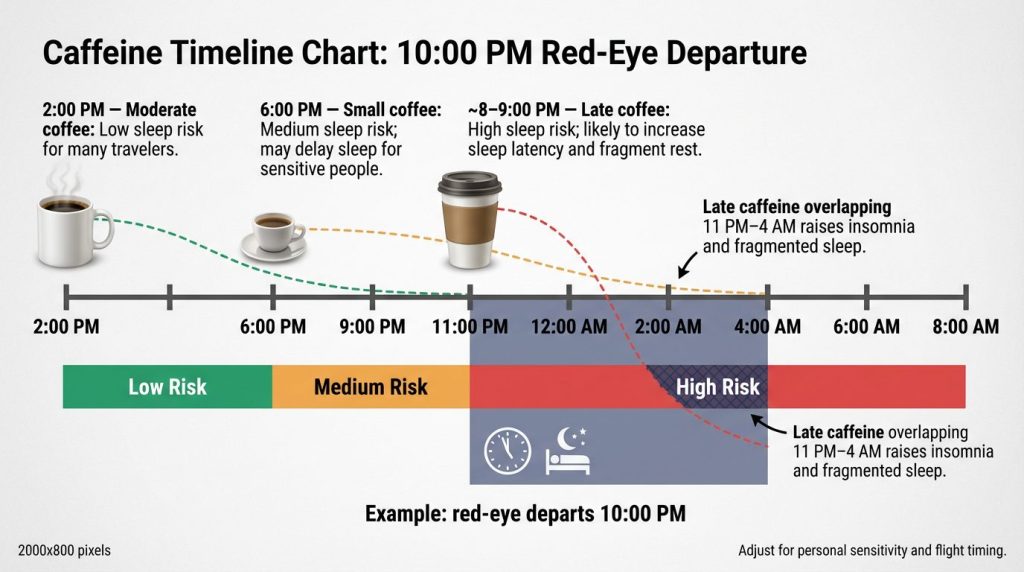
Imagine your red-eye departs at 10:00 PM.
Now imagine three caffeine windows.
Window one is earlier afternoon, which supports alertness without colliding with bedtime for many people.
Window two is early evening, which can help you get through the airport but may still delay sleep if you are sensitive.
Window three is within a few hours of departure, which is the window most likely to increase sleep latency and fragment rest.
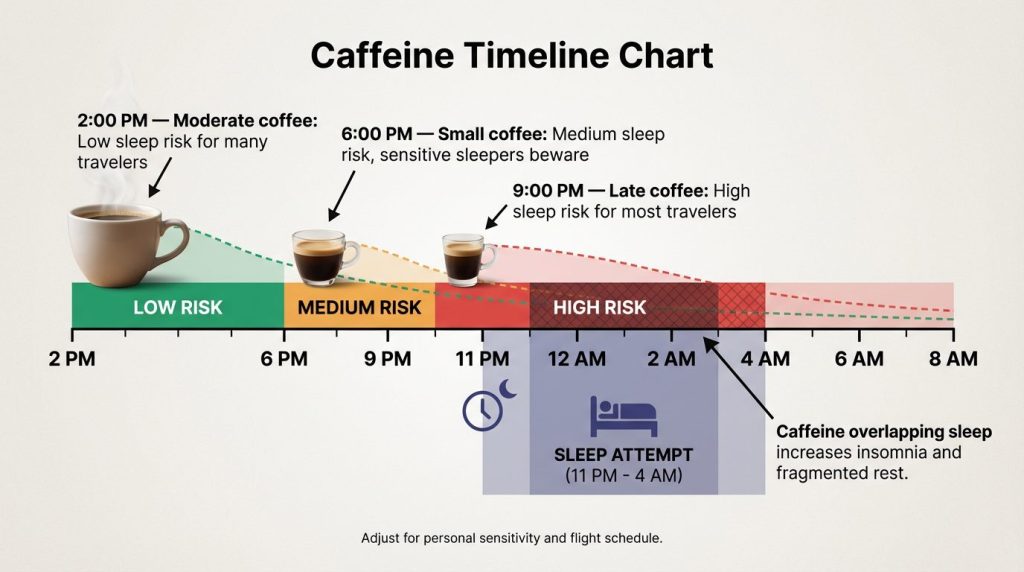
Visual Aid: Caffeine Timeline Chart
Timeline begins at 2:00 PM and ends at 8:00 AM the next day.
At 2:00 PM, a moderate coffee is shown as “low sleep risk” for many travelers.
At 6:00 PM, a smaller coffee is shown as “medium sleep risk,” especially for sleep-sensitive people.
At 9:00 PM, caffeine is shown as “high sleep risk” for most travelers who want to sleep on the plane.
A shaded sleep attempt block begins around 11:00 PM and runs to about 4:00 AM.
The chart illustrates that caffeine taken late overlaps that sleep block, increasing the chance of insomnia or fragmented rest.
Timing Beats Willpower
Caffeine timing shapes sleep more than your intention does.
Smaller Can Be Smarter
A half-caf or smaller dose earlier can reduce withdrawal without wrecking sleep.
Late Caffeine Has A Cost
Coffee close to departure often turns a sleep plan into a long, restless night.
Your Simple Caffeine Rule for Red-Eye Success
If you want to sleep on your red-eye, treat coffee like a “no later than early evening” tool.
For many travelers, that means caffeine earlier in the day, then tapering down well before boarding.
If you are a daily coffee drinker and you fear withdrawal, choose a smaller dose earlier rather than a strong dose late.
If you are a business traveler who must stay alert, choose coffee with a plan for light exposure, hydration, and a controlled nap strategy at the destination.
If you are sleep-sensitive or anxious, skipping coffee close to departure is often the most reliable path to a smoother flight.
The best decision is the one that matches your goal, because red-eye success is about alignment, not toughness.
FAQ – When Should You Drink Coffee on a Red-Eye Without Sacrificing the Sleep You Need?
How Long Before Sleeping on a Red-Eye Should You Stop Drinking Coffee?
About six hours before your intended sleep period is a practical starting point for many travelers.
Caffeine’s average half-life is around five hours, so a substantial amount can remain active long after you stop feeling an obvious boost.
People who are particularly sensitive to caffeine may need an even longer cutoff.
Work backward from when you want to sleep rather than simply deciding that coffee is safe because the flight has not departed yet.Why Can Evening Coffee Still Affect You Hours Later?
Caffeine is metabolized gradually rather than disappearing when its noticeable stimulation wears off.
If you consume it in the evening, part of the original dose can still be circulating when you try to sleep several hours later.
That can make it harder to fall asleep or contribute to lighter, more fragmented rest.
The effect becomes especially noticeable on an airplane because cabin sleep is already vulnerable to noise, light, seating position, and interruptions.Is Afternoon Coffee Usually Safer Than Coffee at the Gate?
Usually, when sleeping during the flight is your priority.
An afternoon dose gives your body more time to metabolize the caffeine before an overnight sleep attempt.
A strong coffee shortly before boarding creates much more overlap between stimulant activity and the hours you hope to spend asleep.
Your personal sensitivity still matters, so use your normal response to afternoon caffeine as a guide.What Should Daily Coffee Drinkers Do Before a Red-Eye?
Avoid assuming you must suddenly eliminate all caffeine on travel day.
People who regularly consume caffeine can experience withdrawal symptoms such as headache, fatigue, irritability, and difficulty concentrating when they abruptly stop.
A smaller amount earlier in the day may help maintain your normal baseline without interfering as much with overnight sleep.
The goal is to reduce late stimulation rather than make the entire travel day unnecessarily uncomfortable.Can Coffee Help If You Need to Stay Awake Instead of Sleep on the Flight?
Yes.
Caffeine can be useful when the overnight segment is short, you have an important connection, or your schedule makes staying alert more practical than attempting a brief period of cabin sleep.
Time the dose around the period when alertness actually matters rather than drinking repeatedly throughout the night.
Remember that stimulation can mask fatigue without replacing the restorative effects of sleep.When Should You Drink Coffee If You Need to Be Alert After Landing?
Use destination time as the reference whenever jet lag is involved.
Caffeine during the destination’s daytime can support alertness while you work toward the local schedule.
Avoid taking it so late that it interferes with the first meaningful sleep period at your destination.
A useful arrival strategy should help you reach local bedtime rather than keep you artificially awake long after it.Can Coffee Make a Nervous Red-Eye Flight Feel Worse?
It can for some travelers.
Caffeine can contribute to jitteriness, a faster heartbeat, restlessness, or a heightened sense of alertness, which may be uncomfortable when you are already anxious about flying.
Those sensations can feel particularly noticeable in a dark, quiet cabin where you are paying close attention to every physical change.
Travelers who know caffeine amplifies their anxiety may prefer a smaller earlier serving, decaf, or no late caffeine at all.Does Coffee Dehydrate You on a Red-Eye?
Coffee should not automatically be treated as though every cup causes net dehydration.
Caffeinated beverages still contribute fluid, particularly for people accustomed to caffeine.
The bigger practical issue on a red-eye may be that drinking a large coffee increases your need to use the restroom and interrupts the limited sleep opportunity you have.
Drink water normally through the travel period and avoid using coffee as your primary hydration strategy.What Can Keep You Alert Before Boarding Without Late Caffeine?
Light, movement, food, and planning can all help.
A walk through the terminal, bright light while you still want to be awake, and a light meal or snack can support alertness without leaving several hours of caffeine in your system.
Once you are ready to sleep, lower screen brightness and environmental light so your behavior starts reinforcing rest instead.
Decaf coffee or a caffeine-free warm drink can preserve the ritual when the drink itself is part of what you enjoy.What Is the Simplest Coffee Rule for a Red-Eye Flight?
Choose your sleep window first and build your caffeine timing around it.
If you want to sleep onboard, stop caffeine well beforehand, with roughly six hours providing a useful starting point and longer being appropriate for sensitive sleepers.
If staying awake is the priority, use a modest amount strategically instead of drinking coffee continuously throughout the night.
Red-eye caffeine works best when every cup has a specific purpose rather than becoming an automatic response to feeling tired.