Short Excerpt
- Philadelphia is easiest to explore when you organize attractions into Old City, Center City and Reading Terminal Market, the Benjamin Franklin Parkway, and the Delaware River waterfront rather than crossing the city repeatedly.
- Independence Hall and the Liberty Bell belong in the same historic block, while the Philadelphia Museum of Art, Barnes Foundation, and Franklin Institute create a separate museum-focused day or half-day.
- Reading Terminal Market works especially well as a planned meal break between sightseeing clusters, while Eastern State Penitentiary, Philadelphia’s Magic Gardens, and Spruce Street Harbor Park add very different experiences beyond the headline landmarks.
Quick Take
- Start Old City with a timed Independence Hall visit, then add the Liberty Bell, National Constitution Center, Elfreth’s Alley, or another nearby historic stop.
- Keep the Philadelphia Museum of Art, Barnes Foundation, and Franklin Institute together because the Parkway makes them easier to combine without unnecessary transportation.
- Use Reading Terminal Market as a destination meal stop rather than treating lunch as an afterthought between reservations.
- Give Eastern State Penitentiary or Philadelphia’s Magic Gardens their own place in the schedule instead of squeezing both into an already crowded day.
- Save the Delaware River waterfront for later when seasonal parks, walking, and evening light can provide a slower finish after museums and historic sites.
- Compare attraction passes only after choosing the paid places you genuinely want to visit, since several major historic and outdoor experiences cost little or nothing to enter.
Plan Philadelphia by Neighborhood So History, Museums, Food, And the River Fit into the Same Trip
Philadelphia rewards travelers who organize the city into walkable sightseeing clusters rather than building a list of attractions in isolation.
Old City should usually become the historic anchor.
Independence Hall, the Liberty Bell Center, National Constitution Center, Independence Mall, and Elfreth’s Alley sit close enough that you can move through several centuries of American history without spending the morning getting in and out of cars.
Independence Hall deserves to set the schedule because timed entry can determine the order of everything around it.
Reserve that visit first, allow extra time for security, and then fit more flexible stops such as the Liberty Bell around it rather than creating a rigid sequence of back-to-back reservations.
Center City gives you a natural transition from history into food and architecture.
Reading Terminal Market can serve as an actual meal destination instead of a rushed snack stop, while City Hall, LOVE Park, and nearby streets make it easy to continue sightseeing without immediately committing to another large museum.
The Benjamin Franklin Parkway is a different kind of day.
The Philadelphia Museum of Art, Barnes Foundation, and Franklin Institute sit within the same broader cultural corridor, so choose one major museum as the anchor and add a second only when your interests and energy justify it.
Trying to experience all three deeply in one day usually creates more museum fatigue than value.
The Philadelphia Museum of Art suits travelers who want a broad collection and one of the city’s most recognizable settings.
The Barnes Foundation feels more concentrated and distinctive, while the Franklin Institute shifts the day toward hands-on science and works especially well for families.
Philadelphia also rewards visitors who leave the obvious route.
Eastern State Penitentiary provides a dramatically different historic experience from Old City, while Philadelphia’s Magic Gardens turns a South Street stop into something visual, intimate, and unlike the city’s traditional museums.
Families can build another day around the Please Touch Museum and Fairmount Park rather than forcing children through an adult-oriented checklist.
That combination gives them a substantial indoor anchor plus outdoor space where the pace can become more flexible.
Then there is the river.
Spruce Street Harbor Park, when operating seasonally, and the broader Delaware River waterfront work best as a late-day change of rhythm after structured attractions.
Instead of adding another admission ticket, you can walk, sit by the water, eat nearby, and let the city shift into evening.
Transportation should follow these clusters.
Walking handles much of Old City and individual museum areas, while transit, seasonal visitor transportation, rideshare, bikes, or other options become more useful when you are connecting the Parkway, riverfront, South Street, and farther-out attractions.
Philadelphia can also be surprisingly friendly to a mixed free-and-paid itinerary.
The Liberty Bell, historic streets, public squares, portions of Independence National Historical Park, City Hall surroundings, and riverfront walks can occupy substantial time without another major admission charge.
That makes attraction passes a math problem rather than an automatic purchase.
Choose your paid attractions first, compare their individual prices with the pass, and buy the pass only when it supports the itinerary you already want rather than encouraging you to race through extra attractions simply to justify the cost.
For one day, prioritize one major historic cluster and one contrasting experience.
For two days, Old City and Center City can anchor the first, while the Parkway, Fairmount, South Street, or the waterfront can shape the second.
Philadelphia feels much larger when you zigzag across it.
Grouped intelligently, the same city becomes remarkably manageable, leaving more time for the history, art, food, and neighborhoods that make the trip worth taking.
Discover Museum Depth with Short Lines and Strong Stories
Philadelphia’s museums do more than fill a rainy hour; they set the pace for a great trip.
They offer depth without draining the day, and they’re arranged so you can pair a headline collection with a second, shorter stop without backtracking.
Start with a single anchor—the Philadelphia Museum of Art for paintings and sculpture, the Barnes Foundation for its unique wall arrangements, or The Franklin Institute for hands-on science—and then layer a nearby surprise so curiosity has room to breathe.
The Parkway geography does heavy lifting: you can walk between institutions, sit in shade rings, and time a coffee without climbing into a car.
Timed entries tame crowds, mobile tickets shrink lines, and a well-chosen guided hour multiplies everything you’ll notice afterward.
If weather wobbles, this cluster becomes your flexible core—swap indoor and outdoor pieces without losing the thread of the day.
Families and mixed-mobility groups benefit from ramps, elevators, benches, and clear sightlines that keep the pace humane.
The result is simple: fewer stops that deliver more satisfaction, and energy left for river light at the end.
Philadelphia Museum of Art
Wide steps, light-washed galleries, and a collection that rewards an unhurried hour.
Go early for calmer rooms, or late afternoon for warm window light and softer crowds.
Pick two focus lanes—say, Impressionism and American moderns—then allow one wildcard room to surprise you.
Benches and sightlines are generous, so pauses don’t break momentum; plan 90–120 minutes if you’re balancing a Parkway loop.
Elevators and ramps are well signed; add a few minutes for lift transfers between wings.
For photos, the grand staircase and terrace deliver skyline frames without leaving the grounds; blue hour from the terrace can be quietly spectacular.
If hunger hits, decide your snack stop before you enter so you don’t spend museum energy debating food afterward.
Planning Help — Day Pass Logic (Go City, when coverage aligns):
Pairing the Art Museum with the Barnes Foundation or The Franklin Institute typically crosses the point where a pass outperforms separate tickets.
The savings matter, but so does friction reduction: one mobile QR at multiple doors, fewer payment screens, and easier order-swapping when clouds or crowds nudge a change.
Planning Help — Highlights and Timing (GetYourGuide):
A 60–90 minute highlights walk gives you the story fast, then leaves time to linger where it clicks.
Mobile tickets and flexible terms protect your schedule if lunch runs long—invest in time, not a line.
Address: 2600 Benjamin Franklin Pkwy, Philadelphia, PA 19130
Cost: around standard museum pricing; check official site
Hours: typically daytime with some evening hours; check official site
Website: https://philamuseum.org/
Barnes Foundation
Light-filled rooms and a singular arrangement that turns looking into learning.
Slow down; spacing is part of the surprise.
Barnes is curated wall-by-wall, so conventional “museum flow” doesn’t apply.
Plan a deliberate 75–90 minutes, moving in short loops to see how objects speak across eras and materials.
Morning slots feel quieter; late afternoon warms photos in public areas.
The building footprint is compact enough to manage without losing the day; staff are helpful with elevators and resting spots.
Pair an earlier visit with a river stroll or Rittenhouse bench time to keep the day gentle.
Planning Help — Pass Value and Rhythm (Go City, when included):
Barnes plus one Parkway partner often meets pass value in a single day.
One QR means no re-queuing at midday when lines swell; if weather flips your order, you won’t renegotiate budgets at the door.
Planning Help — Timed Flow (GetYourGuide):
Barnes manages entry by time window, preserving the quiet feel inside.
Booking a defined slot eliminates doorway drift; flexible terms let you pivot to “indoor first” if heat builds.
Address: 2025 Benjamin Franklin Pkwy, Philadelphia, PA 19130
Cost: varies by exhibition; check official site
Hours: typically daytime; check official site
Website: https://www.barnesfoundation.org/
The Franklin Institute
Hands-on science, a planetarium, and that walk-through heart that stops kids in their tracks.
Break the visit into two bursts with water and shade in between.
If you’re traveling with kids, budget 90–120 minutes and leave on a high note—one extra exhibit can melt a solid morning.
The building sprawls: pick anchors (heart, flight, rotating show), then add one “if time allows.”
Stroller access is simple; elevators are central and staff keep traffic moving.
Photos land well in the lobby geometry and at scheduled shows; check timing so you’re not sprinting.
Snacks along the Parkway keep energy even without chasing a full lunch.
Planning Help — Two-Door Days (Go City, when aligned):
Stacking Franklin with the Philadelphia Museum of Art or Please Touch Museum often flips the pass math in your favor.
Consolidated entries reduce counter time and let you swap order if someone needs a nap—value that doesn’t show on a price tag but transforms the day.
Planning Help — Arrival Certainty (GetYourGuide):
A defined window means you begin exploring sooner.
Flexible cancellation is your safety valve for weather pivots, so you keep control over the schedule and your sanity.
Address: 222 N 20th St, Philadelphia, PA 19103
Cost: around standard museum pricing; check official site
Hours: typically daily; check official site
Website: https://www.fi.edu/
Step Into Philadelphia’s Revolutionary Core and Old City Icons
Old City lands best as a story in three acts—Independence Hall, the Liberty Bell, and the National Constitution Center—woven together by short walks and planned shade.
Morning reservations anchor the day; a defined window keeps you from losing an hour at the door and protects the next stop.
Streets are compact, so you can add coffee, a quiet square, or lunch without burning time on transfers.
Security screening appears at some entries; arriving ten to fifteen minutes early makes everything feel calmer.
Families should think in 60–90 minute blocks with restroom and water breaks before each move.
If heat builds, swap the sequence—museum first, then a breezier stroll—so you finish with energy for the river.
Independence Hall
Measured narration in a room that still feels alive.
Morning slots are calmer; late day brings warmer window light.
Think in sequence: Hall → Liberty Bell → lunch → National Constitution Center.
A 60-minute Hall window keeps everything else in orbit.
Security is smoother if you arrive early; benches and shade nearby reset the pace for mixed-mobility groups.
Photos land best before tours begin or as crowds thin late.
Planning Help — Reserved Entry and Context (GetYourGuide):
Lines expand quickly, and missing the best hour cascades through the day.
A reserved entry anchors the morning and eliminates doorway drift.
Short guided walks stitch context between stops, reduce backtracking, and help you hold the story rather than the map.
Planning Help — Two-Venue Value (Go City):
If you’re also visiting the National Constitution Center or the Museum of the American Revolution, a pass reduces repeat payment screens and stabilizes door times when energy dips.
Address: 520 Chestnut St, Philadelphia, PA 19106
Cost: some tickets free with reservation; special tours vary
Hours: typically daytime; check official site
Website: https://www.nps.gov/inde/
National Constitution Center
Big stories land better when you can touch the timeline.
Orientation film, artifact galleries, and “Signers’ Hall” turn civics into something you can feel.
Plan 75–90 minutes and check showtimes first so the arc holds together.
Late morning and late afternoon feel calmer; school groups pulse midday.
Elevators are straightforward and benches offer regular breaks; the footprint is large enough to explore without squeeze.
If you’re blending this with Hall and the Bell, route Hall first, then Bell, then NCC for air-conditioned depth before lunch or a river walk.
Planning Help — Pass and Timing (Go City / GetYourGuide):
Pairing NCC with Independence Hall reservations or Museum of the American Revolution often justifies a day pass: one mobile QR, fewer payment screens, easier order swaps if heat or crowds shift.
When you want certainty, timed tickets protect your best hour and reduce doorway drift; flexible terms help if lunch or security runs long.
Address: 525 Arch St, Philadelphia, PA 19106
Cost: around standard museum pricing; check official site
Hours: typically daytime; check official site
Website: https://constitutioncenter.org/
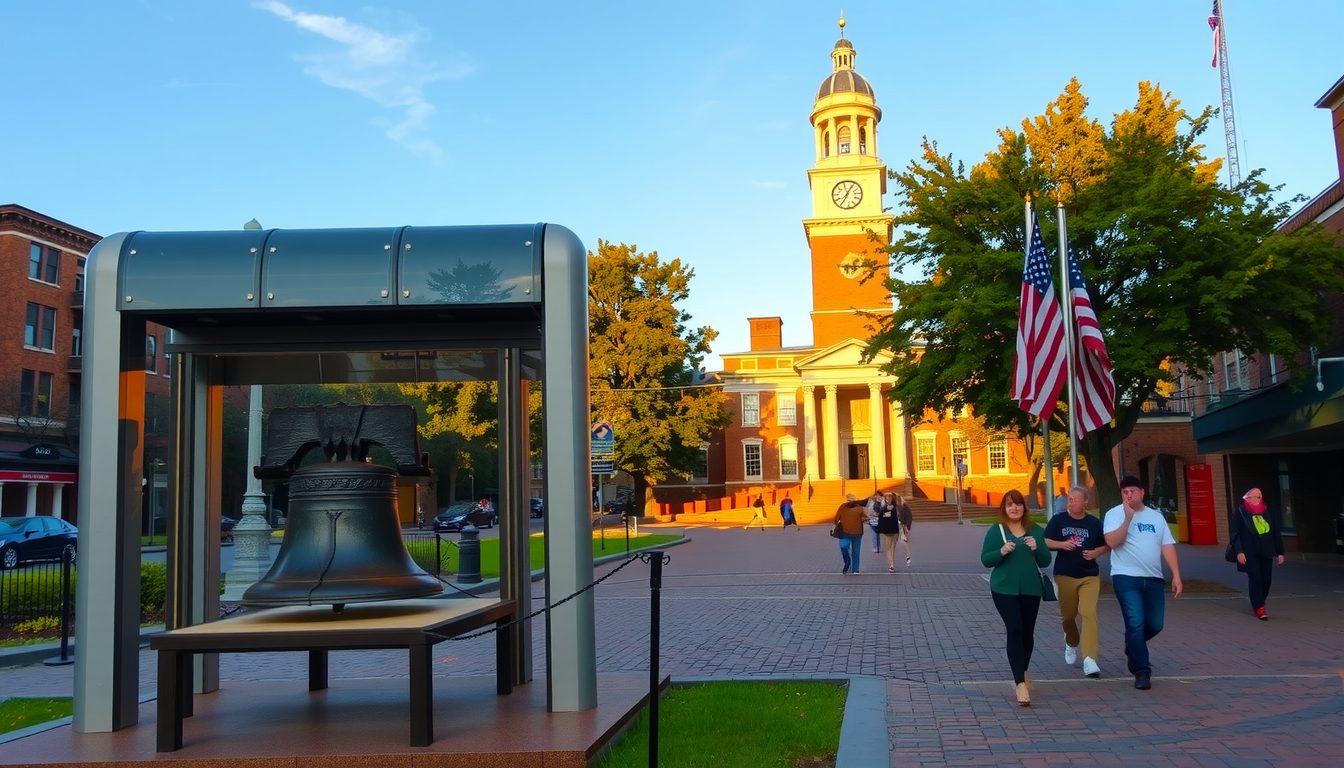
Liberty Bell Center
A fast, meaningful stop—best placed between longer experiences.
Go near opening or late afternoon for smaller waves.
The exhibit path is linear; keep your group close to avoid re-queueing if someone lingers.
Sensible photo etiquette speeds everyone along—frame the Bell, step a few paces, and let the next visitor in.
Pair with a café or shade stop so you don’t arrive hungry to your next reservation.
Planning Help — Pacing With Purpose (GetYourGuide):
Paced Old City routes thread the Bell between context stops, add planned shade and restroom breaks, and keep timed components on track at Independence Hall.
The result is a calmer morning with the same number of wins.
Address: 526 Market St, Philadelphia, PA 19106
Cost: often free; security screening applies
Hours: typically daytime; check official site
Website: https://www.nps.gov/inde/planyourvisit/libertybellcenter.htm
Immerse Yourself in Philadelphia’s Markets, Historic Streets, and Stone Landmarks
Philadelphia’s in-between moments—markets, squares, and short walks—make the big visits feel balanced.
Treat breaks as planned features, not time killers: a 45-minute market graze resets the group without sacrificing the next reservation.
Center City distances look small on a map but add up as zig-zags; using a hop-on loop or step-through e-bikes converts scatter into sequence.
For comfort, aim for shade rings, carry water, and time crossings to keep your feet fresh.
Photo-wise, frame details—tile, brick, neon—so people can move naturally around you.
Afternoons invite a slower tempo; sit on a bench and watch the swirl before you push to the river.
Reading Terminal Market
Busy aisles, local stalls, and more choice than you planned for.
Arrive between meal peaks; split up and reconvene with treats.
Think of the Market as a pressure valve: 45–60 minutes for grazing and a reset.
Weekdays feel calmer; weekends reward early arrival or a late lunch.
Seating fills fast; standing counters work if you’re saving dinner for later.
Nearby garages exist, but swapping the car for feet or a loop bus prevents the “tiny drive, big delay” pattern.
Planning Help — One Ticket, Many Stops (Big Bus Tours Philadelphia):
On days that also hit Old City and the Parkway, a hop-on circuit replaces three short rideshares and two parking decisions with one predictable loop.
You pay once, arrive oriented, and protect your mealtime window—no sprinting because a driver is five minutes away on a one-way.
Planning Help — Door-to-Door Freedom (BikesBooking.com):
If weather cooperates, step-through e-bikes stitch Market → City Hall → Parkway → Art Mile in one smooth arc.
Marketplace listings show frame fit, battery range, and pickup points; locks and helmets included mean you stop where the light is best.
Address: 1136 Arch St, Philadelphia, PA 19107
Cost: entry free; purchases vary
Hours: typically morning to evening; check official site
Website: https://readingterminalmarket.org/
Relax by Philadelphia’s Riverfront and Seasonal Evening Lights
The river is where Philadelphia exhales—hammocks, barges, and long sightlines that turn a good day into an easy evening.
Build it in as a reward: an early dinner nearby, a stroll as lights come on, and a route back that avoids the late-night parking shuffle.
When temperatures rise, breezes make the waterfront feel friendlier.
Time blue hour and you’ll get reflections that look planned weeks in advance.
Spruce Street Harbor Park (Seasonal)
Floating barges, hammocks, and color after dusk.
Arrive before sunset to claim a spot and let the evening unfold.
Crowds ebb with weather; weekday evenings feel airy, weekends ask for patience. Vendors run smoother earlier; consider a picnic starter so you’re not hungry in line.
For photos, step off the main run and frame lights against water rather than faces—everyone moves, your shot doesn’t.
Planning Help — Transfers Without the Tangle (Big Bus / BikesBooking.com):
Penn’s Landing can be a parking puzzle.
A hop-on loop (when operating) solves timing and gives you a clock to pace the night, while e-bikes provide lock-and-go freedom for river photos.
Marketplace listings include helmet/lock details and protected route suggestions so you move like a local.
Address: 301 S Christopher Columbus Blvd, Philadelphia, PA 19106
Cost: park access often free; vendors vary
Hours: seasonal; check official site
Website: https://www.delawareriverwaterfront.com/
Find Off-Beat Stops that Spark Conversation
Short visits that spark conversation—and won’t eat the day.
Pick one that suits your group’s mood; balance heavier stops with a square or café before you move on.
Eastern State Penitentiary
Stone corridors, audio stories, and a space that lingers.
Go earlier for lighter crowds; pair a second Fairmount stop.
Expect 60–90 minutes; the audio tour shapes the visit so you absorb more with fewer detours.
Lighting is dim in places; let eyes adjust and move carefully on uneven floors.
If mobility is a concern, staff can point you to the least bumpy path.
Nearby cafés offer an easy cooldown before your next stop.
Planning Help — Two-Stop Days (Go City, when included):
Matched with the Art Mile or another paid venue, a pass keeps your day from stalling at payment points and often nudges your budget the right way—especially on weekends.
Planning Help — Framed Narratives (GetYourGuide):
Narrated entries give the framework fast, then you wander with purpose.
Flexible terms protect your timeline if weather shifts or special events alter hours.
Address: 2027 Fairmount Ave, Philadelphia, PA 19130
Cost: around standard museum pricing; check official site
Hours: typically daytime; seasonal evenings for special events
Website: https://www.easternstate.org/
Philadelphia’s Magic Gardens
Mirror, tile, and color in a lived-in mosaic.
Timed entry keeps it comfortable; photos pop at golden hour.
Plan 45–60 minutes; the space is intimate and better without rush.
Crowds compress the path, so earlier or later windows feel kindest.
For photos, think details rather than wides—angles hide other guests and emphasize craft.
South Street eateries make it easy to fold this into dinner.
Planning Help — Controlled Capacity (GetYourGuide):
A booked window prevents doorway bottlenecks and lets you step straight into the installation.
Flexible terms help if weather turns or the previous museum ran long—your plan survives without fees.
Address: 1020 South St, Philadelphia, PA 19147
Cost: modest entry; check official site
Hours: typically daytime into early evening; check site
Website: https://www.phillymagicgardens.org/
Create a Family Day in Philadelphia That Truly Feels Like Vacation
Family days thrive on rhythm: one anchor experience, a snack, fresh air, and the option to pivot when naps or weather assert themselves.
Choose venues that welcome movement and offer quick wins, then protect your victories with short transfers and clear next steps.
Parks near museums are your friends; so are step-through e-bikes with child seats if you prefer to skip short rideshares and car-seat shuffles.
Keep the last hour gentle and you’ll end the day smiling.
Please Touch Museum (Memorial Hall)
Hands-on exhibits in a grand space built for movement.
Two hours here pairs perfectly with lawns and lakes in Fairmount Park.
Arrive early for open rooms, then break for outdoor time before naps.
Wide paths and elevators make strollers easy; set a “one last room” rule to leave on a high.
For photos, lobby geometry and natural light do most of the work.
If you’re planning a picnic, gather supplies before the museum so you don’t lose momentum afterward.
Planning Help — Keep Everyone Together (BikesBooking.com):
Child-seat or cargo e-bikes connect the museum, Japanese House and Garden (when open), and park lawns at one calm pace.
Comparing shops in one place ensures frame sizing and battery health match your loop; locks and helmets included remove last-minute stress.
Planning Help — Spread Savings Across Days (Go City):
Use a pass on your denser museum day, then pair this low-cost park segment.
Moving savings across the itinerary lets you keep meals and treats intact without second-guessing.
Address: 4231 Avenue of the Republic, Philadelphia, PA 19131
Cost: around standard museum pricing; check official site
Hours: typically daytime; check official site
Website: https://www.pleasetouchmuseum.org/
Discover Philadelphia’s City Hall and Historic Old Streets
Stone detail, tower views (when offered), and alleys that still whisper.
Keep loops short, hydrate, and check tower schedules before you commit the afternoon to a single elevator.
This is where hop-on circuits shine: you’re measuring time by headways instead of guesswork, and your feet will thank you at dinner.
Philadelphia City Hall (Tours Vary)
Courtyards and carvings reward slow looking; tower access is limited and scheduled.
Check times before you plan the day around the elevator.
Plan 30–60 minutes for the exterior and courtyard alone; add a timed tower slot if available.
Pair with LOVE Park and the Parkway for minimal walking. Accessibility is solid at ground level; tower logistics vary by season.
For photos, frame columns and flagstones rather than crowds—angles come easily here.
Planning Help — Orientation Without Guesswork (Big Bus Tours Philadelphia):
This stop sits between the Parkway and Old City.
A hop-on loop sets a clean rhythm—predictable headways, simple transfers, and narration that keeps everyone oriented—so museum slots and meal times stay intact.
Address: 1400 John F Kennedy Blvd, Philadelphia, PA 19107
Cost: courtyard access often free; tower tours vary
Hours: building hours and tour schedule vary; check official site
Website: https://www.phlvisitorcenter.com/city-hall
Elfreth’s Alley
Short, honest history on a residential block.
Be kind with photos; people live here.
Ten to twenty minutes is plenty unless the house museum is open and you’re exploring inside.
Go early for quieter frames; step off the main run to let residents pass.
Combine with a coffee stop and Independence Hall to keep your loop gentle and meaningful.
Cobblestones can be slick after rain; wear shoes with grip.
Planning Help — Thread the Story (GetYourGuide):
Guided Old City walks tie the alley to the larger narrative and handle timing for Hall and the Bell.
Planned shade and restroom breaks feel small but change the whole morning in warm weather.
Address: 124–126 Elfreth’s Alley, Philadelphia, PA 19106
Cost: alley strolling free; house museum days vary
Hours: open access; museum hours vary
Website: https://www.elfrethsalley.org/
FAQ – How Should You Group Philadelphia Attractions to See More Without Rushing Across the City?
Which Philadelphia Attractions Should First-Time Visitors Prioritize?
Start with Independence Hall and the Liberty Bell if Philadelphia’s Revolutionary history is one of the reasons you came.
Then choose one contrasting experience such as Reading Terminal Market, the Philadelphia Museum of Art, the Barnes Foundation, or the Delaware River waterfront.
You do not need to cover every famous attraction on your first visit.
A historic anchor, a food or museum experience, and time to walk one neighborhood usually creates a stronger introduction than a checklist spread across the entire city.How Should You Plan Independence Hall and the Liberty Bell Together?
Make Independence Hall the timed anchor because its tour schedule can dictate the morning.
The Liberty Bell Center does not require the same kind of timed reservation, making it easier to place before or after the hall depending on crowds and security.
The National Constitution Center, Washington Square, and other Old City historic sites can extend the same walking loop.
Keeping these stops together prevents transportation from consuming the time you saved with advance planning.How Much Time Should You Give Philadelphia’s Old City?
A half-day works well for many first-time visitors, while serious history travelers can easily spend most of the day there.
Independence Hall, the Liberty Bell, National Constitution Center, Elfreth’s Alley, and surrounding historic sites offer more than enough material to slow down.
Build around one or two major indoor experiences rather than trying to enter every building.
Coffee, squares, and short walking breaks can also make a history-heavy itinerary much easier to sustain.Can You Visit the Philadelphia Museum of Art and Barnes Foundation on the Same Day?
Yes, particularly when art is one of your main priorities.
Their locations along the Benjamin Franklin Parkway make them far easier to combine than museums in completely different parts of the city.
Give each enough time to feel worthwhile instead of treating one as a quick add-on.
Travelers who want a slower experience may prefer one major art museum plus Parkway walking, City Hall, or another shorter attraction.Is The Franklin Institute Better for Families Than the Art Museums?
It can be, especially for children who respond better to interactive science than traditional galleries.
Hands-on exhibits allow families to build the visit around movement and discovery rather than expecting children to maintain the same pace through an art collection.
The Philadelphia Museum of Art and Barnes Foundation can still work well for families whose children enjoy art.
Choose based on your group rather than assuming every family needs the same attraction.Is Reading Terminal Market Worth Planning into a Sightseeing Day?
Yes, because it can function as both a Philadelphia food experience and a practical break between attractions.
Give yourself roughly an hour when you want enough time to browse, choose food, and actually enjoy it instead of rushing through the aisles.
Its Center City location makes it useful between Old City and Parkway-oriented plans.
Arriving outside the busiest meal period can make choosing food and finding space easier.Which Philadelphia Attractions Offer Something Different from Revolutionary History?
Eastern State Penitentiary and Philadelphia’s Magic Gardens create two very different alternatives.
Eastern State provides an immersive historic setting centered on the former prison, while the Magic Gardens emphasizes mosaic art, color, texture, and a much more intimate physical space.
The Philadelphia Museum of Art, Barnes Foundation, and Franklin Institute expand the choices further into art and science.
Adding one of these experiences keeps a Philadelphia trip from becoming exclusively about the 18th century.What Are the Best Philadelphia Attractions for Families?
The Franklin Institute and Please Touch Museum are two of the strongest dedicated family choices.
Fairmount Park gives families outdoor space that can balance a longer indoor visit, while Reading Terminal Market can work as a flexible food stop with many choices.
Older children interested in history may also enjoy Independence Hall or Eastern State Penitentiary.
One substantial attraction plus food and outdoor time usually works better than stacking several major admissions into a single family day.When Should You Visit Philadelphia’s Riverfront?
Late afternoon and evening can work particularly well because the waterfront provides a slower finish after a structured museum or historic day.
Seasonal attractions such as Spruce Street Harbor Park can add food, seating, lights, and an easygoing atmosphere when operating.
The riverfront also gives you a break from indoor exhibits and timed entry.
Check seasonal schedules before making it the centerpiece of an evening because individual waterfront attractions do not operate identically year-round.What Is a Realistic Two-Day Philadelphia Attractions Plan?
Use day one for Old City, beginning with Independence Hall and the Liberty Bell before adding the National Constitution Center or another nearby historic site.
Reading Terminal Market can become the meal transition before City Hall, Center City, or an evening waterfront visit.
On day two, choose the Parkway for the Philadelphia Museum of Art, Barnes Foundation, or Franklin Institute, then add one contrasting stop such as Eastern State Penitentiary or another neighborhood experience.
Two geographically organized days give you more usable sightseeing time than repeatedly crossing Philadelphia to chase individual attractions.