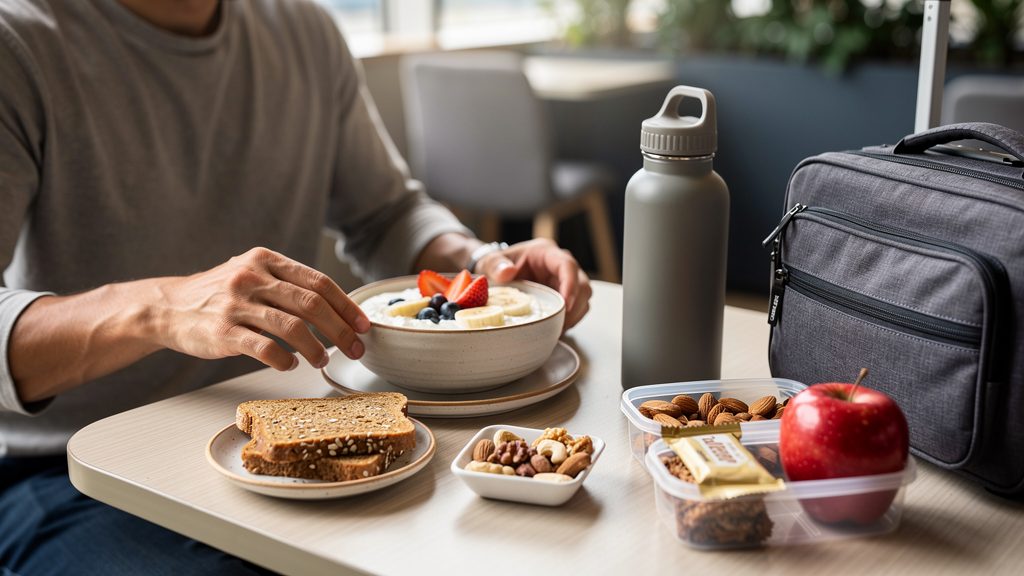

Make the Most of Your Trip
Compare the top tours, passes, and experiences — find what fits your travel style.
Short Excerpt
- Eating healthy while traveling works best when you plan for the moments that usually derail you: airports, long travel days, hotel breakfasts, irregular meal times, and limited food choices.
- Portable snacks, grocery-store basics, balanced restaurant choices, and regular hydration can help you maintain energy without turning vacation meals into a rigid diet.
- The goal is not to avoid local food; it is to create enough balance that you can enjoy memorable meals without feeling drained for the rest of the trip.
Quick Take
- Pack protein- and fiber-rich snacks such as nuts, fruit, nut butter, whole-grain crackers, or other shelf-stable options before long transit days.
- Build hotel breakfasts around foods such as eggs, oatmeal, yogurt, fruit, nuts, and whole grains when those choices are available.
- At airports and rest stops, look for grilled proteins, vegetables, salads, grain bowls, wraps, or other meals that provide more staying power than snack foods alone.
- Use grocery stores and local markets for fruit, yogurt, hummus, vegetables, bread, and simple meals when restaurant dining starts dominating every day.
- Enjoy the local foods you traveled to experience, then balance richer meals with lighter choices rather than trying to eat perfectly throughout the trip.
- Plan meals around your itinerary so long tours, flights, road trips, and late dinners do not leave you so hungry that convenience becomes your only consideration.
Eat Healthy While Traveling Without Missing the Food You Came to Enjoy
Travel can dismantle your normal eating routine within hours.
Early flights, airport terminals, hotel buffets, long sightseeing days, unfamiliar restaurants, road trips, and late dinners can leave you choosing whatever is closest rather than what will keep you feeling good.
Eating healthy while traveling does not require packing every meal from home or avoiding the foods that make a destination worth visiting.
A better strategy is to protect the ordinary meals and snacks so you have room to enjoy the extraordinary ones.
Start by planning for the times when good choices are hardest to find.
A few shelf-stable snacks in your carry-on can prevent an airport delay, long drive, or missed lunch from turning into hours without food followed by an oversized convenience meal.
Breakfast gives you another easy opportunity to create some stability.
Eggs, oatmeal, yogurt, fruit, whole-grain toast, nuts, or similar options can provide a more useful start to a busy travel day than relying entirely on pastries or sugary breakfast foods.
Local restaurants should still be part of the trip.
Try the regional specialty, book the restaurant you have been looking forward to, or enjoy street food that introduces you to the destination, then make your next meal simpler if that helps you feel better.
Grocery stores and food markets can fill the gaps between restaurant meals.
Fruit, yogurt, hummus, vegetables, nuts, bread, and other easy staples give you something dependable in your room, rental car, or day bag without requiring a full kitchen.
The biggest advantage comes from thinking ahead instead of trying to make perfect choices after you are already hungry.
Pack a few dependable foods, know when your next meal is likely to happen, keep water available, and leave enough flexibility to enjoy the dishes you would regret traveling home without trying.
Start With a Food Philosophy That Travels
Before you pack a single snack, shift your mindset.
Healthy eating on the road isn’t about rigid rules—it’s about adaptable habits.
Instead of aiming for “perfect,” aim for “better.”
Choose the salad over the fries.
Add fruit to your breakfast.
Drink water before coffee.
These small upgrades compound over time.
And they’re easier to stick to than restrictive plans that collapse the moment you land in a new time zone.
Travel is unpredictable.
Your food strategy should be resilient enough to bend without breaking.
Why It Works:
- Flexible habits survive travel disruptions
- Small upgrades are easier to maintain than strict rules
- A mindset shift reduces guilt and increases consistency
Build a Travel-Friendly Snack Arsenal
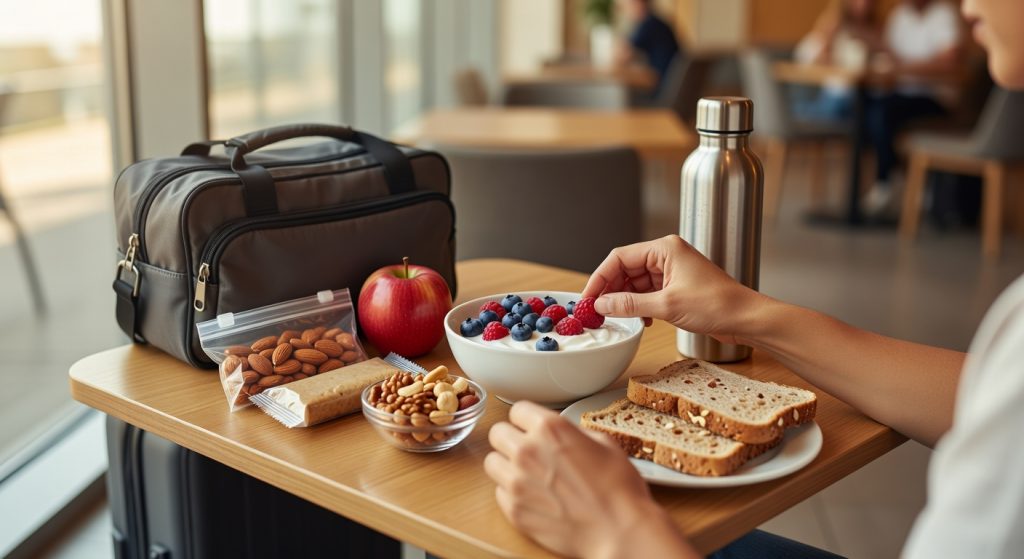
Smart snacking is your first line of defense.
Pack nutrient-dense options that don’t melt, spoil, or spike your blood sugar.
Think almonds, walnuts, pumpkin seeds, dried chickpeas, protein bars with clean ingredients, and dried fruit without added sugar.
Add travel-friendly produce like apples, oranges, snap peas, or baby carrots.
Nut butter packets, tuna pouches, and whole grain crackers can turn a snack into a mini meal.
And if you’re flying, pack snacks in your carry-on—airport food is expensive and often loaded with sodium and preservatives.
Snacks aren’t just filler—they’re fuel.
They help you stay sharp between meals and avoid impulsive food decisions when hunger hits hard.
What Smart Travelers Always Carry:
- Protein-rich snacks to stabilize energy
- Produce that travels well and adds fiber
- Shelf-stable mini meals for long transit days
Make Hotel Breakfasts Work for You
Hotel breakfasts can be a minefield—or a goldmine.
Skip the pastries and sugary cereals.
Look for eggs, oatmeal, yogurt, fruit, and whole grain toast.
Add nuts or seeds if available, and avoid juices that are mostly sugar.
If the buffet is limited, combine small portions of multiple items to build a balanced plate.
And if breakfast isn’t included, stock your room with basics: instant oats, fruit, nut butter, and protein powder.
A healthy morning meal sets the tone for the rest of the day.
It stabilizes blood sugar, improves focus, and reduces cravings later on.
Why It Matters:
- A balanced breakfast improves energy and decision-making
- Hotel buffets can be hacked with smart choices
- Stocking your room prevents morning nutrient gaps
Navigate Airports Without Derailing Your Diet
Airport food courts are designed for impulse.
But you can still find decent options.
Look for grilled proteins, salads, grain bowls, or wraps with veggies.
Avoid fried foods, creamy sauces, and oversized portions.
Hydrate before and during your flight—dehydration mimics hunger and worsens jet lag.
And if you’re flying long-haul, skip alcohol and caffeine close to boarding.
They disrupt sleep and digestion, especially at altitude.
Your airport strategy should be simple: fuel, not feast.
What Helps You Stay Balanced in Transit:
- Grilled proteins and veggies over fried or creamy options
- Hydration as a priority—not an afterthought
- Avoiding alcohol and caffeine before long flights
Eat Local Without Losing Control
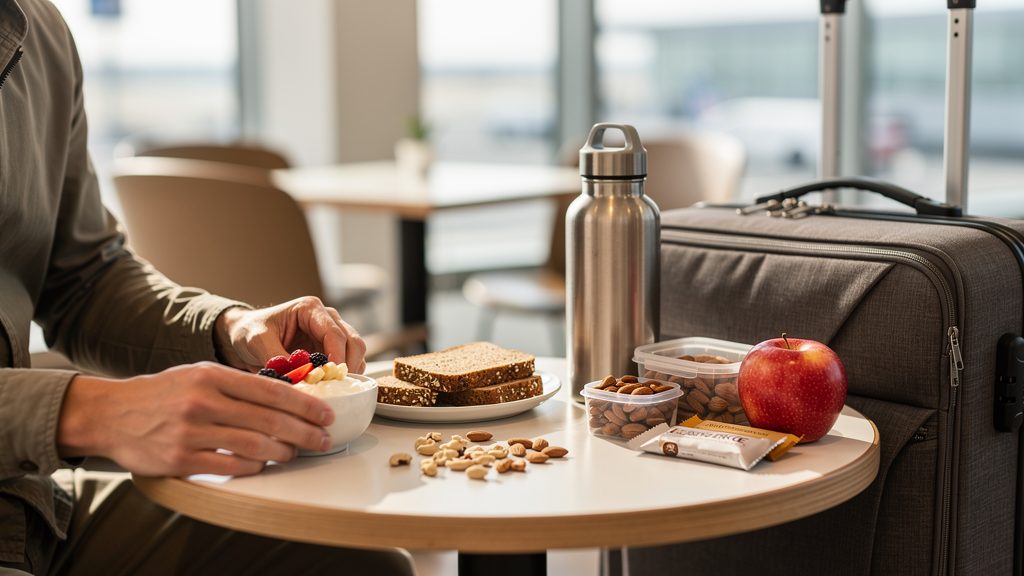
Trying local food is part of the joy of travel.
But you don’t have to eat everything, every time.
Choose one indulgent meal a day and balance the others.
If you’re sampling street food, pair it with a fresh juice or fruit.
If you’re eating out, start with a salad or broth-based soup.
Share rich dishes or order smaller portions.
And if you’re in a country with heavy cuisine, balance it with lighter meals—fruit, yogurt, grilled vegetables—when you can.
Local food should be a highlight, not a hazard.
Why It Works:
- Strategic indulgence keeps you satisfied without overdoing it
- Pairing rich foods with fresh sides improves digestion
- Local eating becomes joyful, not overwhelming
Use Grocery Stores to Stay Grounded
One of the easiest ways to eat healthy while traveling is to shop like a local.
Visit grocery stores or markets and stock up on basics: fruit, yogurt, nuts, whole grain bread, hummus, and pre-cut veggies.
If you have a fridge, buy greens and proteins to build simple meals.
Even without a kitchen, you can assemble healthy snacks and breakfasts.
Markets also give you insight into local food culture—without the restaurant markup.
Shopping isn’t just practical—it’s empowering.
It gives you control over what goes into your body.
What Helps You Stay Nourished on the Road:
- Grocery stores offer affordable, healthy staples
- Markets provide fresh, local produce and snacks
- Shopping like a local builds routine and control
Hydrate Like It’s Your Job
Dehydration is sneaky.
It causes fatigue, headaches, cravings, and poor digestion.
Carry a reusable water bottle and refill it often.
Drink a full glass of water first thing in the morning and before every meal.
If you’re in a country with questionable tap water, buy large bottles and keep one in your room.
Add electrolytes if you’re sweating a lot or flying long distances.
And limit sugary drinks—they spike insulin and dehydrate you further.
Hydration isn’t optional—it’s foundational.
Why It Matters:
- Hydration improves energy, digestion, and mood
- Water before meals reduces overeating
- Electrolytes help during heat, flights, and long walks
Don’t Skip Meals—Strategize Them
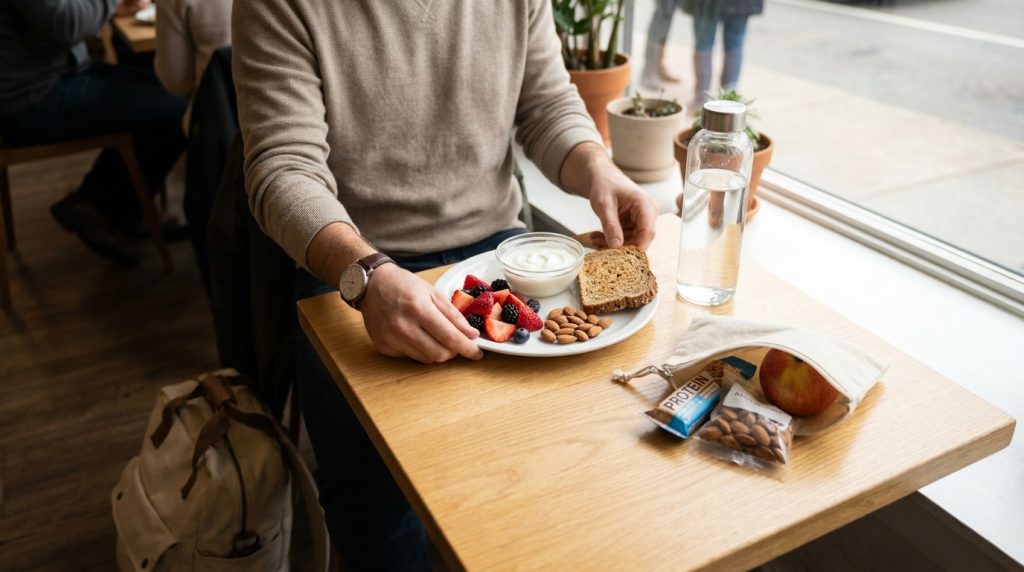
Skipping meals leads to energy crashes and poor decisions.
Instead, plan your meals around your itinerary.
Eat a solid breakfast, carry snacks, and schedule lunch before you’re starving.
If dinner will be late, eat something light in the afternoon.
And if you’re on a tight schedule, prep meals the night before or pack portable options.
Your body performs better with consistent fuel—not feast and famine cycles.
What Smart Travelers Do Differently:
- Plan meals around activities, not just hunger
- Use snacks to bridge long gaps
- Avoid skipping meals that lead to binge eating later
Use Apps to Find Healthy Food Anywhere
Technology makes healthy eating easier.
Use apps like HappyCow, Yelp, or Google Maps to find restaurants with vegetarian, vegan, or health-conscious options.
Search for keywords like “salad,” “grain bowl,” “smoothie,” or “organic.”
Read reviews and scan menus before you go.
And if you’re in a new country, learn basic food terms to help you order smart.
Apps aren’t just for convenience—they’re tools for control.
Why It Works:
- Apps help you find healthy options in unfamiliar places
- Menu scanning prevents impulse orders
- Language prep improves ordering confidence
FAQ – How Do You Eat Healthy While Traveling Without Missing Out on Local Food?
What Is the Easiest Way to Eat Healthy While Traveling?
Focus on repeatable habits rather than trying to follow a perfect diet.
Pack a few dependable snacks, eat reasonably balanced meals when convenient, keep water available, and avoid going so long without food that hunger controls the next decision.
Travel schedules are unpredictable, so a flexible approach is easier to maintain than strict rules.
You can still enjoy richer local dishes without making every meal an indulgence.Which Snacks Work Best for Flights and Long Travel Days?
Choose portable foods that provide protein, fiber, or both and can tolerate several hours in your bag.
Nuts, seeds, dried chickpeas, whole fruit, nut butter packets, whole-grain crackers, and suitable protein bars are convenient examples.
Shelf-stable mini meals can be especially useful during connections, long drives, or delayed departures.
Packing your own options also reduces your dependence on whatever happens to be available at the airport or rest stop.How Can You Build a Better Hotel Breakfast?
Start with the most filling basics available.
Eggs, oatmeal, plain yogurt, fruit, whole-grain toast, nuts, and seeds can be combined into a breakfast with protein, fiber, and carbohydrates.
You do not need to avoid every pastry or vacation treat, but making sweets the entire breakfast may leave you hungry again quickly.
When breakfast is not included, keeping simple foods in your room can give you more control over the morning.What Should You Look for When Eating at an Airport?
Search for meals that contain recognizable sources of protein, vegetables, and filling carbohydrates.
Grilled proteins, salads, grain bowls, sandwiches, wraps, soups, and similar options can be easier to turn into a balanced meal than relying entirely on snack counters.
Sauces and dressings can usually be ordered on the side when you want more control over the meal.
Having your own backup snacks makes the decision easier when the terminal has limited choices.How Can You Enjoy Local Food Without Feeling Like You Ruined Your Diet?
Make local food part of the plan rather than treating it as a mistake.
Enjoy the dish, dessert, market food, or restaurant that genuinely interests you, then let other meals during the day be simpler if that feels better.
Sharing richer dishes or ordering smaller portions can also help when you want to taste several specialties.
The point of healthy travel eating is to support the trip, not remove one of travel’s biggest pleasures.Why Are Grocery Stores Useful When You Are Traveling?
They give you affordable access to simple foods that are difficult to keep ordering from restaurants.
Fruit, yogurt, nuts, hummus, whole-grain bread, vegetables, and other ready-to-eat staples can handle breakfasts, snacks, or lighter meals.
A hotel refrigerator or kitchenette expands your choices, but you can still assemble useful foods without either one.
Local markets have the added benefit of introducing you to ingredients and everyday foods that residents actually buy.How Do You Avoid Skipping Meals on Busy Sightseeing Days?
Plan food around the itinerary before the day becomes crowded.
Eat before a long tour, carry something portable, and identify approximately when lunch or dinner will fit between activities.
An afternoon snack can bridge the gap when dinner reservations are much later than your normal meal time.
That little bit of planning helps prevent the sudden hunger that makes the nearest fast-food counter feel like the only option.How Can You Stay Hydrated While Traveling?
Keep water accessible instead of waiting until you feel noticeably thirsty.
A refillable bottle works well in destinations where the local water is safe to drink, while bottled water may be the better choice where tap-water quality is uncertain.
Hot weather, extensive walking, and long travel days can increase how much fluid you need.
Electrolyte products may also be useful during heavy sweating or other situations involving substantial fluid loss, depending on your individual needs.How Can You Find Healthier Restaurants in an Unfamiliar City?
Look at menus before you are hungry enough to choose impulsively.
Google Maps, Yelp, HappyCow, and similar tools can help identify restaurants offering vegetarian, vegan, salads, grain bowls, grilled dishes, smoothies, or other options that fit what you want.
Recent reviews can also reveal portion sizes and whether menu descriptions match what is actually served.
In another country, learning a few basic food terms can make ordering significantly easier.What Should You Do When a Travel Day Offers Almost No Healthy Food?
Use the best available option rather than treating the day as a failure.
Combine whatever useful foods you can find—such as fruit, nuts, yogurt, sandwiches, soup, vegetables, or a protein source—and continue normally at the next meal.
Portable snacks become especially valuable during flight delays, road trips, long layovers, or weather disruptions.
One imperfect travel meal has far less impact than repeatedly arriving at meals exhausted, extremely hungry, and without a backup plan.