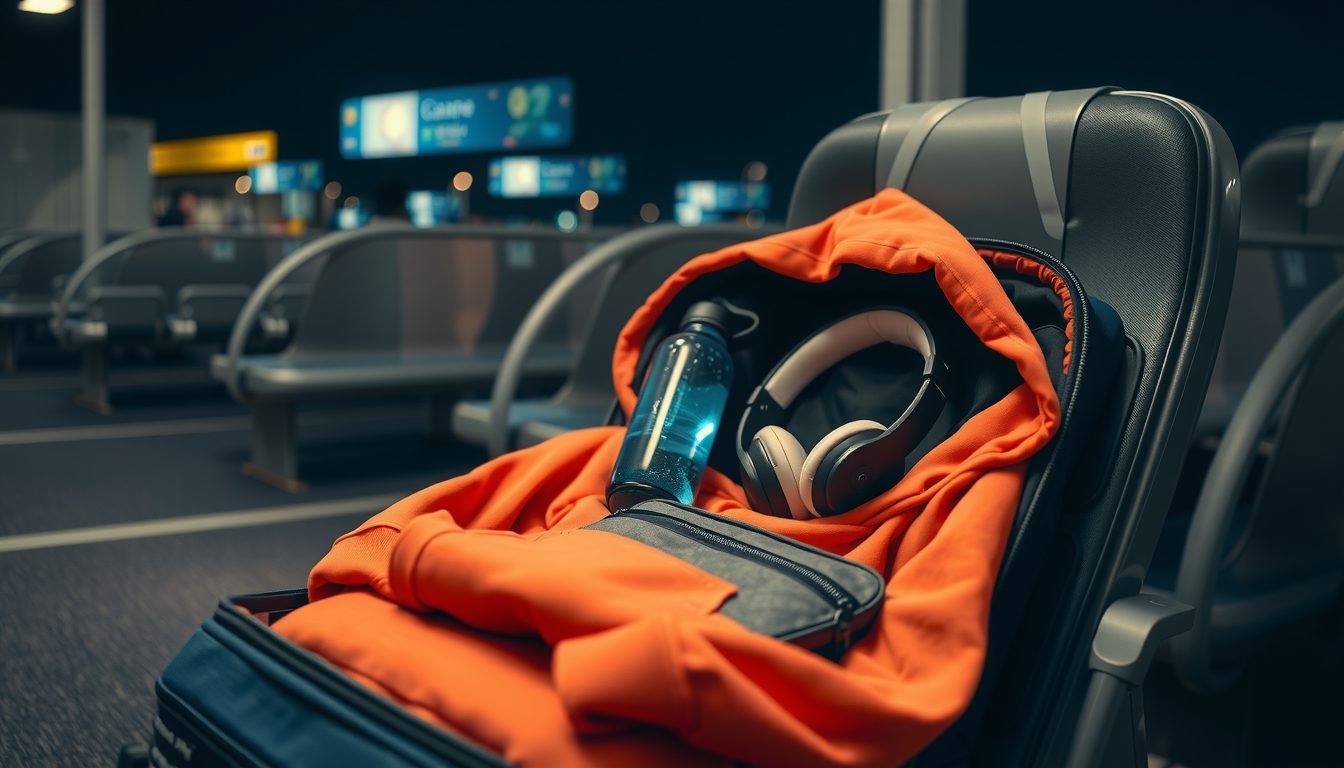
Short Excerpt
- A useful red-eye packing list should solve the problems that interrupt overnight flights most often: light, noise, temperature changes, dry cabin air, uncomfortable posture, hunger, dead devices, and a messy arrival.
- The easiest system is to separate what you need for sleep from what you need after waking, then keep both groups accessible without digging through an overhead bag in the dark.
- Eye masks, earplugs, comfortable layers, simple snacks, hydration, essential toiletries, medication, charging gear, and a clean arrival layer usually provide more value than an oversized collection of travel gadgets.
Quick Take
- Use two small pouches: one for sleep and comfort during the flight and another for toiletries, medication, and items you want immediately before landing.
- Follow a 90-second rule by keeping anything you may need overnight near the top of your personal item or in an outside pocket.
- Control light, noise, temperature, and posture with an eye mask, earplugs or comfortable headphones, removable layers, socks, and simple neck or lumbar support.
- Bring a refillable bottle and a couple of familiar snacks, drinking more earlier in the journey and avoiding unnecessary large drinks right before your main sleep window.
- Keep prescription medication, important documents, phone cables, and a power bank in your carry-on; spare lithium batteries and power banks should remain in the cabin rather than checked baggage.
- Pack for the morning as well as the night by including a toothbrush, deodorant, clean top, mobile data plan, offline directions, and anything you will want before hotel check-in.
Pack Your Red-Eye Around What You Need Before Sleep and the Moment You Land
A red-eye packing list works best when it is organized around the two moments when tired travelers become frustrated fastest: trying to settle down in the dark and trying to function immediately after landing.
That means the most useful packing strategy is not bringing more.
It is separating the right things and putting them where half-asleep you can actually reach them.
Start with two small pouches inside your personal item.
The first is your sleep-and-comfort pouch.
Keep your eye mask, earplugs or comfortable headphones, lip balm, tissues, hand sanitizer, a small moisturizer, downloaded sleep audio, and one simple snack together so you do not have to search through the bag after the cabin lights go down.
The second is your landing-and-reset pouch.
A toothbrush, toothpaste, deodorant, face wipes or a small towel, clean top, medication, glasses or contact supplies, hair tie or compact comb, and gum or mints can make the transition from overnight passenger to first-day traveler much easier.
Then apply the 90-second rule.
If you expect to need something during the flight but cannot reach it within about a minute and a half, it is packed in the wrong place.
Overnight essentials belong in an outside pocket, under-seat personal item, or top layer rather than buried beneath clothes in the overhead bin.
Comfort should be built around four predictable cabin problems: light, noise, temperature, and posture.
An eye mask handles surprise overhead lights and neighboring screens.
Earplugs or comfortable headphones soften announcements, conversations, carts, and other sudden sounds, while a hoodie, removable sweater, socks, and simple neck or lower-back support help when the cabin temperature and seat position become uncomfortable several hours into the night.
Hydration and food need the same practical approach.
Bring an empty refillable bottle through security and fill it afterward.
Drink normally earlier in the journey, then ease back on large amounts as your main sleep period approaches if frequent bathroom trips tend to wake you.
Pack two or three familiar snacks rather than relying entirely on whatever happens to remain available late at night.
Nuts, a suitable protein bar, fruit, crackers, or a small sandwich can prevent hunger from becoming another reason you cannot settle down.
Your technology should also be ready before boarding.
Charge your phone, download entertainment and important travel information, save offline directions, and keep the correct charging cable accessible.
A power bank belongs in your carry-on, not checked baggage, and if your carry-on is gate-checked, remove the power bank and keep it with you in the cabin.
International arrivals deserve one more layer of preparation.
Having an eSIM or another mobile-data option ready before landing means maps, transit directions, rides, hotel messages, and reservation confirmations work when you are tired and least interested in solving another problem.
The best red-eye packing checklist is therefore not the longest one.
It is the one that gives you darkness when you want sleep, warmth when the cabin gets cold, food when everything is closed, power when your phone is low, and a clean, organized reset when the aircraft door finally opens.
The Red-Eye Packing Mindset That Changes Everything
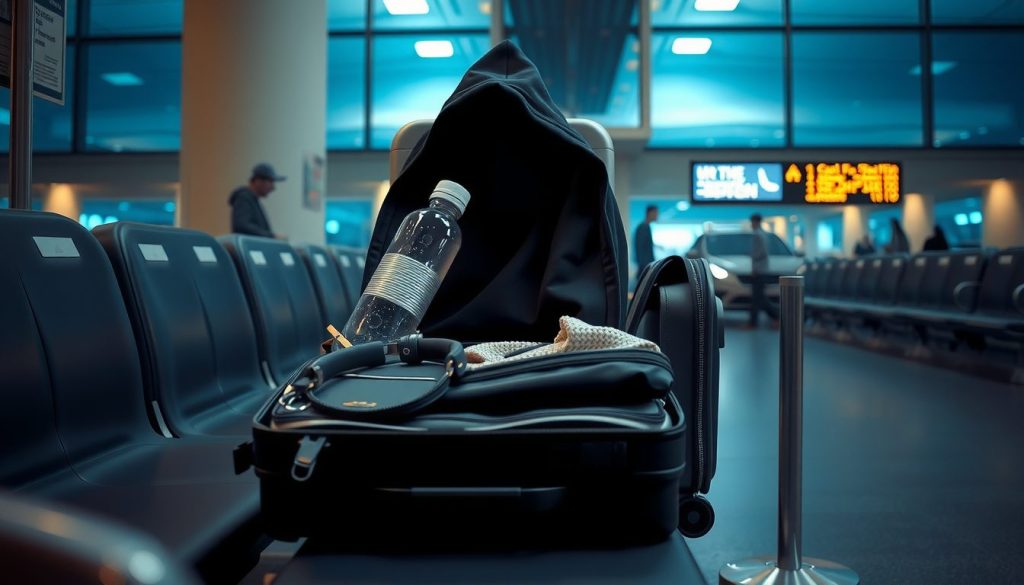
Packing for an overnight flight is not the same as packing for a daytime trip.
You are essentially creating a mini sleep environment inside a public cabin.
That environment has predictable problems.
It is dry.
It has light spikes.
It has noise spikes.
It is colder than you think at 2 a.m.
And you are sitting still for longer than your body likes.
When you pack with those realities in mind, comfort becomes repeatable instead of lucky.
The Two-Pouch System
Here is the simplest approach that works for almost everyone.
Pack two small pouches inside your carry-on.
One is your “sleep and comfort pouch.”
The other is your “landing and reset pouch.”
The sleep pouch is what you need from boarding to lights-out.
The landing pouch is what you want right after you wake up or right after you land.
This prevents the classic red-eye chaos of digging through a bag in the dark.
It also prevents you from waking your seatmate because you cannot find one cable.
The 90-Second Rule
If you cannot reach it in ninety seconds, it is not packed correctly for a red-eye.
That is not a moral rule.
It is a tired-brain rule.
Tired brains get impatient and clumsy.
So you place essentials in outer pockets or the top layer of your bag.
You keep the rest packed like normal.
This is how you feel “together” on a red-eye without packing like you are moving apartments.
Packing Mindset Notes
Two Pouches Prevent Panic
Separating sleep items from landing items keeps you calm and organized overnight.
Access Matters More Than Quantity
The best item is useless if it is buried in the bottom of the bag.
Comfort Is Predictable
Dry air, temperature drops, and noise spikes happen on almost every red-eye.
Tired-Brain Friendly Wins
A simple organization system works even when you are half asleep.
Carry-On Essentials That Make Sleeping Easier
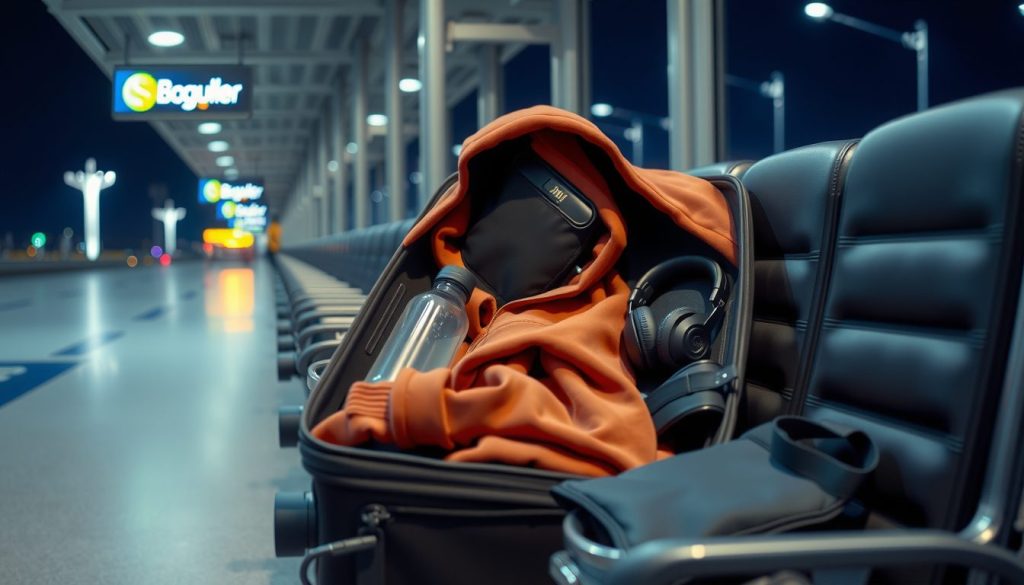
Sleep on a red-eye is not just about “being tired.”
It is about controlling signals.
Light tells your brain it is daytime.
Noise spikes tell your brain to stay alert.
An unstable posture causes micro-wakeups you do not remember, but you feel.
So your packing list should be built around those three problems.
If you solve those, you can sleep in economy better than you think.
Light Control
An eye mask is one of the most reliable red-eye helpers.
It blocks cabin flashes, neighbor screens, and surprise overhead lights.
If you do not use an eye mask, a hoodie with a soft brim can do an okay job.
The key is creating darkness cues for your brain.
Darkness cues make sleep onset easier.
They also help you return to sleep after you wake briefly.
That matters because most plane sleep is fragmented.
So light control is not a luxury item.
It is a core item.
Noise Control
The cabin hum is not the issue.
The spikes are.
Cart rumbles, loud laughs, overhead bin slams, announcement bursts.
Foam earplugs are cheap and effective.
If you prefer headphones, choose something comfortable enough to wear while resting.
Noise-canceling is helpful, but not required.
A steady sound option can also work, like soft white noise or calming music.
Avoid content that keeps your mind active.
You want your brain to drift, not debate.
Posture And Seat Comfort
Neck stability is the difference between “I slept” and “I never really slept.”
A simple neck pillow can help if your head drops forward.
If you do not want to buy one, a rolled hoodie can stabilize your neck.
A scarf can help if you lean toward the window.
A small lumbar support, like a folded sweater, can reduce lower back tension.
Less tension means fewer micro-wakeups.
Less micro-wakeups means more recovery.
That is the whole point.
Sleep Essentials Notes
Darkness Helps Sleep Start
An eye mask or hood reduces wake signals and supports faster sleep onset.
Earplugs Beat Spikes
Cheap earplugs often improve sleep more than expensive gadgets.
Neck Stability Matters
Preventing head drops reduces micro-wakeups and improves recovery.
Comfort Is Mechanical
Small posture support creates real sleep benefits on long overnight flights.
Layering Clothes So You Stay Comfortable All Night
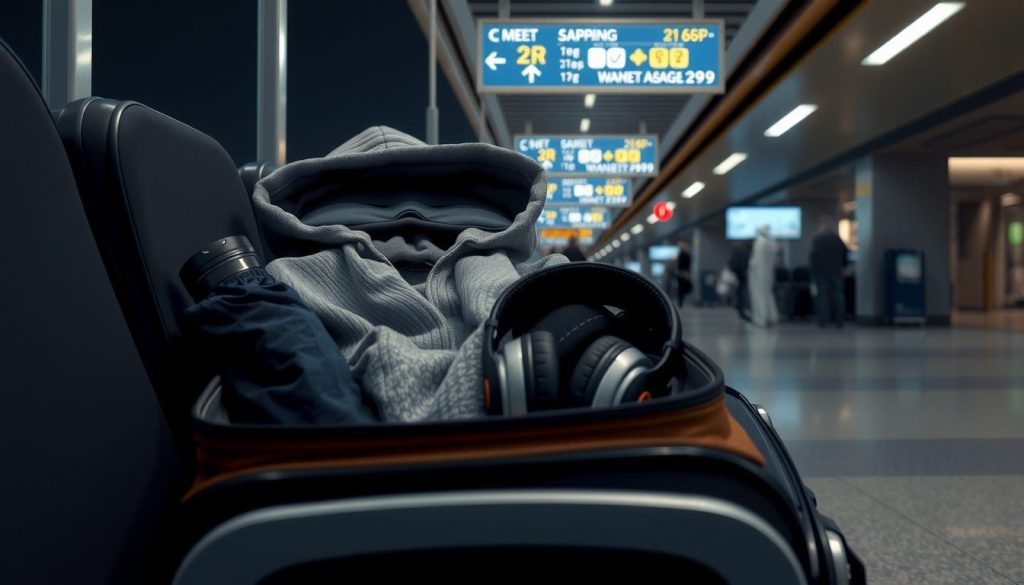
Cabins have mood swings.
They can feel warm during boarding, then cold once you are cruising.
If you dress for the first hour, you will be uncomfortable by the third.
If you dress for the cold, you might overheat early and feel restless.
Layering solves this without making you bulky.
It also helps you sleep because temperature stability is a sleep signal.
Your body settles when it is not fighting cold feet or sweaty discomfort.
So pack layers on purpose.
The Layer Stack That Works
Start with a soft base layer that feels comfortable against your skin.
Add a mid-layer you can remove easily, like a lightweight sweater.
Bring an outer layer that acts like a blanket, like a hoodie or light jacket.
Choose fabrics that do not itch and do not trap heat aggressively.
If you overheat, sleep becomes harder.
If you get chilled, you wake up.
The goal is flexible comfort.
Flexible comfort is the secret to red-eye sleep.
Feet And Extremities
Cold feet wake people up.
This is a quiet truth of red-eye misery.
Pack socks even if you do not plan to wear them during boarding.
Compression socks can help some travelers reduce swelling on long flights.
A light beanie can help if you get cold easily, but it is optional.
If you tend to get dry hands, pack a small hand cream.
Dryness creates discomfort, and discomfort creates wakeups.
Keep it simple.
Pack the small items that prevent unnecessary irritation.
The “Landing Look” Layer
When you land, you often want to look a little more put-together.
Not for anyone else.
For you.
A clean top layer, like a fresh tee or light button-down, can change how you feel.
It helps you feel ready to step into a new day.
It also helps if you are going straight to meetings, sightseeing, or transit.
This is why the landing pouch is useful.
You wake up, you refresh, and you move forward.
Layering Notes
Cabins Change Temperature
Layering protects comfort because flights rarely stay the same temperature all night.
Socks Are Sleep Insurance
Warm feet prevent wakeups and reduce discomfort late in the flight.
Dryness Is a Real Problem
Small moisturizers prevent irritation that can keep you awake.
Landing Layers Reset You
A clean top layer helps you feel ready and confident on arrival.
Toiletries And “Look Alive” Items That Matter On Red-Eyes
Toiletries for a red-eye are not about a full routine.
They are about preventing that dry, puffy, slightly miserable feeling.
Cabin air is dry and it shows up on your face and your mood.
A simple refresh kit makes you feel human quickly.
It also helps you transition into your first day without feeling like you need to hide.
So think minimal.
Think high impact.
Pack the basics that actually change how you feel.
Dryness And Comfort
Lip balm is nonnegotiable on many red-eyes.
So is a small moisturizer if your skin gets tight.
A simple saline spray can help if your nose dries out.
Eye drops can help if you wear contacts or get dry eyes easily.
Do not overpack.
Pick what you know you use.
The goal is comfort, not collecting products.
When dryness is controlled, sleep is more likely.
When you land less dry, you feel less exhausted.
Quick Refresh Kit
A toothbrush and small toothpaste are obvious, but the real win is timing.
Use them before landing or right after, not when you are already rushed.
A small pack of face wipes can help if you feel grimy.
Deodorant is a confidence item, especially if you have a connection.
If you wear contacts, consider glasses for the flight.
Contacts and dry cabin air can be a rough combo overnight.
A simple hair tie or small comb can also help you look normal fast.
Normal fast is the red-eye goal.
Meds And Comfort Items
If you use any regular medications, keep them in your personal item.
Do not check them.
Pack simple pain relief if you tend to get headaches when you are dehydrated or short on sleep.
If you are prone to motion sickness, bring what you normally use.
Do not experiment on a travel night.
If you use a sleep aid, consider medical guidance first, because what helps one person can backfire for another.
The safest strategy is still timing, light control, and hydration.
Those work without side effects.
Toiletry Notes
Dryness Makes You Feel Worse
Lip balm and moisturizer prevent the tight, tired feeling that ruins comfort.
Refresh Timing Matters
A quick reset before landing can make arrival feel easier immediately.
Keep Meds Accessible
Always carry regular medications in your personal item, not in checked bags.
Avoid Travel Experiments
Use what you already know works for your body and routine.
Hydration Gear And Simple Snacks That Save You
Hydration is a red-eye comfort multiplier.
Not because you need to chug water nonstop.
Because dry air makes tiredness feel heavier.
It also worsens headaches and irritability.
A simple hydration plan can make you feel dramatically better on arrival.
Snack planning helps too, because hunger at 1 a.m. is a mood problem.
And airport snacks are expensive and usually not satisfying.
So you pack a small amount of stability.
The Water Plan
Bring a refillable bottle.
Fill it after security.
Sip steadily earlier in the flight, then lighten up during your sleep window.
Drink again after landing.
That is the whole plan.
You do not need a complicated schedule.
If you like electrolytes, pack a packet and use it after landing or mid-flight.
Keep it optional, not mandatory.
The goal is feeling normal.
Feeling normal is how you enjoy the first day.
Snacks That Support Sleep
Pick snacks that do not spike and crash your energy.
Nuts, simple protein bars, and small sandwiches tend to work well.
Fruit can help too, if your stomach tolerates it.
Avoid super salty snacks because they increase thirst and dryness.
Avoid heavy sugar because it feels good briefly, then leaves you foggy.
Pack one small “emergency snack” for mid-flight hunger.
That prevents you from buying overpriced food during a layover or landing tired and cranky.
Mood stability is part of comfort.
Hydration Notes
Refillable Bottles Save Money
They prevent overpriced purchases and support steadier energy.
Sip Then Sleep
Drink earlier, then reduce intake during sleep to avoid constant wakeups.
Snacks Prevent Panic Buying
A simple snack plan saves money and reduces irritability overnight.
Stable Fuel Feels Better
Protein and water often beat sugar and coffee on short sleep.
Tech Must-Haves That Prevent Overnight Friction
Tech issues are a red-eye pain multiplier.
A dead phone turns a calm arrival into a stressful arrival.
A missing cable turns a long night into a long search.
A bad connection turns a simple navigation problem into a mood problem.
So pack tech with intention.
Keep it accessible.
And build a small redundancy into your essentials.
This is not about carrying a suitcase of gadgets.
It is about avoiding preventable frustration when you are tired.
Power And Cables
Bring a power bank that can actually charge your phone fully.
Bring the correct cable and consider a short backup cable.
If your devices use different ports, a small multi-tip cable can help.
Charge everything before leaving home.
It sounds obvious, and yet it is the most common failure.
Use your boarding window to top off if outlets are available.
Then shift into low-power mode before sleep.
A low-power mindset protects your arrival confidence.
Audio And Sleep Support
If you plan to use audio for sleep, download content in advance.
Do not rely on airport Wi-Fi at midnight.
Choose calm playlists, white noise, or gentle audiobooks.
Avoid intense content that keeps your brain awake.
If you use headphones, choose comfort over style.
If they hurt after twenty minutes, you will take them off, and the plan will fail.
Tech is only useful when it is wearable.
Wearable wins.
Connectivity Abroad
If you land internationally, stable data matters immediately.
Maps, transit, hotel messages, and confirmations all depend on it.
An eSIM can help you avoid roaming shock and SIM shop hunts.
Airalo is a common choice for quick activation in many destinations.
Yesim and Drimsim can be useful alternatives depending on region and plan style.
Sally Sim gives you another option to compare.
If you use public Wi-Fi, securing it can reduce risk and stress.
NordVPN can help protect connections on networks you do not control.
Less tech stress means a calmer arrival day.
Calmer arrival days feel like vacation faster.
Tech Notes
Power Protects Calm
A charged phone prevents stress spirals after landing.
Download Before Midnight
Offline content makes sleep support reliable when Wi-Fi is weak.
Comfort Beats Fancy
Headphones only help if they are comfortable enough to wear while resting.
Data Removes Friction
Reliable connectivity makes arrival logistics easier and reduces stress.
The Actual Red-Eye Packing Checklist You Can Copy And Use
This is the part you want when you are packing in a hurry.
Use it like a menu, not a mandate.
Pick based on your body, your destination, and your seat situation.
But keep the structure.
Sleep pouch.
Landing pouch.
Then the rest of your carry-on.
When you keep that structure, you will feel organized even when you are tired.
Sleep And Comfort Pouch
Eye mask.
Earplugs or comfortable headphones.
Lip balm.
Small moisturizer.
Tissues.
Small hand sanitizer.
One calming audio option downloaded offline.
A small snack for mid-flight hunger.
A pen if you may need to fill forms.
Landing And Reset Pouch
Toothbrush and toothpaste.
Face wipes or small towel.
Deodorant.
A clean top layer.
Mini hair brush or hair tie.
Contact lens case or glasses if applicable.
Essential meds.
A small pack of gum or mints.
Clothing And Layers
Soft base layer.
Mid-layer sweater or long-sleeve.
Hoodie or light jacket.
Socks.
Optional compression socks.
Optional light beanie.
Hydration And Food
Refillable water bottle.
Optional electrolyte packet.
Two to three simple snacks.
Tech Essentials
Phone charger cable.
Power bank.
Backup short cable.
Headphones.
Offline maps or saved directions.
eSIM plan details if traveling internationally.
Checklist Notes
Two Pouches Keep You Calm
Separate sleep needs from landing needs so you are not digging in the dark.
Essentials Must Be Accessible
Pack for tired you, not for organized-at-home you.
Comfort Is Signals
Light, noise, temperature, and posture are the real red-eye variables.
Landing Is Part of Packing
What you need after waking matters as much as what you need to fall asleep.
Land Feeling Better Because You Packed Like You Meant It
A red-eye will always be a little weird.
You are sleeping in public, in dry air, on a moving seat.
But it does not have to feel miserable.
When you pack with a red-eye mindset, you remove most of the friction.
That friction is what makes people feel “wrecked” after overnight travel.
Two small pouches, a layering plan, hydration stability, and tech that works.
That is the whole system.
It costs less than one airport meal, and it changes your arrival day.
So the next time you take a red-eye, you do not need luck.
You just need the right essentials in the right place.
FAQ – What Should You Pack for a Red-Eye So You Can Sleep Better and Land Ready?
What Is the Two-Pouch System for Red-Eye Flights?
Use one small pouch for sleep and another for arrival.
The sleep pouch holds items such as an eye mask, earplugs, lip balm, tissues, moisturizer, headphones, and a small snack that you may want after boarding.
The landing pouch holds your toothbrush, toothpaste, deodorant, clean top, medication, grooming basics, and anything else you want immediately before or after arrival.
Separating the two prevents you from digging through your entire bag while tired.What Does the 90-Second Packing Rule Mean?
Anything you expect to use during the overnight flight should be reachable within roughly 90 seconds.
That usually means keeping it in an outer pocket, the top of your personal item, or one of your two small pouches.
Items buried beneath clothing or stored in an inconvenient overhead bag are much harder to retrieve once the cabin is dark.
Pack for the version of yourself that is tired and half awake rather than the version packing carefully at home.What Should You Pack to Sleep Better on a Red-Eye?
Start with light, noise, temperature, and posture because those four factors repeatedly interrupt airplane sleep.
An eye mask, foam earplugs or comfortable headphones, removable clothing layers, warm socks, and a neck pillow or rolled hoodie can solve many of the most common problems.
A folded sweater behind your lower back may also improve comfort when the seat becomes tiring after several hours.
Expensive gadgets are optional when simple items already address the disturbance that usually wakes you.How Should You Dress for an Overnight Flight?
Wear soft layers that can be added or removed easily.
A comfortable base layer, light sweater or long-sleeve shirt, hoodie or jacket, and socks give you more control when the cabin changes from warm during boarding to cold during cruise.
Avoid clothing that feels restrictive after several hours of sitting.
Packing a clean top for arrival can also help you feel more refreshed without requiring a full change of clothes.Which Toiletries Matter Most on a Red-Eye?
Focus on the small items that improve comfort or help you reset before landing.
Lip balm, moisturizer, toothbrush, toothpaste, deodorant, tissues, face wipes, and any familiar eye or contact-lens supplies are usually more useful than a large toiletry kit.
Keep regular medications in your personal item rather than checked luggage.
Use products you already know work for you instead of experimenting with unfamiliar sleep aids or other products on travel night.What Food and Hydration Items Should You Pack?
Bring an empty refillable bottle and fill it after airport security.
A few familiar snacks such as nuts, crackers, fruit, a suitable protein bar, or a small sandwich can prevent late-night hunger without taking much space.
Drink normally earlier in the journey, then reduce unnecessary large drinks during your main sleep period if bathroom trips tend to interrupt you.
Electrolytes can remain optional rather than becoming a required part of every overnight flight.What Technology Should Stay Within Reach During a Red-Eye?
Keep your phone, charging cable, headphones, and power bank somewhere easy to access.
Download music, white noise, podcasts, movies, maps, and important reservation information before boarding so weak Wi-Fi does not disrupt your plan.
Power banks and spare lithium batteries must remain in carry-on baggage rather than checked luggage, and they should be protected from damage or short circuits.
If your bag is gate-checked, remove the power bank and keep it with you in the cabin.What Should You Prepare for an International Arrival?
Set up connectivity before you land whenever possible.
Airalo, Yesim, Drimsim, Saily, or another suitable eSIM option can give you mobile data for maps, transit, hotel messages, rides, and reservations without searching for a SIM card while exhausted.
Save important directions and confirmations offline as a backup.
Reliable arrival data is especially useful when you land early and cannot immediately check into your hotel.Should Compression Socks Be Part of Every Red-Eye Packing List?
Not necessarily.
Some travelers like compression socks for comfort or swelling during long periods of sitting, while people with particular blood-clot risk factors may receive more specific recommendations from a healthcare professional.
They should not replace regular leg movement or periodic walking when it is safe to move around the cabin.
If you have a medical condition, previous blood clot, recent surgery, pregnancy, or another significant risk factor, individualized guidance is more appropriate than a generic packing recommendation.What Is the Simplest Red-Eye Packing Checklist to Remember?
Think in five categories: sleep, layers, refresh, food and water, and technology.
Pack a sleep pouch with light and noise control, comfortable clothing layers, a landing pouch with toiletries and medication, a bottle and snacks, and essential charging and connectivity gear.
Keep the items you need overnight under the seat or otherwise easily accessible rather than buried in the overhead bin.
When the things you need before sleep and after waking are already organized, the entire red-eye requires fewer decisions at the moments when you are least interested in making them.