

Make the Most of Your Trip
Compare the top tours, passes, and experiences — find what fits your travel style.
Short Excerpt
- Busy travel days become easier to manage when you reduce unnecessary decisions, build extra time into the schedule, and prepare for predictable stress points before they happen.
- Food, hydration, movement, controlled breathing, noise reduction, and short periods away from crowds can help keep a demanding itinerary from becoming mentally exhausting.
- The goal is not to make every travel day effortless; it is to preserve enough flexibility and energy that delays, crowds, and changing plans do not control the entire experience.
Quick Take
- Add buffer time between flights, transfers, hotel check-ins, tours, reservations, and meetings so one small delay does not destabilize the rest of the day.
- Identify your personal triggers—such as hunger, crowds, noise, rushing, or too many decisions—and prepare specific ways to reduce them.
- Keep water and reliable snacks available because dehydration, skipped meals, and long gaps between food can make an already demanding day feel worse.
- Use short walks, stretching, breathing exercises, music, or a quieter location when you need to reset between stressful parts of the itinerary.
- Pre-plan essential decisions such as transportation, meals, documents, and backup routes so you have fewer problems to solve when you are already tired.
- Give yourself permission to drop or rearrange a low-priority activity when protecting the rest of the trip is more valuable than completing every item on the itinerary.
Keep Busy Travel Days From Turning Into A Chain Of Stressful Decisions
A packed travel day can unravel surprisingly quickly.
A delayed flight pushes back your transfer, the hotel room is not ready, lunch disappears from the schedule, traffic slows the ride across town, and suddenly every decision feels more urgent than it actually is.
The best way to manage that pressure is not to expect perfect conditions.
Build the day so small disruptions have somewhere to go instead of allowing one late arrival to knock over every plan that follows it.
Start with time. Leave realistic gaps between transportation, hotel check-ins, tours, meetings, meals, and reservations rather than constructing an itinerary where every activity depends on the previous one ending exactly on schedule.
Then look at the problems that affect you personally.
Crowds may be exhausting for one traveler, while another becomes irritable when hungry, overwhelmed by noise, or frustrated by having to make too many decisions at once.
Knowing your patterns lets you prepare useful responses instead of discovering the same trigger repeatedly during the trip.
Food, hydration, and movement also become more important when the schedule is demanding.
Carry water and a dependable snack, walk during a long layover, stretch after extended periods of sitting, and avoid relying entirely on caffeine to keep pushing through an overloaded day.
Reduce decision fatigue wherever possible.
Keep travel documents accessible, know how you are getting from the airport to the hotel, save important addresses offline, choose a backup restaurant, and understand what you will do if a flight, train, or tour changes.
Short resets can help when the environment becomes too much.
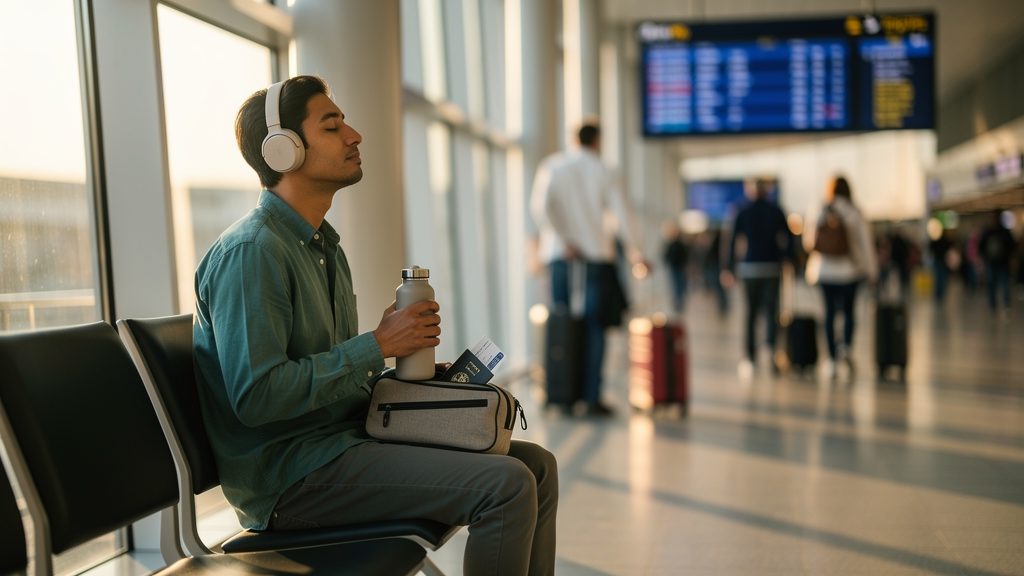
A few minutes of slower breathing, headphones in a noisy terminal, a brief walk, or simply moving to a less crowded area can give you enough separation to think clearly about what needs to happen next.
Most importantly, do not treat the itinerary as a test you have to pass.
Missing one attraction, moving a dinner reservation, or returning to the hotel earlier than planned can protect the experiences that matter more later in the trip.
Start With a Morning Ritual That Anchors You
Before the chaos begins, build a moment of calm.
Even five minutes of intentional stillness can change the tone of your entire day.
Stretch.
Breathe.
Journal.
Sip your coffee slowly.
Listen to a song that makes you feel strong.
The goal isn’t productivity—it’s presence.
A grounding ritual helps you start the day with clarity, not cortisol.
It reminds your nervous system that you’re in control, even when the schedule isn’t.
Why It Works:
- Rituals create emotional stability before external stress hits
- Familiar habits reduce anxiety in unfamiliar environments
- Morning calm improves decision-making and patience
Use Breathwork to Reset Your Nervous System

Stress isn’t just mental—it’s physical.
Your breath is the fastest way to interrupt the stress response.
Use the 4-7-8 method: inhale for 4 seconds, hold for 7, exhale for 8.
Repeat for 2–3 minutes whenever you feel overwhelmed.
Or try box breathing: inhale, hold, exhale, hold—all for 4 seconds each.
These techniques lower your heart rate, reduce cortisol, and shift your brain out of fight-or-flight mode.
They’re discreet, portable, and powerful.
You can do them in line, on a plane, in a cab, or while waiting for a delayed train.
Why It Works:
- Breathwork calms the nervous system in real time
- Portable techniques help you reset anywhere
- Controlled breathing improves focus and emotional regulation
Build Buffer Time Into Your Itinerary
One of the biggest stress triggers during travel is feeling rushed.
When every minute is accounted for, even small delays can feel catastrophic.
Instead, build buffer time between activities.
Leave 30 minutes between check-out and your next transfer.
Schedule meals with breathing room.
Avoid back-to-back bookings unless absolutely necessary.
Buffer time isn’t wasted time—it’s recovery space.
It gives you room to adapt, breathe, and enjoy the journey instead of racing through it.
Why It Matters:
- Buffer time reduces panic during delays
- Flexibility improves emotional resilience
- Spacious schedules allow for spontaneity and rest
Use Movement to Release Tension
Busy travel days often mean long periods of sitting, standing, or rushing.
Your body holds stress in your shoulders, neck, hips, and jaw.
Use movement to release it.
Stretch in your hotel room.
Walk during layovers.
Do a short yoga flow before bed.
Even pacing while waiting for a ride can help.
Movement isn’t just physical—it’s emotional hygiene.
It helps you process tension and reset your mood.
Why It Works:
- Movement releases stored stress from the body
- Physical activity improves mood and energy
- Intentional movement creates emotional clarity
Eat and Hydrate Like You Mean It

Stress is amplified by poor nutrition and dehydration.
Busy travel days often lead to skipped meals, sugar crashes, and caffeine overload.
Start with a balanced breakfast: protein, fiber, healthy fats.
Carry snacks that stabilize blood sugar—nuts, fruit, protein bars.
Drink water consistently, especially before flights or long drives.
Avoid relying on coffee or energy drinks to power through.
Your brain performs better when your body is nourished.
What Smart Travelers Do Differently:
- Prioritize hydration and balanced meals
- Use snacks to prevent energy dips
- Avoid caffeine overload that worsens anxiety
Use Music and Audio to Shift Your State
Sound is a powerful emotional tool.
Create playlists for calm, focus, or motivation.
Use noise-canceling headphones to block chaos in airports or stations.
Listen to guided meditations, affirmations, or calming podcasts during transit.
Music can shift your mood faster than logic.
It bypasses stress and reconnects you to your emotional center.
Why It Works:
- Audio creates emotional boundaries in noisy environments
- Music regulates mood and energy
- Guided tracks offer structure and support during chaos
Create Micro-Moments of Control
When everything feels unpredictable, find something you can control.
Organize your bag.
Clean your phone screen.
Choose your seat.
Repack your snacks.
These small actions give your brain a sense of agency.
They interrupt helplessness and remind you that you’re not just reacting—you’re choosing.
Why It Matters:
- Micro-control reduces anxiety in chaotic settings
- Small wins restore confidence and calm
- Intentional actions shift your mindset from reactive to proactive
Know Your Triggers and Plan Around Them
Self-awareness is your best travel tool.
If crowds stress you out, avoid peak hours.
If hunger makes you irritable, pack snacks.
If noise overwhelms you, carry earplugs or headphones.
If decision fatigue hits hard, pre-plan meals or routes.
Stress isn’t random—it’s patterned.
Knowing your triggers helps you design a day that supports your emotional stability.
Why It Works:
- Planning around triggers prevents emotional spirals
- Self-awareness improves travel satisfaction
- Proactive choices reduce reactive stress
Give Yourself Permission to Pause
You don’t have to power through everything.
If you’re overwhelmed, step outside.
Sit down.
Close your eyes.
Cancel a plan.
Take a breath.
Busy travel days often reward hustle—but your nervous system rewards rest.
Pausing isn’t weakness.
It’s wisdom.
Why It Matters:
- Pausing prevents burnout and emotional overload
- Rest improves clarity and decision-making
- Permission to slow down builds resilience
FAQ – How Do You Keep a Packed Travel Day from Becoming Overwhelming?
What Causes the Most Stress on Busy Travel Days?
Rushing, uncertainty, hunger, crowds, noise, delays, and too many decisions can all pile up during a demanding itinerary.
The problem often becomes worse when several of those pressures happen at the same time.
A late transfer may not be particularly difficult by itself, but it feels very different when you are also hungry, tired, and worried about missing a reservation.
Planning around those combinations is usually more effective than looking for one universal stress-relief technique.How Much Buffer Time Should You Add Between Travel Plans?
Give yourself enough room that a normal delay does not immediately threaten the next reservation.
Thirty minutes may be useful between relatively simple activities, while airports, train stations, hotel changes, and unfamiliar transportation can justify considerably more.
The right amount depends on the destination and how difficult it would be to recover if you arrive late.
An itinerary with breathing room is usually more enjoyable than one that looks efficient on paper but requires everything to go perfectly.Which Breathing Techniques Can Help During a Stressful Travel Moment?
Slow, deliberate breathing can give you something simple to focus on when the surrounding environment feels chaotic.
Box breathing uses equal intervals for inhaling, holding, exhaling, and holding again, while other travelers prefer a longer exhale than inhale.
You do not need to follow a complicated sequence for several minutes if that makes you more distracted.
The useful part is creating a short interruption before deciding what to do next.Why Do Food and Hydration Matter on a Busy Travel Day?
Long itineraries make it surprisingly easy to skip meals or realize too late that you have barely had anything to drink.
Hunger and dehydration can make fatigue, headaches, irritability, and difficulty concentrating more noticeable.
Carry a water bottle where appropriate and keep a dependable snack such as nuts, fruit, crackers, or a suitable protein bar available.
That gives you another option when a delay eliminates the meal you expected to have.How Can You Reduce Decision Fatigue While Traveling?
Make routine decisions before the busiest part of the day begins.
Save hotel addresses, transportation details, tickets, reservation confirmations, and backup routes where you can reach them quickly.
Choosing a likely restaurant, airport transfer, or meeting point beforehand also removes one more decision from a stressful moment.
The fewer basic logistics you have to solve while tired, the more attention you can give to unexpected problems that actually require judgment.What Can You Do When Crowds and Noise Become Too Much?
Change the environment when you reasonably can.
Move away from a congested gate, step into a quieter part of the station, use earplugs or noise-reducing headphones, or take a short walk before returning to the problem.
Travelers who know crowds are a major trigger can also schedule popular attractions earlier or later in the day.
Avoiding every busy place is unrealistic, but reducing unnecessary exposure can make a demanding itinerary easier to handle.Does Movement Help During Long and Stressful Travel Days?
It can be useful after long periods of sitting, standing, or waiting.
Walk during a layover, stretch in your hotel room, move around during longer stops, or take a few minutes outside when the schedule allows.
The goal does not need to be a workout.
A small amount of movement can break up the physical stiffness and monotony that often accompany airports, trains, road trips, and long meetings.How Should You Handle a Flight Delay Without Letting It Ruin the Day?
Start with the decisions that actually affect what happens next.
Check the airline app, identify rebooking options, confirm whether your connection or transfer is still realistic, and notify anyone waiting for you when necessary.
Then review reservations later in the day and decide which ones need to move.
Solving the disruption in priority order prevents you from mentally dealing with every possible consequence at the same time.When Should You Drop Something from a Busy Itinerary?
Consider cutting an activity when keeping it would damage several higher-priority parts of the trip.
A rushed attraction may not be worth losing dinner reservations, arriving exhausted at an evening event, or starting the next morning depleted.
Distinguish between something you genuinely care about and something that remains on the schedule only because you originally planned it.
A flexible itinerary gives you permission to protect the experiences that matter most.What Is the Best Overall Strategy for Managing a Demanding Travel Day?
Design the day around flexibility rather than perfect execution.
Build extra time into important transitions, carry food and water, reduce unnecessary decisions, know your personal triggers, and keep backup options for transportation or reservations.
Use short resets when pressure builds instead of waiting until the entire day feels unmanageable.
A successful busy travel day is not one where nothing goes wrong; it is one where the inevitable changes do not take control of everything that follows.