Chicago is a city where history, culture, and modern energy meet in a very real, very walkable way.
From Millennium Park and Navy Pier to neighborhood art walls and university museums, the city rewards curious travelers who like full days and easy transit connections.
You can fill mornings with museums, afternoons with lakefront walks or river cruises, and evenings with theater, music, or deep-dish pizza without ever needing to manage a rental car.
The CTA trains and buses, Metra lines, and bike-friendly routes stitch major sights together, which means smart routing matters just as much as picking the right attractions.
Tools like flight finders such as CheapOair, Kiwi.com, or Omio help you reach O’Hare or Midway at reasonable fares.
Hotel platforms such as Booking.com, Trip.com, Agoda, and Tripadvisor make it easier to base yourself in the Loop, River North, or near the Magnificent Mile so you can spend more time exploring and less time commuting.
Once you are in the city, attraction passes like Go City, timed-entry and guided tours booked through GetYourGuide or Viator, and bike or e-bike rentals from BikesBooking.com help you move between sights smoothly while staying within a clear budget.
Explore The History Of Chicago And Its Defining Moments
Chicago’s story is one of rebuilding, reinvention, and using its lake and rail connections to grow into a major American city.
The city was incorporated in 1837 and quickly became a key transportation link between the Great Lakes and the Mississippi River system.
When the Great Chicago Fire of 1871 devastated large sections of the city, the rebuilding that followed drove innovations in architecture and infrastructure that still shape the skyline today.
You can see that legacy in historic commercial blocks, preserved homes, and museums that treat the fire as a turning point rather than the whole story.
Later chapters include the rise of steel, stockyards, and railroads, the birth of modern skyscrapers, and cultural contributions in jazz, blues, and theater that spread far beyond Illinois.
For visitors, dipping into this history gives context to famous buildings, neighborhoods, and attractions, turning a simple walk into a chance to read the city’s layers.
If you want that history framed clearly, neighborhood and architecture tours booked through GetYourGuide or Viator can weave together museum stops, outdoor viewpoints, and transit rides so you see how those chapters connect on the ground.
Discover Why Chicago Offers Culture, Flavor, And Memorable Experiences
Chicago manages to feel both big and welcoming, with downtown towers and intimate neighborhood blocks existing just a train ride apart.
You can stand in front of masterpieces at the Art Institute in the morning, eat a casual lunch along the Chicago Riverwalk, then finish the night with live music in a smaller venue.
Lake Michigan’s shoreline, city parks, and elevated trails like The 606 add fresh air breaks between cultural stops, which keeps days balanced instead of exhausting.
Food ranges from deep-dish and Italian beef to global tasting menus, and many of the spots locals love sit within a short walk of major attractions.
Because the city’s grid and transit are straightforward, you can plan each day around “clusters” like the Museum Campus, the Loop, or Hyde Park instead of crisscrossing all afternoon.
Passes from Go City can be helpful when you are visiting several paid attractions in a short window, especially if you are combining the Museum Campus with observation decks or cruises.
For more customized days, tours and skip-the-line tickets through GetYourGuide, Viator, or Klook can streamline entry times and routes so you spend more time inside exhibits and less time waiting at ticket windows.
Visit Essential Chicago Attractions That Blend History, Art, And Entertainment
Millennium Park
Millennium Park is the place where many trips to Chicago quietly begin, even if visitors do not realize it when they step off the sidewalk.
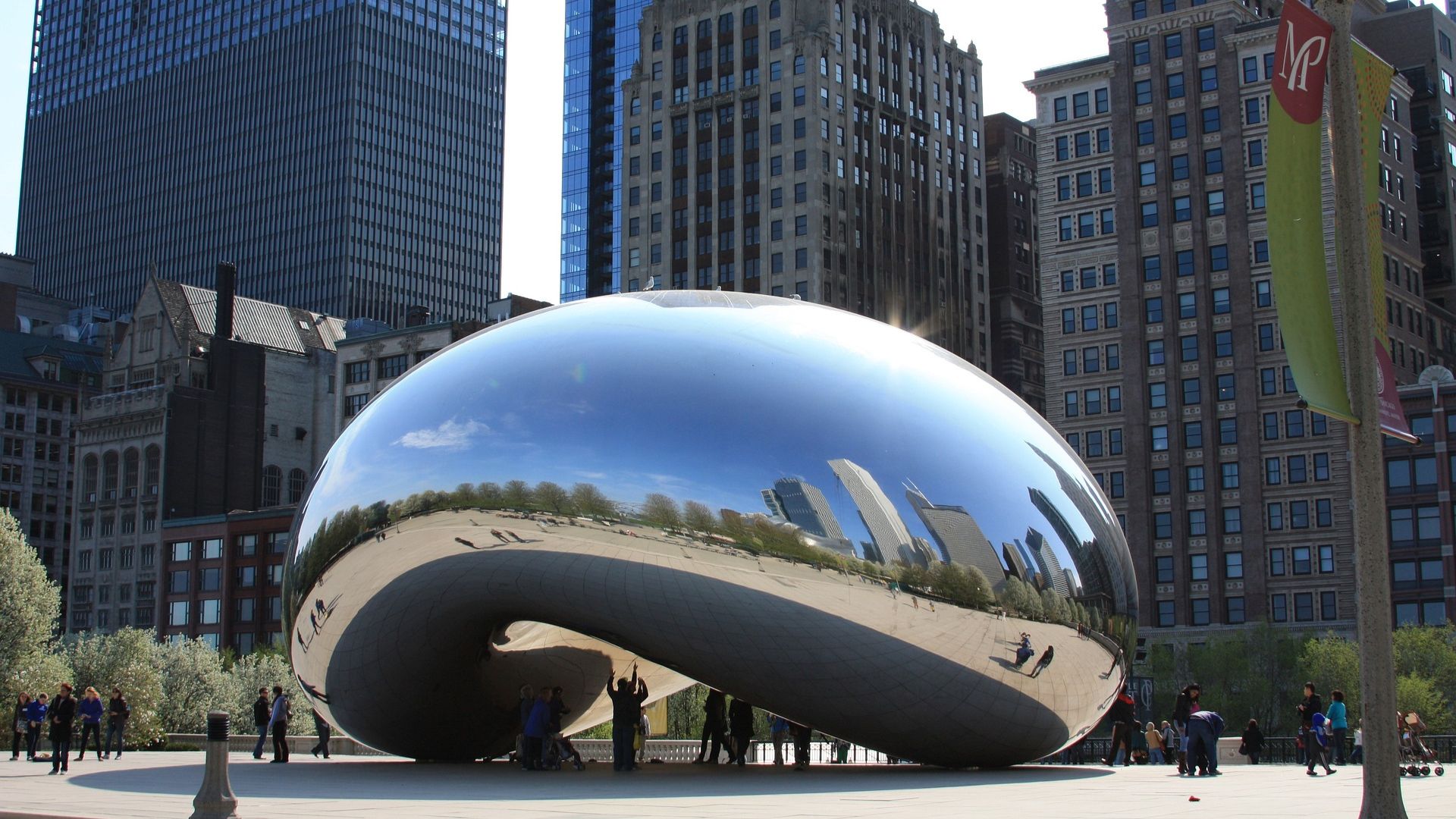
The reflective curves of Cloud Gate, often called “The Bean,” pull people in with mirror-like views of the skyline and the moving crowd all around.
Just steps away, the Crown Fountain, Lurie Garden, and Jay Pritzker Pavilion add water, greenery, and open-air performance space, giving the park a distinctly urban but relaxed feel.
Because it sits at the edge of the Loop and the lakefront, Millennium Park works well as both a morning starting point and an evening wind-down spot.
If you are centering a day around downtown attractions like the Art Institute and the Riverwalk, you can often walk between them and the park in minutes.
Flexible tickets and neighborhood walking tours booked via GetYourGuide or Viator frequently use Millennium Park as a meeting point, which saves you time hunting for random corners or side streets.
For those staying slightly farther north or west, a hop-on route from Big Bus Tours can make the park the anchor of a larger loop that also stops near Navy Pier, the Magnificent Mile, and Museum Campus highlights.
Address: 201 E Randolph St, Chicago, IL 60602
Cost: free
Hours: typically daily; check official site for seasonal hours and event schedules
Website: https://www.chicago.gov/city/en/depts/dca/supp_info/millennium_park.html
Art Institute of Chicago
The Art Institute of Chicago is one of those museums where you recognize pieces long before you realize you have seen them in person.
Galleries with works like “American Gothic” and “A Sunday Afternoon on the Island of La Grande Jatte” sit alongside rooms filled with Asian, African, European, and contemporary art.
To keep the experience from feeling overwhelming, it helps to pick two or three sections you care most about and treat everything else as a pleasant bonus instead of a checklist.
Audio guides, highlights maps, and occasional member or public tours give structure to your visit, especially if you have limited time.
Lines can stretch on busy days, so timed tickets or fast-track entry through partners such as GetYourGuide or Viator can reduce your wait at the door and free up more minutes inside the galleries.
If you are visiting several paid sights in a short span, check whether a pass from Go City aligns with your plans, as bundling the Art Institute with observation decks or river cruises can sometimes bring the per-attraction cost down.
Wear comfortable shoes, bring a light layer for cooler galleries, and allow breathing room in your schedule so you can linger when a specific room unexpectedly captures your attention.
Address: 111 S Michigan Ave, Chicago, IL 60603
Cost: around $32 for adults; discounts for Illinois residents, students, and youth
Hours: typically daily except Tuesdays; check official site for current hours and free days
Website: https://www.artic.edu
Navy Pier
Navy Pier stretches out into Lake Michigan like a small entertainment district pushed over the water.
You will find the Centennial Wheel, seasonal rides, casual and sit-down dining, souvenir shops, theaters, and regular fireworks or special events depending on the time of year.
It works well for mixed-age groups because people can split up for short bursts—some riding the wheel or carousel while others linger over a drink with lake views—then regroup without much effort.
Crowds peak on summer weekends and during major events, so consider early daytime windows or shoulder seasons if you prefer breathing room.
Boat trips that depart from the pier, including architecture cruises and lakefront sightseeing trips, can usually be reserved through GetYourGuide, Viator, or Klook, which helps you lock in times and compare options without walking booth to booth.
Families or groups planning to combine the ride attractions, the Children’s Museum, and other ticketed activities over a day or two may want to compare individual prices with passes from Go City, especially in peak travel months when walk-up rates can climb.
Dress for breezier conditions than you feel downtown, since the pier often catches more wind and cooler air from the lake.
Address: 600 E Grand Ave, Chicago, IL 60611
Cost: entry is free; rides and attractions priced individually
Hours: daily; hours vary seasonally and by business, so check official site
Website: https://navypier.org
Shedd Aquarium
Shedd Aquarium brings marine and freshwater life right to the edge of the city, with tanks and exhibits that immerse you in different environments.
Visitors move from Caribbean reef scenes to river habitats and on to ocean spaces with belugas, dolphins, and other marine mammals.
Because Shedd often attracts families, school groups, and tour groups, timing matters; early entries on weekdays and off-season afternoons tend to feel more relaxed.
General admission, special exhibits, and animal presentations can add up, so it is smart to know what you most want to see and build your ticket choice around that list instead of deciding at the counter.
Skip-the-line or priority-entry tickets from platforms like GetYourGuide and Viator may help you bypass longer queues on busy days and sometimes bundle Shedd with other Museum Campus attractions.
If you are also planning to visit the Field Museum or Adler Planetarium, compare combined pricing with attraction passes from Go City, which can make a full Museum Campus day more economical if you are comfortable pre-committing.
Strollers are welcome, but planning short breaks between galleries and packing light snacks can help younger travelers last longer without getting overwhelmed.
Address: 1200 S DuSable Lake Shore Dr, Chicago, IL 60605
Cost: around $39.95 for adults; pricing varies by ticket type and day
Hours: typically daily; hours and free-day schedules vary by season
Website: https://www.sheddaquarium.org
Field Museum
The Field Museum presents natural history on a scale that matches its grand building.
SUE the T. rex and Máximo the titanosaur anchor a collection that ranges from ancient Egypt to gemstones, fossils, and evolving planet exhibits.
It is the kind of place where you can easily spend most of a day if you love reading displays, or a few targeted hours if you focus on two or three sections.
Maps, mobile tools, and occasional guided experiences help you avoid wandering in circles, which matters when you have limited time or younger travelers.
Timed-entry and highlights tours available through GetYourGuide or Viator can give structure to your visit and keep you on a clear path across the galleries.
If you are combining the Field Museum with Shedd Aquarium or Adler Planetarium, look at passes from Go City, since a well-planned Museum Campus route with multiple entries in a single day can tip the value equation toward a bundled option.
Bring comfortable shoes, expect a fair amount of walking, and consider building in a mid-visit café break to reset your energy.
Address: 1400 S DuSable Lake Shore Dr, Chicago, IL 60605
Cost: around $30 for standard adult admission; pricing varies by package
Hours: daily; hours and free-day schedule vary by season
Website: https://www.fieldmuseum.org
Willis Tower Skydeck
Willis Tower Skydeck puts you more than 100 floors above Chicago, with views that stretch across multiple states on clear days.
The Ledge glass boxes, which extend out from the façade, deliver an extra jolt of excitement as you look straight down at the streets below.
Lines for the elevators and for the Ledge itself can grow long at mid-day and sunset, so it helps to aim for off-peak times or secure timed tickets.
Weather can affect visibility, which is why many visitors check live webcams or recent photos before deciding on a time slot.
Priority entry and flexible tickets sold via GetYourGuide or Viator may reduce waiting and add rebooking options if conditions are not ideal.
When you pair Skydeck with other paid attractions like the Art Institute or Museum Campus on one or two intense sightseeing days, passes through Go City can be worth investigating, especially during peak travel periods when individual prices are highest.
Pack a light layer for potential temperature differences and be prepared for security screening similar to an airport checkpoint.
Address: 233 S Wacker Dr, Chicago, IL 60606
Cost: from around $32 for adults; variable based on time and add-ons
Hours: usually daily with extended evening hours; check official site for specifics
Website: https://theskydeck.com
Museum of Science and Industry
The Museum of Science and Industry feels like a playground for curious minds of all ages.
Exhibits include the U-505 submarine, a coal mine experience, interactive physics and weather stations, and a large model railroad that traces routes across the country.
Hands-on displays encourage kids and adults to experiment, press buttons, and move through experiences rather than just reading wall text.
Because the museum sits in Hyde Park rather than downtown, you will want to think about transit or driving time when planning your day.
Timed tickets for popular exhibits and general admission can be arranged through GetYourGuide and Viator, which helps you start your visit with a clear arrival window.
If your Chicago stay includes multiple Hyde Park attractions, such as the Museum of Science and Industry plus campus museums, check whether a city pass from Go City aligns with your plan or if individual tickets make more sense based on your timing.
Allow at least half a day here, especially with children, and build in food and rest breaks so nobody burns out before exploring their favorite section.
Address: 5700 S DuSable Lake Shore Dr, Chicago, IL 60637
Cost: around $25.95 for adults; some experiences cost extra
Hours: typically daily; hours vary by season and day of the week
Website: https://www.msichicago.org
Chicago Riverwalk
The Chicago Riverwalk runs along the south bank of the Chicago River, turning a functional waterway into a string of outdoor cafés, seating areas, public art, and boat landings.
You can stroll, linger over a drink, or board architecture cruises and water taxis that show the skyline from a lower angle.
Because the Riverwalk lies below street level, it often feels more relaxed than the busy roads just above, especially on mild evenings.
Entry is free, so it works as both a casual break between attractions and a planned anchor for an afternoon or night out.
Many river cruises and architecture tours that depart from Riverwalk piers can be reserved ahead of time through GetYourGuide, Viator, or Klook, allowing you to compare sailing times and narration styles before committing.
If you want to package river cruising with other big-ticket experiences, passes from Go City sometimes include certain tours, which can lighten the cost of a high-impact sightseeing day.
Comfortable shoes and a light jacket for breezy sections will help you enjoy the entire stretch without needing to duck back to the hotel.
Address: Wacker Dr and adjacent paths along the Chicago River, Chicago, IL 60601
Cost: free to walk; boat rides and dining priced individually
Hours: generally open daily; some sections and businesses are seasonal
Website: https://www.chicagoriverwalk.us
Lincoln Park Zoo
Lincoln Park Zoo offers animal encounters in one of the country’s few major zoos with free admission.
The grounds include big cats, primates, reptiles, birds, and farm animals, all within a larger park that also holds ponds, paths, and the Lincoln Park Conservatory.
It is an easy fit for families thanks to its manageable size and the ability to drop in for a few hours without feeling pressure to “get your money’s worth” on a ticket.
Weekends and school holidays can be busy, but arriving earlier in the day often gives you more open viewing areas and less crowded paths.
Because the zoo sits in a broader neighborhood with restaurants, lakefront access, and walking routes, you can use bike or e-bike rentals from BikesBooking.com to connect the zoo with North Avenue Beach, the lakefront trail, and nearby streets without juggling parking meters.
If your broader trip includes several structured experiences, you can balance them by keeping Lincoln Park Zoo as your “flex” stop—an attraction you can move up or down in the schedule depending on weather and energy.
Strollers are welcome, and planning breaks at playgrounds or open lawns can help kids reset between indoor and outdoor exhibits.
Address: 2400 N Cannon Dr, Chicago, IL 60614
Cost: free; donations encouraged
Hours: open daily; hours vary by season
Website: https://www.lpzoo.org
Adler Planetarium
Adler Planetarium sits at the tip of a small peninsula on Museum Campus, giving you open views back toward the skyline and out over Lake Michigan.
Inside, exhibits and sky shows explore planets, stars, space history, and the tools astronomers use to study the universe.
The combination of hands-on displays and immersive domed-theater shows makes it appealing to families and space-curious adults alike.
Because ticket options can include both exhibits and specific shows, it is helpful to glance at the schedule and pick times before you arrive.
Packages and timed tickets available via GetYourGuide or Viator can simplify those choices and sometimes pair Adler with other Museum Campus stops.
If you are planning to combine Adler, Shedd, and the Field Museum within a day or two, the math may favor attraction bundles from Go City, especially if you like the idea of prepaying most admission costs before arrival.
Outside, the walkway around the planetarium offers one of the most photogenic angles on the city, so bring a camera or phone with enough battery for sunset shots.
Address: 1300 S DuSable Lake Shore Dr, Chicago, IL 60605
Cost: general admission around $19 for adults; show add-ons available
Hours: generally closed mid-week in some seasons; check official calendar
Website: https://www.adlerplanetarium.org
Explore Distinctive Chicago Attractions That Surprise And Delight
Garfield Park Conservatory
Garfield Park Conservatory brings together tropical, desert, and seasonal plant displays under glass, making it one of Chicago’s most soothing indoor retreats.
Paths wind through palm-filled rooms, fern-covered spaces, and cactus collections, giving visitors a chance to slow their pace and enjoy greenery even on winter days.
Because the conservatory is free, it works as both a primary outing and a flexible backup plan when weather disrupts outdoor ideas.
Weekdays often feel particularly calm, though weekends can still be pleasant if you arrive earlier in the day.
You can reach Garfield Park Conservatory by CTA Green Line, but if you prefer a more guided experience, some city tours booked through GetYourGuide or Viator include it among their stops.
Travelers who enjoy structuring their days around car-free movement can pair the conservatory with bike time using rentals from BikesBooking.com, treating the visit as the leafy midpoint of a longer loop.
Plan for humid conditions in certain rooms, bring water, and consider a light layer you can easily remove as you move between different climate zones.
Address: 300 N Central Park Ave, Chicago, IL 60624
Cost: free; donations welcome
Hours: typically daily except some holidays; check official site for current hours
Website: https://garfieldconservatory.org
Chicago History Museum
The Chicago History Museum focuses on the city’s own story, from its early growth to the fire, industry, transportation, and politics.
Interactive exhibits and detailed displays help bring key events and everyday life into focus.
You can step into reconstructed spaces, view artifacts, and learn how transportation, immigration, and industry reshaped the city again and again.
The museum does a good job of balancing text, visuals, and hands-on elements, making it approachable for both adults and older children.
To deepen the experience, you might combine a visit here with a neighborhood or architecture walk in nearby areas reserved via GetYourGuide or Viator, which lets you see how the stories on the walls connect to streets outside.
If you are touring multiple history-focused sites across the city, a broader pass from Go City can occasionally support your plans when paired with other high-value admissions like observation decks or major museums.
Expect to spend at least two to three hours here, and build in time to explore the surrounding Lincoln Park area once you are finished.
Address: 1601 N Clark St, Chicago, IL 60614
Cost: around $19 for adults; discounts available for students and seniors
Hours: typically daily; hours vary by season and day
Website: https://www.chicagohistory.org
Museum of Contemporary Art
The Museum of Contemporary Art (MCA) highlights art that speaks directly to the present moment.
Exhibitions often feature installations, photography, sculpture, and multimedia work that ask visitors to look twice and think about how art reflects current culture.
Because shows rotate regularly, you may see something very different on each visit, which appeals to repeat travelers and locals.
Shorter labels and multimedia guides help explain context without overwhelming you with text.
If you enjoy having a framework for what you are seeing, small-group tours and ticket bundles sold via GetYourGuide or Viator can ensure you catch major works and understand the themes of current exhibitions.
Because the MCA sits close to the Magnificent Mile, you can easily combine a museum visit with shopping, dining, or a hop-on circuit using Big Bus Tours, which reduces the number of times you need to cross busy intersections on your own.
Wear comfortable shoes and leave a little time to sit with a view over the plaza or nearby streets between galleries.
Address: 220 E Chicago Ave, Chicago, IL 60611
Cost: around $22 for adults; some discounts or free days available
Hours: generally closed Mondays; check official site for current hours
Website: https://mcachicago.org
Pilsen Murals
Pilsen’s murals transform building walls, viaducts, and side streets into open-air canvases that celebrate Mexican and Mexican-American culture, social themes, and neighborhood pride.
Walking the area, you will see large-scale works that mix bright color, symbolism, and local history.
Because the murals are embedded in an active residential and commercial neighborhood, you can combine art spotting with bakery stops, taquerias, and small shops.
This mix makes Pilsen a strong choice for travelers who like culture, food, and photography in one compact area.
If you prefer some guidance, street-art and food walks in Pilsen are easy to find through GetYourGuide or Viator, which can help you understand the stories behind specific walls instead of treating them as just backdrops.
Because you may cover a fair amount of ground, pairing the neighborhood with bikes from BikesBooking.com can make it easier to move between clusters of murals without relying solely on buses or long walks.
Stay aware of traffic, respect residents’ privacy, and remember that some murals may change over time as artists update or replace them.
Address: Centered around 18th St, Chicago, IL 60608
Cost: free to explore; spending depends on food and shopping
Hours: best in daylight for safety and viewing; murals are outdoors year-round
Website: —
Chicago Cultural Center
The Chicago Cultural Center is worth visiting both for what it hosts and for what it is.
Inside, you will see ornate details, marble staircases, and impressive stained-glass domes that alone justify the stop.
On top of that, the building offers rotating free exhibitions, concerts, film screenings, and talks that highlight local and global artists.
Because admission is free, you can drop in for a short visit or linger longer if you find a show that speaks to you.
Events and exhibits change frequently, so checking the calendar before your trip can help you line up your visit with something that interests you.
Some downtown walking tours sold via GetYourGuide or Viator include the Cultural Center among their stops, giving you a guided look at its architecture and history.
The building is centrally located near the Loop and Millennium Park, making it easy to fold into even a short Chicago stay.
Address: 78 E Washington St, Chicago, IL 60602
Cost: free
Hours: generally daily except some holidays; hours vary by day
Website: https://www.chicago.gov/city/en/depts/dca/supp_info/chicago_culturalcenter.html
Oz Park
Oz Park brings “The Wizard of Oz” into a neighborhood green space using statues of Dorothy, Toto, the Tin Man, the Scarecrow, and the Cowardly Lion.
The park blends these character sculptures with playgrounds, sports fields, and lawns where locals walk dogs or relax.
Children often enjoy hunting for each figure, while adults can appreciate the themed touches and the surrounding Lincoln Park streets.
It is a low-pressure stop: you can spend twenty minutes or a couple of hours depending on your schedule.
Because Oz Park sits in a residential area, it pairs well with casual neighborhood cafés and nearby stretches of the lakefront or zoo.
You can reach the area via CTA or fold it into a bike-friendly route using rentals from BikesBooking.com, treating the park as an easy pause during a longer exploration of the North Side.
Light footwear and a willingness to walk on grass and paths are all you really need for this stop.
Address: 2021 N Burling St, Chicago, IL 60614
Cost: free
Hours: generally open daily from morning to evening
Website: https://www.chicagoparkdistrict.com/parks-facilities/oz-park
The 606
The 606 converts an old elevated rail line into a multi-use trail that stretches across several neighborhoods.
You will find runners, cyclists, families, and commuters using its paved path and access ramps throughout the day.
Public art, landscaping, and neighborhood connections keep the experience interesting, especially if you enjoy seeing how different parts of the city fit together.
Because the trail has multiple entry points, you can treat it as a short stroll near your accommodation or a longer cross-city ride.
Renting bikes through BikesBooking.com is a straightforward way to experience the entire length without overtaxing your feet.
If you want a more guided perspective on the neighborhoods along the route, you can look for small-group urban-exploration tours on GetYourGuide or Viator that include portions of The 606.
Bring water, watch for faster bike traffic, and remember that you can exit at multiple points if the weather shifts.
Address: Entrances along Bloomingdale Trail, roughly at 1800–4200 W, Chicago, IL
Cost: free
Hours: typically open daily from early morning to late evening
Website: https://www.the606.org
Chicago Architecture Center
The Chicago Architecture Center (CAC) gives you a concentrated starting point for understanding the buildings that define the city’s skyline.
Inside, you will see scale models, interpretive exhibits, and displays that cover historic and modern design.
The real strength of the CAC, though, lies in its tours—especially the river cruises and walking routes led by trained docents.
These experiences connect what you learn inside the center with what you see outside, turning glass facades and stone ornament into parts of a larger story.
River cruises and city architecture tours associated with the CAC can often be booked through GetYourGuide, Viator, or directly through CAC links, giving you options for time of day and route.
Because these are some of the city’s most popular structured experiences, they also frequently appear in combination products alongside other paid attractions through passes like Go City, which can stretch your budget if you plan carefully.
Arrive a little early for your tour to check in, use restrooms, and look around the center before boarding a boat or starting a walk.
Address: 111 E Wacker Dr, Chicago, IL 60601
Cost: center admission around $14 for adults; tours priced separately
Hours: open daily; tour schedules vary by season
Website: https://www.architecture.org
The Rookery Building
The Rookery Building is a downtown office building that doubles as a showcase for Chicago School architecture and Frank Lloyd Wright’s design work.
Its lobby combines light, metalwork, and stone in ways that reward slow looking rather than quick photos.
You can step inside during weekday business hours to view the public areas, but guided tours add far more detail and context.
These tours often explain the building’s construction, its place in Chicago’s architectural evolution, and the changes that Wright introduced to the interior.
Conveniently located in the Loop, the Rookery can fit into a morning of downtown sightseeing without requiring a full day.
Ticketed lobby and in-depth tours are available through the Chicago Architecture Center and can be reserved via GetYourGuide or Viator, which lets you pick a time that fits neatly between other attractions.
Plan a bit of extra time to step outside and admire the building’s exterior from across the street after your tour finishes.
Address: 209 S La Salle St, Chicago, IL 60604
Cost: lobby viewing is typically free; guided tours carry a fee
Hours: lobby open weekdays during business hours; tour times vary
Website: https://www.therookerybuilding.com
Promontory Point
Promontory Point sits in Burnham Park and pushes out into Lake Michigan, offering sweeping views back toward the Chicago skyline.
Its limestone steps and grassy areas are popular for picnics, reading, and relaxed conversations on warm days.
Swimmers sometimes enter the lake from designated zones, while others simply enjoy watching the water and boats in the distance.
Because the Point is a neighborhood park rather than a major commercial attraction, it tends to feel unhurried even during busy seasons.
Public transit and Metra connections make it reachable without a car, but if you are staying farther north, you may want to allow extra travel time to account for transfers.
Combining Promontory Point with nearby Hyde Park museums and walks is easier when you plan a clear route, which you can map yourself or support with guided neighborhood tours from GetYourGuide or Viator.
Bring a blanket, sunscreen, and perhaps a light jacket since breezes off the lake can make temperatures feel cooler than the forecast suggests.
Address: 5491 S DuSable Lake Shore Dr, Chicago, IL 60615
Cost: free
Hours: generally open daily; lake access can be affected by weather or local rules
Website: https://www.chicagoparkdistrict.com/parks-facilities/promontory-point
Experience Off-The-Beaten-Path Chicago Attractions For Unique Adventures
Baha’i House of Worship
The Baha’i House of Worship in nearby Wilmette is one of only a handful of Baha’i temples worldwide.
Its white, lace-like exterior rises above carefully maintained gardens that stay quietly busy in good weather.
Inside, the main worship space feels calm and contemplative, welcoming visitors from any background.
Because it sits outside the central city, you will need to allow travel time on the Purple Line or by car.
If you are already planning a North Shore day, combining the temple with lakefront walks and smaller communities can make the trip feel even more rewarding.
Some regional tours on GetYourGuide or Viator include the temple as part of broader North Shore or spiritual-sites itineraries, which can simplify transportation.
Travelers renting a car for wider Chicago-area exploration can compare options through Auto Europe, Discover Cars, or Rentalcars.com, making it easier to sync this visit with suburban stops on their schedule.
Address: 100 Linden Ave, Wilmette, IL 60091
Cost: free
Hours: daily; hours for visitor center and temple interior vary, so check official site
Website: https://www.bahai.us/house-of-worship
Pullman National Monument
Pullman National Monument preserves a community built around railcar manufacturing and early labor history.
The district includes surviving company structures and residential streets that together tell the story of industrial ambition and worker organizing.
Interpretive centers introduce you to the Pullman Company, the 1894 strike, and how this neighborhood fits into broader labor movements.
Walking among the buildings, you can see how design and planning reflected both company needs and a particular view of workers’ lives.
Because the site sits on the Far South Side, you will likely allocate a half-day once you factor in transit or driving.
History-focused travelers may appreciate guided tours or transportation-included experiences from GetYourGuide or Viator, which simplify logistics.
If you are using a rental car to explore several south-side or Calumet-region sites, booking through services like Rentalcars.com or Discover Cars can give you flexibility on vehicle type and pickup points.
Address: 610 E 111th St, Chicago, IL 60628
Cost: free
Hours: visitor center hours vary; outdoor areas accessible daily
Website: https://www.nps.gov/pull
National Museum of Mexican Art
The National Museum of Mexican Art sits in Pilsen and offers a deep look at Mexican, Mexican-American, and Chicano art.
Its collection includes textiles, folk art, painting, sculpture, and contemporary pieces that speak to identity, migration, and cultural continuity.
Because admission is free, the museum is accessible to a wide range of visitors and works well as both a primary outing and a complement to exploring Pilsen’s murals.
The galleries feel manageable in size, which makes it possible to see everything in a focused visit without rushing.
Combining the museum with a mural walk and local dining gives you a balanced day built around art and everyday neighborhood life.
You can add structure with Pilsen-focused cultural tours from GetYourGuide or Viator, which often incorporate both the museum and outdoor works.
Allow time for reflection in the galleries and consider reading about current exhibitions ahead of your visit so you know which themes interest you most.
Address: 1852 W 19th St, Chicago, IL 60608
Cost: free
Hours: generally Tuesday through Sunday; closed Mondays and some holidays
Website: https://nationalmuseumofmexicanart.org
Oriental Institute Museum (to be safe, often called The Institute for the Study of Ancient Cultures)
This University of Chicago museum focuses on ancient Near Eastern civilizations, with artifacts from Mesopotamia, Persia, Egypt, and surrounding regions.
You will see statues, reliefs, tablets, and everyday objects that span thousands of years.
The exhibits are compact but rich in detail, making them well suited to visitors who like depth over sheer size.
Because the museum sits within Hyde Park, it pairs naturally with the Smart Museum of Art or the Museum of Science and Industry.
Public transit and buses can bring you to campus, but you may wish to map out your route carefully, especially if you are unfamiliar with Chicago’s South Side.
Some Hyde Park-centered tours on GetYourGuide or Viator include university stops, which can reduce guesswork.
If you are visiting several campus museums in one day, attractions passes like Go City may be less relevant than simply budgeting time and CTA fares, since many university spaces already have modest or suggested-donation pricing.
Address: 1155 E 58th St, Chicago, IL 60637
Cost: typically a suggested donation; check current guidance
Hours: hours vary by day and season; closed some days of the week
Website: https://isac.uchicago.edu
Smart Museum of Art
The Smart Museum of Art, also at the University of Chicago, presents a collection that spans European, Asian, contemporary, and modern works.
The smaller scale makes it easier to absorb than very large institutions, and thoughtful curation often groups pieces in ways that spark useful comparisons.
Rotating exhibitions keep the experience fresh for repeat visitors and locals.
Labels and programs tend to lean toward interpretation and context without feeling overly academic.
Because admission is typically free, you can visit without feeling pressured to stay for hours, then continue on to nearby campus architecture or Hyde Park streets.
Art-minded visitors may enjoy pairing the Smart Museum with guided Hyde Park or campus walks booked on GetYourGuide, spreading their time between indoor collections and outdoor spaces.
Good shoes and a willingness to walk between university sites will go a long way toward keeping the day comfortable.
Address: 5550 S Greenwood Ave, Chicago, IL 60637
Cost: free
Hours: hours vary by day; closed certain days and holidays
Website: https://smartmuseum.uchicago.edu
Hull House Museum
The Hull House Museum preserves the legacy of Jane Addams and the settlement house movement she helped lead.
It focuses on immigration, social reform, labor, and community organizing in Chicago and beyond.
Exhibits and programs highlight both Addams’s work and the broader efforts of residents and neighbors who used the house as a base for change.
Because the museum sits on a modern university campus, the surrounding environment mixes historic buildings with newer structures.
Visitors interested in social justice, women’s history, or urban change often find this stop especially meaningful.
You can reach the area via the Blue Line, and some themed history tours sold on GetYourGuide or Viator incorporate Hull House as one of several sites.
Leave room in your schedule to sit with some of the material, as it touches on complex issues that still resonate today.
Address: 800 S Halsted St, Chicago, IL 60607
Cost: typically free; donations encouraged
Hours: limited days and hours; check official schedule before visiting
Website: https://www.hullhousemuseum.org
Lillstreet Art Center
Lillstreet Art Center functions as a creative hub for classes, workshops, and galleries, particularly focused on ceramics and fine craft.
You can browse exhibitions, shop for handmade pieces, or sign up for multi-week or single-session classes depending on your schedule.
The environment tends to feel friendly and community-oriented, reflecting its role as both a school and a gathering point.
If you are interested in taking home something more personal than a typical souvenir, the gallery shop can be a strong option.
The center sits in a neighborhood setting, making it easy to combine with local cafés or nearby streetscapes.
Creative-focused city itineraries or neighborhood tours on GetYourGuide or Viator sometimes include Lillstreet among their optional stops.
Expect a slower pace here compared to big downtown attractions, and give yourself time to talk with staff or artists if you are curious about the classes.
Address: 4401 N Ravenswood Ave, Chicago, IL 60640
Cost: free to enter; class and workshop fees vary
Hours: hours vary by day; check official site for gallery and shop times
Website: https://lillstreet.com
Glessner House Museum
Glessner House Museum showcases a late-19th-century residence designed by Henry Hobson Richardson on Prairie Avenue.
The home’s heavy stone exterior and carefully arranged interior feel very different from more ornate Victorian buildings of the same era.
Guided tours walk you through rooms, furnishings, and stories that illuminate the lives of the Glessner family and their neighbors.
Because visits are led by guides, you get both architectural detail and social context rather than just a quick look around.
The museum’s South Loop location makes it easy to pair with other historic homes or with nearby parks and museums.
Tickets and select small-group experiences may be available through GetYourGuide or Viator, particularly during special events.
Check tour times carefully in advance so you arrive when a group is forming rather than between sessions.
Address: 1800 S Prairie Ave, Chicago, IL 60616
Cost: around $20 for standard adult tours; special programs may differ
Hours: limited tour days and times; reservations often recommended
Website: https://www.glessnerhouse.org
Chicago Maritime Museum
The Chicago Maritime Museum focuses on how the Great Lakes and waterways shaped the city’s development.
Exhibits cover shipping, shipbuilding, recreational boating, and the environmental story of the region’s waters.
Models, artifacts, and interpretive panels help connect what you see on today’s river and lakefront to earlier eras of trade and travel.
It is a compact museum, so you can explore thoroughly in a couple of hours without feeling rushed.
Because it sits away from the main tourist corridor, you will want to check transit routes or parking options ahead of time.
Some specialized tours available on GetYourGuide or Viator tie in maritime themes with river or lake cruises, which can make sense if you are especially interested in this side of Chicago’s history.
Consider pairing the museum with a walk along the nearby river or an evening cruise to connect the exhibits with present-day views.
Address: 1200 W 35th St, Chicago, IL 60609
Cost: around $10 for adults; discounts for students and seniors
Hours: limited days and hours; check official schedule before visiting
Website: https://www.chicagomaritimemuseum.org
Beverly Arts Center
The Beverly Arts Center brings theater, music, film, and visual arts to the Beverly neighborhood on the city’s southwest side.
Its calendar includes performances, exhibitions, classes, and community events for adults and children.
Inside, you will find gallery space, performance venues, and classrooms that keep the building busy across the week.
Because programming changes frequently, the experience depends heavily on what is on during your visit.
Checking the schedule ahead of time can help you align your trip with a particular show, festival, or exhibition that matches your interests.
If you prefer structured transportation and context, neighborhood arts tours or event-focused shuttles found through Viator may occasionally include the center.
Basing yourself closer to downtown and using commuter rail or ride-share creates a relaxed way to enjoy an evening event here without worrying about parking far from home.
Address: 2407 W 111th St, Chicago, IL 60655
Cost: free entry to building; ticket and class prices vary by program
Hours: hours depend on events and class schedules; check calendar for details
Website: https://www.beverlyartcenter.org
Immerse Yourself In Chicago Attractions That Capture The City’s Spirit
Chicago’s attractions are easier to enjoy when you treat them as parts of a few well-planned days rather than a long checklist.
One approach is to dedicate a day to the Museum Campus, another to downtown and the Riverwalk, and a third to neighborhoods such as Pilsen, Lincoln Park, or Hyde Park.
Staying central through platforms like Booking.com, Trip.com, Agoda, or Tripadvisor helps you reach those clusters without long commutes.
Travel insurance from providers like World Nomads, VisitorsCoverage, Insubuy, or EKTA can protect non-refundable tours and tickets, especially if weather or airline disruptions affect your schedule.
Once in the city, attraction passes from Go City, tours and timed entries via GetYourGuide, Viator, or Klook, and bike rentals on BikesBooking.com work quietly in the background to cut lines and backtracking.
If you are connecting through major airports where flight delays are possible, services such as Compensair and AirHelp can review whether you qualify for compensation after long disruptions.
On the digital-safety side, tools like Incogni and NordVPN can reduce data-broker exposure and keep your browsing private when you log into travel accounts on public Wi-Fi.
With a thoughtful mix of planning and flexibility, Chicago’s mix of museums, parks, riverfront paths, and neighborhood streets becomes less overwhelming and more like a series of memorable days that fit together naturally.
FAQ – Chicago Attractions That Inspire Wonder, Culture, And Memorable Experiences
What Are the Must-See Attractions for First-Time Visitors to Chicago?
Most first-time visitors focus on a combination of downtown and Museum Campus attractions.
Millennium Park, the Art Institute of Chicago, Navy Pier, the Chicago Riverwalk, and the Willis Tower Skydeck offer a strong introduction to the city’s art, architecture, and lakefront setting.
Adding Shedd Aquarium, the Field Museum, or Adler Planetarium rounds out the picture with science and natural history.
If you plan to visit several of these within two or three days, compare individual pricing with passes from Go City, and consider timed entries reserved via GetYourGuide or Viator to keep lines under control.
Why Should I Visit Millennium Park in Chicago?
Millennium Park brings public art, gardens, and performances together in the heart of downtown.
Cloud Gate’s reflective surface makes the skyline feel interactive, while Crown Fountain and Lurie Garden offer water and greenery just steps from office towers.
Free concerts at Jay Pritzker Pavilion can turn an ordinary evening into a relaxed cultural event.
Because the park sits at a natural crossroads, it fits easily into days built around the Art Institute, the Chicago Cultural Center, or the Riverwalk.
What Makes Navy Pier A Popular Chicago Attraction?
Navy Pier combines lake views, attractions, and entertainment in one walkable space.
The Centennial Wheel, seasonal rides, and Chicago Children’s Museum appeal to families, while restaurants and bars give adults a comfortable place to linger.
From the pier, you can board architecture cruises and lakefront boats that reveal the skyline from the water.
Tickets for those cruises are easy to compare and reserve through GetYourGuide, Viator, or Klook, which helps you lock in departure times before you arrive.
Which Chicago Museums Offer Unique Cultural Experiences?
The Art Institute of Chicago anchors the city’s fine-arts scene with a collection that spans centuries and continents.
The Museum of Contemporary Art focuses on newer work that responds to current cultural and social themes.
Neighborhood and university museums such as the National Museum of Mexican Art, the Smart Museum of Art, and the Institute for the Study of Ancient Cultures deepen the picture by highlighting specific communities and regions.
If you prioritize art and culture, consider clustering these museums by location and using transit or bikes from BikesBooking.com to connect them efficiently.
Where Can I Find Outdoor Attractions in Chicago?
For big landscaped spaces, Millennium Park, the Chicago Riverwalk, Lincoln Park Zoo and Conservatory, Garfield Park Conservatory, The 606, and Promontory Point stand out.
White-tablecloth museums and lake views mix well when you plan days that blend indoor galleries with walks or bike rides.
Bikes rented through BikesBooking.com make it easier to string together Oz Park, lakefront segments, and The 606 without relying on a car.
If you are visiting in winter, indoor options like Garfield Park Conservatory and the Museum Campus still keep you close to nature and water views without extended time in the cold.
What Neighborhoods Provide Authentic Chicago Experiences?
Pilsen, Hyde Park, Lincoln Park, Wicker Park, and Beverly each show different sides of Chicago life.
Pilsen mixes murals and Mexican-American culture, Hyde Park balances university life with museums and lakefront paths, and Lincoln Park offers a blend of historic homes, zoo, and green space.
Wicker Park leans into independent shops and nightlife, while Beverly anchors its arts center and historic residential streets.
Neighborhood food and art tours via GetYourGuide or Viator can help you navigate these areas without worrying about where to start.
How Do Hurricanes Affect Travel to Chicago Attractions?
Chicago itself is far from the coast, so you will not see storm surge or direct hurricane impacts at attractions.
However, strong Gulf and Atlantic storms can disrupt flights into O’Hare and Midway, which in turn may affect the first or last days of your trip.
Travel insurance from companies such as World Nomads, VisitorsCoverage, Insubuy, or EKTA can help cover non-refundable hotels, tours, and attraction tickets when severe weather forces changes.
If you experience long delays or cancellations, services like Compensair and AirHelp can review whether you qualify for compensation under airline or regional rules and handle much of the paperwork for you.
What Scams Should I Watch for During Hurricane Season Travel?
Most hurricane-related scams target travelers with fake emails, phone calls, or messages claiming to be from airlines or hotels.
Common tactics include asking you to “confirm” card details, pay extra fees to keep a booking, or click links to unofficial payment pages.
To stay safe, access your bookings by typing airline, hotel, or platform addresses—such as Booking.com, Trip.com, or Tripadvisor—directly into your browser rather than using unsolicited links.
You can also reduce data-broker exposure by using Incogni and protect your browsing on public Wi-Fi with a VPN like NordVPN, especially when you log in to financial or travel accounts while on the road.
FAQ – Dallas Attractions That Inspire Culture, History, and Memorable Journeys
What Are the Best Attractions for First-Time Visitors to Dallas?
First-time visitors should prioritize a mix of cultural and historical highlights.
The Sixth Floor Museum, Reunion Tower, and Dallas Museum of Art provide a balanced introduction.
Adding Klyde Warren Park or White Rock Lake creates breathing space in the itinerary.
Evenings in Deep Ellum or Bishop Arts District deliver authentic dining and music experiences.Why Is the Sixth Floor Museum a Must-See in Dallas?
The Sixth Floor Museum immerses visitors in a pivotal moment of American history.
Exhibits combine narrative, artifacts, and multimedia for deeper context.
Guided tours booked through Viator or GetYourGuide enhance understanding of Dealey Plaza.
Visitors consistently describe the experience as reflective and meaningful.What Makes Reunion Tower a Signature Dallas Experience?
Reunion Tower offers panoramic views that orient travelers to the city’s layout.
Interactive displays help identify neighborhoods and landmarks.
Bundled tickets through Viator streamline scheduling and reduce wait times.
The tower pairs seamlessly with nearby downtown attractions.Which Dallas Museums Provide Unique Cultural Perspectives?
The Dallas Museum of Art delivers a global collection with free admission.
The Perot Museum of Nature and Science engages curiosity with hands-on exhibits.
Smaller institutions like the Nasher Sculpture Center and Latino Cultural Center provide focused experiences.
Structured highlights tours help visitors maximize time across multiple museums.Where Can Families Find Engaging Attractions in Dallas?
The Perot Museum excites children with dinosaurs and interactive science.
The Dallas World Aquarium blends marine life with rainforest habitats.
Klyde Warren Park offers playgrounds and food trucks for all ages.
Combination tickets simplify logistics for family groups.How Do Dallas Neighborhoods Deliver Authentic Local Experiences?
Deep Ellum showcases murals, music, and nightlife energy.
Bishop Arts District blends boutique shopping and dining in a walkable setting.
Trinity Groves offers riverfront patios with skyline views. Neighborhood tours provide insider context for first-time visitors.What Outdoor Attractions Highlight Dallas’s Natural Side?
The Dallas Arboretum and White Rock Lake combine gardens and water views.
Klyde Warren Park and Turtle Creek Park provide green breaks downtown.
Cedar Ridge Preserve offers rugged hiking trails and hilltop views.
Bike rentals streamline movement between outdoor sites.How Can Travelers Explore Dallas Without a Car?
DART light rail connects downtown attractions efficiently.
Bike rentals allow flexible movement between parks and museums.
Central hotels make walking tours accessible.
Guided itineraries optimize routes for car-free exploration.How Do Hurricanes Affect Travel Plans to Dallas?
Dallas is inland, so attractions are not directly impacted by storm surge.
Major Gulf storms can disrupt flights into DFW and Love Field.
Travel insurance from VisitorsCoverage, Ekta, Insubuy, or Compensair protects prepaid hotels and tours.
Compensation services review claims if airline disruptions occur.What Scams Should Travelers Avoid During Hurricane Season?
Fraudsters often pose as airlines or hotels requesting new fees.
Fake emails and calls attempt to secure card details.
Log in directly to airline or hotel accounts instead of clicking links.
Protect personal data with services like Incogni and VPNs when checking reservations.