
Make the Most of Your Trip
Compare the top tours, passes, and experiences — find what fits your travel style.
Short Excerpt
- Sleeping well in hotels and hostels becomes easier when you control the problems that travel introduces most often: unfamiliar noise, unwanted light, uncomfortable room conditions, shared spaces, and disrupted routines.
- Simple tools such as an eye mask, earplugs, white noise, better room or bunk selection, and a familiar bedtime routine can make imperfect accommodations much easier to sleep in.
- Jet lag requires a different approach, with daylight exposure, local meal timing, and carefully managed naps helping your body adjust to the destination.
Quick Take
- In hotels, request rooms away from elevators, ice machines, service areas, busy streets, and other predictable sources of nighttime noise.
- Close curtain gaps with clips or hangers, block light leaking beneath the door, and use an eye mask when the room never becomes dark enough.
- In hostels, smaller dorms, privacy curtains, quiet-hour policies, and beds away from doors or bathrooms can reduce overnight interruptions.
- Keep earplugs, an eye mask, and a compact white-noise option in your carry-on so your basic sleep setup travels with you.
- Maintain a short bedtime routine even when the room changes because familiar cues can make an unfamiliar sleeping environment easier to settle into.
- When jet lag is the bigger problem, use daylight and local-time meals to help shift your body clock rather than relying only on what happens at bedtime.
Sleep Better In Hotels And Hostels Without Letting Noise, Light, Or Jet Lag Ruin Your Trip
A hotel can look perfect at check-in and still become frustrating the moment you try to sleep.
Thin walls, elevator traffic, street noise, rattling air conditioning, bright hallway light, and curtains that never quite close can turn an expensive room into a poor place to rest.
Hostels introduce a different set of problems.
Roommates arrive at midnight, alarms go off before sunrise, backpacks unzip in the dark, phones glow from neighboring bunks, and someone always seems to be entering or leaving when you finally start drifting off.
You cannot control every part of either environment, but you can control much more than it first appears.
Room selection, bunk choice, darkness, sound, temperature, and a few familiar bedtime cues can substantially change how easy it is to settle into an unfamiliar bed.
Start before you unpack.
In a hotel, ask for a room away from elevators, ice machines, service areas, nightlife, and noisy streets when possible.
In a hostel, look for smaller dorms, privacy curtains, quiet-hour policies, and a bed position that limits foot traffic around you.
Then create your own portable sleep environment.
An eye mask can solve poor blackout curtains, earplugs or white noise can soften unpredictable sounds, and a familiar pillowcase or other small bedtime item can make the room feel less foreign without filling your luggage.
Light control can be surprisingly simple.
Curtain gaps can sometimes be closed with clips or a trouser hanger, while a rolled towel near the bottom of the door may reduce both hallway light and some outside noise.
Your normal routine matters too.
Dim the lights, reduce screen exposure, read, journal, stretch, listen to familiar audio, or follow whatever short sequence usually tells your body that the active part of the day has ended.
Jet lag needs more than a better room.
Spend time in natural daylight after arrival, begin eating on the destination’s schedule, and use naps carefully so they do not keep reinforcing the time zone you left behind.
You do not need a silent luxury suite or a private hostel room to sleep well while traveling.
The goal is to remove enough of the disturbances you can control that the ones you cannot control stop dominating the night.
Hotel Hacks: Reclaiming the Room
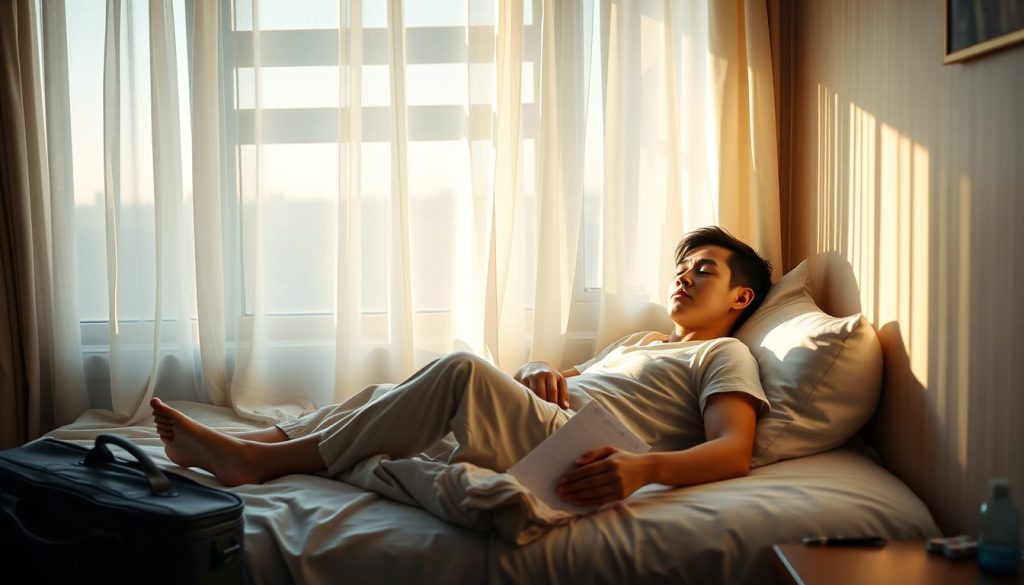
A hotel room looks polished when you first walk in.
The crisp sheets, the folded towels, the promise of rest.
But once the door closes, the flaws reveal themselves.
The curtains leak light from the street below.
The hallway carries every sound—luggage wheels, late‑night conversations, the ding of an elevator that never seems to stop.
The thermostat drifts between too warm and too cold, leaving you restless under the covers.
This is where you take control.
Clamp the curtains shut with clips or pin them with a hanger.
Roll a towel under the door to block the glow and the chatter.
Ask for a room away from elevators, ice machines, and street‑facing windows.
Bring your own pillowcase, carrying the scent of home, so your nervous system recognizes safety.
And set the climate early—cool air, dim lights, and a ritual that tells your body it’s time to let go.
Hotels are not always havens, but with the right hacks, you can turn them into sanctuaries.
Picture yourself in New York, where the city never sleeps.
Your hotel room overlooks a street alive with honking taxis and flashing lights.
You clip the curtains shut, slide in earplugs, and spray lavender mist across your pillow.
The chaos outside fades, and the room becomes your cocoon.
Or imagine a boutique hotel in Paris, where the walls are thin and the neighbors are loud.
You slip on noise‑canceling headphones, play white noise, and let the sound of rain drown out the chatter.
Sleep arrives, not because the room is perfect, but because you made it yours.
Recap – Hotel Sleep Anchors:
- Curtain hacks erase stray light.
- Room selection silences the hallway.
- Familiar scents and fabrics cue rest.
Hostel Hacks: Building a Cocoon in Chaos
Hostels are alive in a way hotels never are.
There’s laughter in the common room, footsteps on the stairs, and the constant shuffle of travelers arriving and leaving at all hours.
It’s vibrant, but it’s rarely quiet.
The dorm itself is a world of its own.
Beds stacked in rows, backpacks spilling into walkways, the sound of zippers and whispered conversations long after midnight.
You can’t control the room, but you can control your corner of it.
Choose wisely: avoid party hostels if sleep is your priority.
Look for dorms with privacy curtains, smaller rooms, or quiet‑hour policies.
Claim the right bed—bottom bunks are cooler and easier to access, top bunks give you distance from foot traffic.
Pack your defenses: earplugs, an eye mask, and even a lightweight scarf to drape as an extra curtain.
Keep your rhythm, even if roommates come and go.
Your body thrives on routine, and consistency is the strongest signal you can send.
And when all else fails, accept imperfection.
Hostels are communal by nature.
Relaxing into that truth helps you sleep better than fighting every disturbance.
Picture yourself in a hostel in Berlin.
The dorm is alive with music drifting from the street, footsteps in the hall, and the sound of zippers.
You pull your curtain closed, slip in earplugs, and let the world fade.
Or imagine a hostel in Tokyo, where the bunks are stacked like capsules.
The room is quiet, but the glow of phones keeps you awake.
You slip on an eye mask, breathe deeply, and drift into sleep.
Recap – Hostel Sleep Anchors:
- Privacy curtains and smart bed choice matter.
- Earplugs and masks create a cocoon.
- Routine steadies you when the room doesn’t.
Rituals That Work Anywhere
Rituals are the secret weapon.
They are the thread that ties together every strange bed, every noisy hallway, every restless night.
Dim the lights thirty minutes before bed.
Sip chamomile or peppermint tea.
Breathe in a slow rhythm—four counts in, seven counts held, eight counts out.
Write down the day’s static in a journal so your mind doesn’t carry it into dreams.
These rituals don’t just help you sleep.
They remind you that rest is something you can create, no matter where you are.
Imagine sipping tea in a hostel kitchen, the chatter fading as you focus on the warmth in your hands.
Or journaling in a hotel room, the glow of the lamp soft and steady, your thoughts spilling onto the page.
These small acts are anchors.
They tell your body it’s safe to rest.
Recap – Universal Sleep Anchors:
- Light, breath, and tea cue rest.
- Journaling clears the static of the day.
- Rituals travel with you, wherever you land.
Sleep as the Foundation of Discovery
Sleep is not a luxury.
It is the foundation of every good day, the invisible scaffolding that holds up your mood, your focus, and your joy.
Without it, even the most beautiful destination feels dulled at the edges.
With it, the world sharpens into color.
Imagine waking in Rome after a night of deep rest.
The city feels alive, the coffee tastes richer, the streets hum with possibility.
Or picture yourself in Bangkok, stepping into the morning heat with energy instead of exhaustion.
Sleep makes every moment brighter.
Hotels and hostels will never be perfect.
But with the right hacks, you can create a sanctuary anywhere.
And when you do, you don’t just travel—you thrive.
FAQ – How Do You Sleep Well in Hotels and Hostels When the Room Is Working Against You?
How Can You Make a Noisy Hotel Room Easier to Sleep In?
Start by reducing the sounds you can control.
Ask for a room away from elevators, ice machines, service areas, busy streets, and nightlife when the hotel has another option available.
Earplugs, sleep headphones, white noise, or the steady sound of a fan can make intermittent hallway and street noise less noticeable.
If the disturbance is severe and persistent, requesting a different room may work better than trying to mask it all night.What Can You Do When Hotel Curtains Let in Too Much Light?
Close the curtains as tightly as possible and look for the gap that is allowing light through.
Clips or the clamping portion of a trouser hanger can sometimes hold curtain panels together without damaging them.
An eye mask provides a more dependable solution when exterior signs, early sunrise, or hallway lighting still reaches the bed.
A rolled towel near the door can also reduce light spilling in from the corridor.Which Hostel Bed Is Best If You Are a Light Sleeper?
Choose based on the disturbances that bother you most.
A bed away from the entrance, bathroom, lockers, or main walkway can reduce the number of people passing beside you during the night.
Lower bunks are easier to enter and leave, while upper bunks can provide more separation from floor-level foot traffic.
Dorm size, privacy curtains, and quiet-hour policies may ultimately affect your sleep more than whether you choose the top or bottom bunk.How Can You Create More Privacy in a Hostel Dorm?
Start with a hostel that already provides individual bunk curtains when possible.
An eye mask and earplugs can create additional separation from the light and activity around you.
Some travelers also carry a lightweight scarf or similar fabric for added visual privacy when the bunk design allows it safely.
Keep the area around your bed organized so you can settle in without repeatedly searching through bags after the room becomes quiet.What Should You Keep in a Travel Sleep Kit?
An eye mask and comfortable earplugs provide the most immediate control over two common travel-sleep problems.
A compact white-noise option, sleep-friendly headphones, familiar pillowcase, or other lightweight bedtime item can make the kit more useful without taking much luggage space.
Keep these items in your carry-on rather than checked baggage so they remain available during overnight flights, long delays, and unexpected hotel changes.
A small kit you consistently bring is more valuable than a complicated collection that is inconvenient to pack.Can a Familiar Bedtime Routine Really Help in an Unfamiliar Room?
Yes, because the routine gives you something consistent when the sleeping environment keeps changing.
You might dim the lights, read, journal, stretch, listen to familiar audio, or prepare for the next morning in the same general order each night.
The routine does not need to be elaborate.
Repeating a few recognizable steps can make the transition from sightseeing and travel logistics to sleep feel less abrupt.How Should You Handle Jet Lag When You Arrive at a Hotel or Hostel?
Begin adjusting to the destination’s schedule as soon as reasonably possible.
Natural daylight can help shift your body clock, while eating meals on local time reinforces the new daily pattern.
Short naps may help when you are exhausted, but long daytime sleep can make it harder to fall asleep at the destination’s normal bedtime.
Treat the entire day as part of the adjustment instead of expecting one nighttime trick to reset your schedule.Are Sleep Supplements Necessary for Jet Lag?
Not necessarily.
Some travelers use melatonin for circadian adjustment, but timing, dose, individual health factors, and other medications can affect whether it is appropriate.
Daylight exposure, local meal timing, and a consistent destination bedtime remain important even when a supplement is used.
Speak with a qualified healthcare professional before starting a new supplement, particularly if you take medication or have health concerns.What Should You Do When Someone Keeps Waking You in a Hostel?
Use the tools that can reduce the disturbance first, such as earplugs, an eye mask, or white noise.
If another guest is repeatedly violating quiet-hour rules, hostel staff may be able to address the problem or move you to another bed or room.
Avoid turning a minor overnight irritation into a confrontation when staff can handle it more effectively.
For future stays, smaller dorms or private rooms may be worth paying for if interrupted sleep repeatedly damages the following day.What Makes the Biggest Difference When Trying to Sleep Anywhere?
Control several small variables instead of searching for one perfect sleep hack.
Choose the quietest room or bunk you can, block unwanted light, reduce unpredictable noise, manage the temperature, and keep a familiar nighttime routine.
When crossing time zones, add daylight exposure and local scheduling to that basic setup.
An unfamiliar room does not have to feel exactly like home; it only needs to become comfortable enough that the environment stops competing with your need to sleep.