
Make the Most of Your Trip
Compare the top tours, passes, and experiences — find what fits your travel style.
Short Excerpt
- Sleeping well in hotels and hostels becomes easier when you control the three things unfamiliar rooms disrupt most: noise, light, and your normal bedtime routine.
- A compact sleep kit, smarter room selection, strategic daylight exposure, and a few familiar nighttime habits can make travel sleep more predictable.
- Small decisions made before check-in—such as requesting a quieter room or choosing the right hostel bunk—can protect the energy you need for the next day.
Quick Take
- Pack an eye mask, comfortable earplugs, supportive travel pillow, and other familiar sleep essentials instead of relying entirely on whatever the property provides.
- In hotels, request rooms away from elevators, ice machines, nightlife, and busy streets; in hostels, smaller dorms and beds away from doors or bathrooms can reduce interruptions.
- Control unpredictable noise with earplugs, sleep-friendly headphones, white noise, or a fan when one is available.
- Use daylight after arrival and keep nighttime lighting low when adjusting to a new time zone rather than expecting your body clock to reset immediately.
- Keep your bedtime routine recognizable even while traveling, and avoid turning late caffeine, alcohol, heavy meals, or endless screen time into additional sleep obstacles.
Sleep Better In Hotels And Hostels By Controlling What Keeps You Awake
A great hotel room does not guarantee a great night of sleep, and a hostel dorm can introduce even more variables you cannot control.
Unfamiliar mattresses, hallway noise, snoring roommates, glowing electronics, thin curtains, street traffic, room temperature, and jet lag can keep you awake even after a day that should have left you exhausted.
The good news is that you do not need perfect sleeping conditions to rest well while traveling.
A small sleep kit, smarter room or bunk selection, better control over noise and light, and a familiar nighttime routine can remove many of the problems that make hotels and hostels difficult for light sleepers.
Your choices before check-in can make a surprisingly large difference.
Requesting a room away from elevators and ice machines, checking reviews for noise complaints, choosing a smaller hostel dorm, or avoiding a bunk beside the bathroom can prevent disturbances before you ever unpack.
Once you are in the room, simple adjustments matter just as much.
Earplugs or white noise can soften unpredictable sounds, an eye mask can compensate for poor blackout curtains, and strategic daylight exposure can help your body adjust when a new time zone has disrupted your normal sleep schedule.
You do not have to recreate your bedroom at home.
The goal is to control enough of the environment that your body can recognize when it is time to sleep, recover from the day, and give you the energy to enjoy what you traveled there to experience.
The sleep hacks below focus on the problems travelers actually encounter in hotels and hostels, from noisy rooms and uncomfortable beds to light, food, jet lag, and a mind that refuses to switch off.
Build a Sleep Kit That Travels With You
Start with the essentials.
A good sleep kit can turn any bed into a sanctuary.
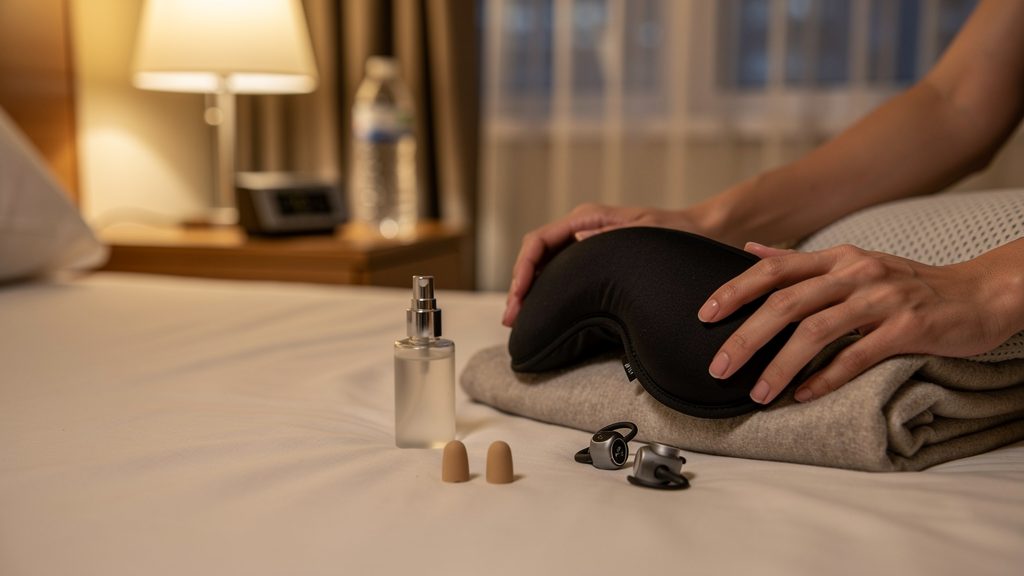
Pack earplugs—foam for comfort, silicone for durability—and an eye mask that blocks light completely.
Add a travel pillow that supports your neck, not just your head, especially if you’re dealing with unfamiliar mattresses or hostel bunks.
Include a small bottle of lavender essential oil or a sleep spray to create a familiar scent cue that signals bedtime.
Noise-canceling headphones or sleep earbuds can help in hostels or urban hotels where ambient noise is unpredictable.
And don’t forget a lightweight sleep sack or travel sheet—especially in hostels where bedding may be questionable or shared.
These items aren’t just accessories—they’re your defense against sensory chaos.
They help you reclaim control over your sleep environment, even when everything else is unfamiliar.
Why It Works:
- Sensory control reduces light and noise disruptions
- Familiar scents help trigger sleep faster
- Travel sheets add comfort and hygiene in shared spaces
Choose Your Room Like a Sleep Strategist
Not all rooms are created equal.
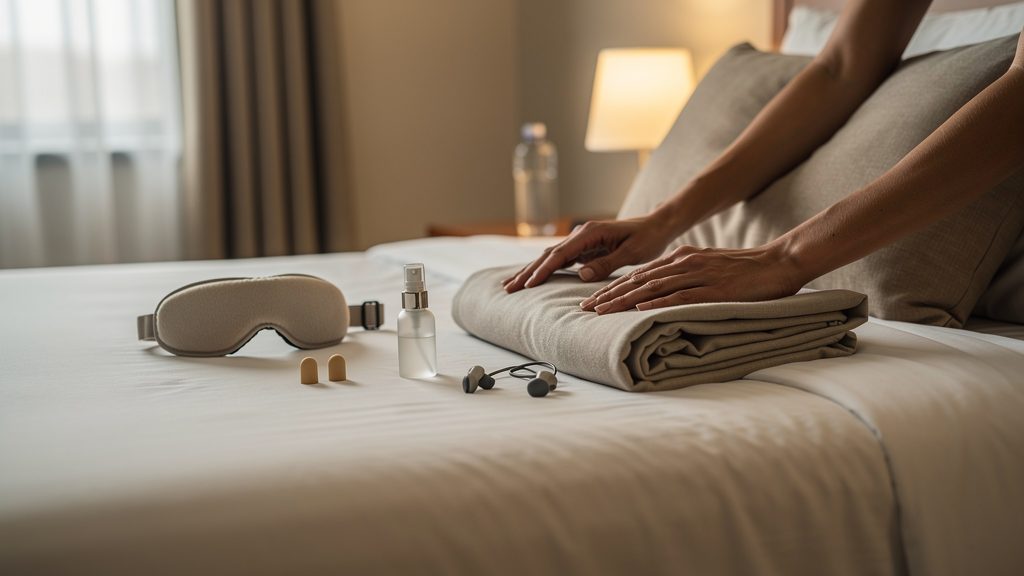
In hotels, ask for a room away from elevators, ice machines, and street-facing windows.
Higher floors tend to be quieter, and corner rooms often have fewer shared walls.
In hostels, choose smaller dorms if possible—fewer people means fewer disruptions.
Avoid bunk beds near doors or bathrooms, and if you can, opt for a bottom bunk to reduce movement and light exposure.
If you’re booking online, look for reviews that mention noise, mattress quality, and blackout curtains.
Photos can be misleading—always scan the comments for sleep-specific clues.
And if you’re sensitive to light, check if the windows have sheer curtains or full blackout panels.
Your room isn’t just a place to crash—it’s a recovery zone.
Treat it like a decision that affects your entire trip.
What Smart Travelers Do Differently:
- Request quiet rooms away from high-traffic areas
- Choose smaller dorms or private rooms when possible
- Scan reviews for sleep-specific clues before booking
Use Rituals to Signal Sleep—Even in Chaos
Your brain loves consistency.
Even when your environment changes, rituals help it know when to wind down.
Start with a 10-minute wind-down routine: stretch, journal, read, or listen to calming music.
Use the same playlist, scent, or meditation app each night to create a sleep cue.
Avoid screens for 30 minutes before bed—blue light delays melatonin release and keeps your brain alert.
If you’re jet-lagged, use light strategically: get sunlight in the morning and dim your environment at night.
Rituals aren’t just about relaxation—they’re about training your brain to recognize sleep time, no matter where you are.
Even brushing your teeth and laying out clothes for the next day can become part of a calming rhythm.
Why It Works:
- Rituals create emotional and physiological sleep cues
- Consistency helps override unfamiliar environments
- Light exposure resets your internal clock
Block Out Noise Like a Pro
Noise is the #1 sleep killer in hostels—and a sneaky disruptor in hotels.
Use earplugs, sleep headphones, or white noise apps to mask sudden sounds.
Apps like Noisli, Rain Rain, or Sleep Sounds offer customizable ambient noise that can drown out snoring, hallway chatter, or traffic.
If you’re using headphones, choose sleep-safe models that don’t press into your ears or fall out easily.
In hostels, position your bed away from doors and communal areas.
And if you’re desperate, a fan or air conditioner can double as a white noise machine.
Noise isn’t just annoying—it’s a stressor.
Blocking it out helps your nervous system relax and stay in deeper sleep cycles.
What Helps You Sleep Through Anything:
- White noise apps mask unpredictable sounds
- Sleep headphones offer comfort and sound control
- Strategic bed placement reduces exposure to noise
Hack the Light to Sleep Deeper
Light is a powerful signal—and most hotel and hostel rooms don’t get it right.
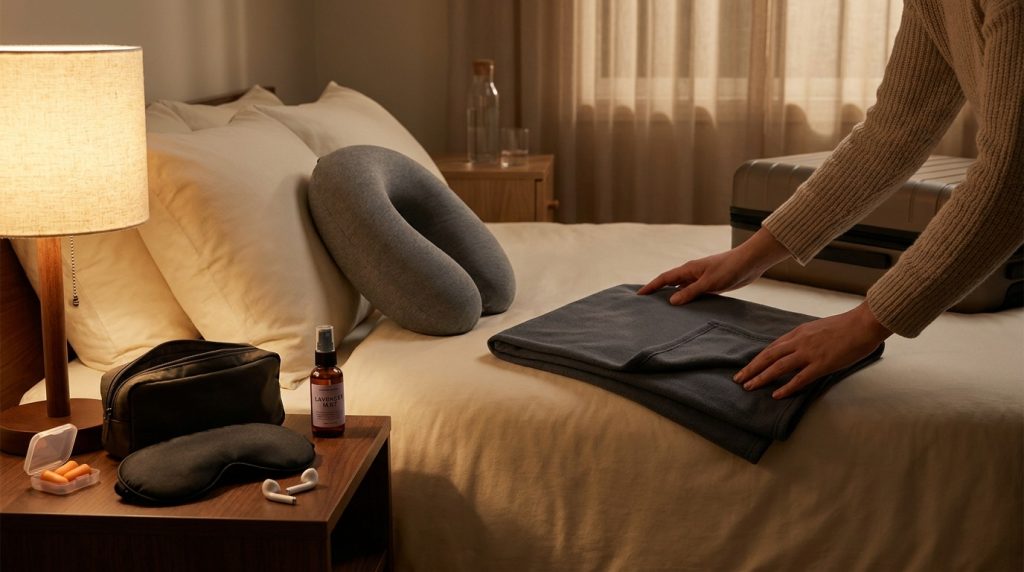
Use an eye mask that blocks all light, especially if curtains are thin or streetlights are nearby.
Cover blinking electronics with tape, socks, or clothing.
If you’re sensitive to morning light, hang a towel or shirt over the window to block sunrise.
And if you’re adjusting to a new time zone, use light intentionally: seek bright light in the morning and avoid it at night.
Light isn’t just visual—it’s hormonal.
Controlling it helps regulate melatonin, which governs your sleep-wake cycle.
Even a tiny LED can disrupt your rhythm if you’re sensitive.
Why It Works:
- Light control helps regulate melatonin and circadian rhythm
- Blocking ambient light improves sleep depth and duration
- Strategic exposure helps fight jet lag
Eat and Drink for Better Sleep
What you consume affects how you sleep.
Avoid caffeine after 2 p.m.—even small amounts can delay sleep onset.
Skip alcohol close to bedtime—it may help you fall asleep but disrupts REM cycles and causes early wakeups.
Eat a balanced dinner with protein, complex carbs, and healthy fats to stabilize blood sugar and support sleep hormones.
If you’re hungry before bed, a small snack like yogurt, banana, or nuts can help without spiking insulin.
Stay hydrated, but taper water intake in the evening to avoid midnight bathroom runs.
Food isn’t just fuel—it’s chemistry.
The right nutrients help your body wind down and stay asleep longer.
What Smart Sleepers Do Differently:
- Avoid caffeine and alcohol late in the day
- Eat balanced meals that support sleep hormones
- Use light snacks to prevent hunger-related wakeups
Use Movement to Reset Your Sleep Cycle
Travel often disrupts your body clock.
Use movement to help reset it.
Walk in the morning light, stretch in the evening, and avoid intense workouts right before bed.
If you’re jet-lagged, light exercise can help your body adjust faster.
Yoga, swimming, or even a short walk after dinner can signal your body to wind down.
And if you’re restless in bed, get up and move gently—don’t force sleep.
Movement isn’t just physical—it’s neurological.
It helps regulate cortisol, reduce anxiety, and prepare your body for rest.
Why It Works:
- Movement helps regulate cortisol and melatonin
- Light exercise improves sleep onset and depth
- Physical activity resets your circadian rhythm
Don’t Let Anxiety Hijack Your Sleep
New places can trigger old worries.
If your mind races at night, use journaling, breathing exercises, or guided meditations to calm it.
Apps like Insight Timer, Headspace, or Calm offer sleep-specific tracks that help shift your focus.
Write down your thoughts before bed to clear mental clutter and reduce rumination.
Use the 4-7-8 breathing method: inhale for 4 seconds, hold for 7, exhale for 8.
And if you wake up anxious, don’t stay in bed—get up, stretch, and reset.
Anxiety isn’t a failure—it’s a signal.
Responding with calm rituals helps you reclaim control.
What Helps You Sleep With a Calm Mind:
- Journaling clears mental clutter before bed
- Breathing techniques reduce anxiety and heart rate
- Guided meditations help shift focus from worry to rest
FAQ – How Can You Sleep Better in Hotels and Hostels When Everything Feels Unfamiliar?
What Should You Pack in a Travel Sleep Kit?
Start with the things that give you direct control over light, noise, and physical comfort.
An eye mask, comfortable earplugs, supportive travel pillow, and sleep-friendly headphones can solve several of the most common problems in unfamiliar rooms.
A lightweight sleep sheet or liner may also be useful in hostels or other shared accommodations when you want an extra layer between yourself and unfamiliar bedding.
Keeping the kit small enough to pack on every trip is more useful than building an elaborate collection you eventually leave at home.How Can You Choose A Hotel Room That Is More Likely To Be Quiet?
Ask for a room away from elevators, ice machines, busy hallways, nightlife, and street-facing windows when possible.
Higher floors and corner rooms can sometimes reduce surrounding noise, although the layout of the individual hotel still matters.
Guest reviews are especially useful because travelers often mention thin walls, traffic, nightclub noise, mattresses, and ineffective curtains.
A few minutes spent researching sleep-related complaints before booking can prevent several difficult nights later.Which Hostel Bed Is Better When You Are A Light Sleeper?
A smaller dorm generally means fewer people entering, leaving, talking, packing, or moving around during the night.
Beds away from doors, bathrooms, and communal spaces can reduce some of the most frequent interruptions.
Bunk preference is more personal: a lower bunk is easier to access, while some travelers prefer an upper bunk because fewer people pass directly beside them.
Choose based on the type of disturbance that normally bothers you most rather than assuming one bunk position works for everyone.How Do You Block Noise in a Hotel or Shared Hostel Room?
Earplugs are one of the simplest options when the problem is snoring, hallway conversations, traffic, or doors opening and closing.
White noise from a phone, fan, or air-conditioning unit can make unpredictable sounds less noticeable by creating a more consistent background.
Sleep headphones can help when you prefer ambient audio, music, or another familiar sound.
If the room itself is exceptionally noisy, requesting another room may be more effective than trying to mask the problem all night.What Can You Do When a Hotel Room Is Too Bright to Sleep?
Begin with an eye mask that comfortably blocks the light reaching your eyes.
Turn off unnecessary lamps and cover distracting electronic indicator lights when you can do so safely without blocking ventilation or tampering with equipment.
Blackout curtains are worth checking before booking if you are especially sensitive to early sunrise or bright exterior lighting.
A darker nighttime environment can also make it easier to preserve a familiar sleep routine when the room itself feels completely different from home.How Can You Keep a Bedtime Routine While Traveling?
Keep a few familiar steps even when everything around you changes.
Reading, light stretching, journaling, preparing clothes for the next morning, listening to familiar audio, or following the same general bedtime sequence can give the evening more structure.
The routine does not need to be long to feel recognizable.
Consistency becomes particularly useful in hotels and hostels because your mattress, room layout, sounds, temperature, and surroundings may all be different at once.What Helps When Jet Lag Makes It Hard to Sleep at the Right Time?
Light exposure is one of the most useful signals for helping your body adjust to a new local schedule.
Spend time outside during the day after arrival, then reduce bright light late in the evening when you are trying to move toward the destination’s bedtime.
Avoid letting a long daytime nap replace the sleep you need that night unless exhaustion makes a short rest necessary.
The goal is to start living on local time instead of repeatedly reinforcing the schedule you left behind.Can Food, Caffeine, Or Alcohol Make Travel Sleep Harder?
Yes, especially when unfamiliar schedules encourage you to eat and drink differently than you normally would.
Late caffeine can make falling asleep more difficult for some travelers, while alcohol may make you feel sleepy initially but can interfere with sleep later in the night.
Large meals immediately before bed may also leave you uncomfortable when you are already adjusting to a different environment.
Keep evening choices relatively simple when getting good rest matters more than extending the night.What Should You Do If You Cannot Stop Thinking When You Try To Sleep?
Give your mind somewhere else to put the unfinished thoughts.
Writing down tomorrow’s plans, reminders, worries, or travel logistics can keep you from mentally rehearsing them while lying in bed.
Slow breathing, gentle stretching, quiet reading, or a guided relaxation track can also provide something neutral to focus on.
If you remain wide awake for a prolonged period, briefly getting out of bed for a quiet activity may feel better than turning the mattress into a place where you struggle with sleep.What Is the Best Overall Strategy for Sleeping Better While Traveling?
Control the parts of the environment you realistically can.
Choose the quietest room or bunk available, block unwanted light and noise, maintain a recognizable evening routine, and give yourself time to adjust when crossing time zones.
Pack a few dependable sleep tools rather than expecting every hotel or hostel to provide ideal conditions.
Better travel sleep usually comes from several small advantages working together rather than one perfect trick.