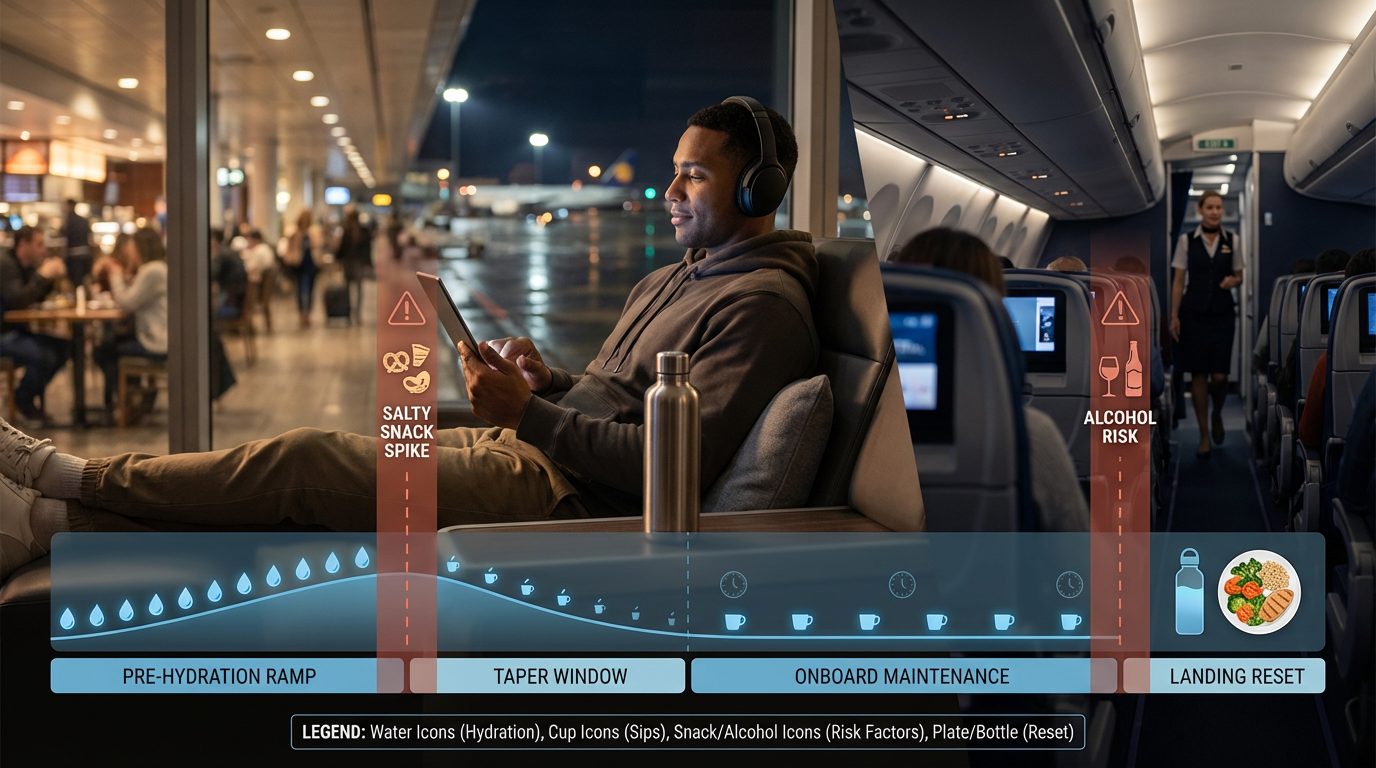

Make the Most of Your Trip
Compare the top tours, passes, and experiences — find what fits your travel style.
Short Excerpt
- Red-eye hydration works best when you arrive at the airport normally hydrated, drink according to thirst, and avoid trying to compensate with a large amount of water immediately before sleep.
- Dry cabin air can make your mouth, throat, eyes, and nasal passages feel uncomfortable, but that does not mean every traveler needs aggressive fluid replacement or electrolyte drinks.
- Water, sensible caffeine timing, limited alcohol, normal meals, and smaller drinks near your main sleep window can protect comfort without creating repeated trips to the lavatory.
Quick Take
- Hydrate normally throughout the day before departure instead of waiting until the gate and drinking a large amount at once.
- Let thirst guide most of your fluid intake, with additional attention after heat exposure, heavy walking, exercise, illness, or other situations that increase fluid loss.
- Reduce beverage volume as your main onboard sleep period approaches if nighttime bathroom trips regularly interrupt your rest.
- Use water as the default drink; electrolytes are usually unnecessary for routine air travel unless you have lost substantial fluid or salt through sweating, illness, or prolonged exertion.
- Alcohol can interfere with sleep quality, while late caffeine can make it harder to fall asleep even though caffeinated drinks still contribute to overall fluid intake.
- After landing, return to normal drinking and eating rather than trying to “catch up” with an excessive amount of water.
Hydrate For A Red-Eye Without Drinking So Much That You Ruin Your Sleep
A red-eye creates an awkward tradeoff: you want enough fluid to feel comfortable in a dry airplane cabin, but drinking too much near bedtime can leave you waking repeatedly for the lavatory just when you finally manage to fall asleep.
The solution is not to drink as much water as possible before boarding. It is to begin the flight normally hydrated, respond to thirst, and time larger drinks earlier so your limited onboard sleep is not constantly interrupted.
Cabin air deserves some context. Low humidity can dry your mouth, throat, eyes, and nasal passages, which may make you feel thirsty or uncomfortable, but that surface dryness does not automatically mean your entire body is becoming severely dehydrated.
Start during the ordinary part of your travel day.
Drink with meals, keep water accessible, and avoid reaching the airport already thirsty after hours of rushing, sightseeing, exercise, or forgetting to drink.
Then change the pattern as your intended sleep window approaches.
If you know a large drink before bed sends you to the bathroom repeatedly, reduce the volume and switch to smaller drinks or occasional sips for thirst and mouth comfort.
Water should remain the default.
You do not need a sports drink or electrolyte packet simply because you are boarding an overnight flight, especially when you have eaten normally and have not spent the day sweating heavily.
Electrolytes become more relevant when the travel day also includes substantial heat exposure, strenuous exercise, heavy sweating, vomiting, diarrhea, or another reason you have lost more than ordinary amounts of fluid and salt.
Even then, more is not automatically better.
Coffee requires a different decision.
Caffeinated beverages still contribute fluid, but caffeine can interfere with the sleep you are trying to get on the airplane, so its timing may matter more than any small effect it has on urination.
Alcohol creates an even poorer tradeoff for a sleep-first red-eye.
It may make you feel sleepy initially, yet it can fragment later sleep and increase the chance that you wake feeling worse than the drink was worth.
After landing, return to ordinary hydration rather than treating the morning like an emergency recovery session.
Water, breakfast or another normal meal, daylight, and gentle movement usually make more sense than forcing down a huge bottle because the cabin felt dry.
The best red-eye hydration plan therefore has one simple goal: stay comfortably hydrated without turning fluid intake into another reason you cannot sleep.
Pre-Hydration Basics That Make the Cabin Feel Less Harsh
Pre-hydration means drinking fluids in advance so your body starts the flight with a strong hydration baseline.
That approach is different from chugging water at the gate, which often creates bathroom urgency instead of comfort.
Cabin humidity refers to moisture in the cabin air, and it is typically low compared to many indoor environments.
Low cabin humidity dries your nose, throat, and eyes, which increases irritation and wakeups.
Those wakeups matter because fragmented sleep is the hidden reason many red-eyes feel brutal.
Hydration supports comfort, and comfort supports longer sleep blocks.
Electrolytes are minerals like sodium, potassium, and magnesium that help your body manage fluid balance.
Electrolytes can be useful in specific situations, but most red-eye success comes from timing, not complexity.
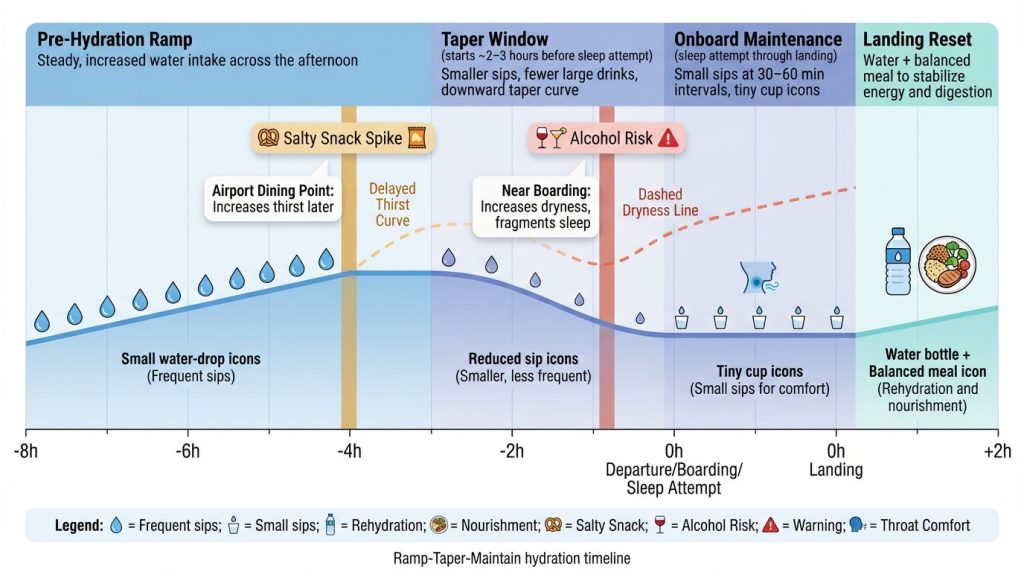
A useful mindset is “ramp, taper, maintain, reset.”
Ramp hydration earlier so your baseline is strong.
Taper volume close to your sleep attempt so sleep is not interrupted.
Maintain with small sips onboard to prevent throat and mouth dryness.
Reset after landing with water plus a balanced meal so energy stabilizes.
This rhythm is simple, repeatable, and realistic even on chaotic travel days.
It also prevents the most common mistake, which is trying to fix dehydration late with one giant drink.
Build Your Baseline Early: Stop Last-Minute Hydration Mistakes
Steady pre-hydration earlier works better than late chugging at the gate.
Fight Cabin Dryness: Protect Sleep Before It’s Interrupted
Low cabin humidity increases dryness, and dryness increases wakeups.
The Four-Step Rhythm Works
Ramp, taper, maintain, and reset creates comfort without constant restroom interruptions.
How Much To Drink: Practical Ranges With Guardrails
Hydration advice often fails because it avoids numbers, then travelers either underdrink or overdrink.
A practical target gives you direction without turning hydration into a math problem.
The right range depends on body size, flight length, activity level, and personal bathroom sensitivity.
The goal is comfort and stable energy, not forcing a huge volume in a short time.
Overdrinking can cause bloating, frequent urination, and disrupted rest, which defeats the purpose.
Underdrinking creates dryness and headaches that also disrupt rest.
A balanced range keeps you out of both extremes.
Simple Body-Size Ranges For The Pre-Boarding Window
Use these ranges as a reference for the six to eight hours before departure.
Smaller body size travelers often do well with about 16 to 32 ounces of fluids spread out.
Average body size travelers often do well with about 24 to 48 ounces spread out.
Larger body size travelers often do well with about 32 to 64 ounces spread out.
Hot weather, heavy walking, or a workout earlier in the day can increase needs modestly.
A desk day in cool weather usually sits at the lower end of the range.
The clearest signal is comfort plus pale yellow urine, not clear urine all day.
Flight-Length Ranges For Onboard Maintenance
Short overnight segments often need only small maintenance sips.
A useful onboard range is about 8 to 16 ounces over the whole flight for many travelers who want sleep.
Long-haul red-eyes often feel better with about 16 to 32 ounces total onboard, spread out in small sips.
Restroom sensitivity matters here more than “hydration perfection.”
Some travelers do best with more water earlier and less water onboard to protect sleep.
Other travelers need consistent onboard sips because dryness wakes them.
The best plan is the one that produces fewer awakenings and fewer headaches at landing.
Guardrails That Prevent Overdoing It
A single large bottle right before you try to sleep usually backfires.
A steady pattern of small sips is almost always easier on the body.
Bloating is a signal you drank too much volume too fast.
Constant restroom urgency is a signal tapering started too late.
Dry mouth with frequent urination can signal caffeine or salty foods are driving thirst, not true depletion.
A plan should adjust based on your own pattern, not based on a generic “drink nonstop” idea.
Comfort and sleep continuity are the real success metrics.
Use Clear Hydration Ranges: Avoid Overdrinking and Dryness
Simple ounces ranges prevent underdrinking and prevent panic-driven chugging.
Sleep Continuity Is The Goal
Hydration that destroys sleep often makes the landing feel worse, not better.
Signals Matter
Bloating and bathroom urgency are feedback that the plan needs tapering earlier.
Hydration Timing: The Ramp, Taper, Maintain Template
Hydration timing is the backbone of red-eye comfort because it solves two problems at once.
A strong baseline reduces dryness symptoms in the cabin.
A taper protects sleep by reducing restroom disruptions.
Maintenance sips keep the throat comfortable without volume overload.
The reset after landing stabilizes the first morning.
This is a system you can repeat on every trip.
The details below give you a travel-day template you can follow without thinking.
The Most Useful Rule: Ramp Early, Taper Late
Ramp hydration during the afternoon and early evening before the flight.
Spread fluids out in small servings rather than large bursts.
Begin tapering two to three hours before your intended sleep attempt.
Keep small sips available during the taper, but avoid large drinks.
Switch to maintenance sips onboard, especially after the cabin air starts drying your throat.
Finish with a landing reset because breakfast and water together often improve energy quickly.
This plan prevents the classic pattern of feeling dry at 1:00 AM because you drank nothing earlier, then chugging and waking up repeatedly.
Visual Aid: Hydration Timeline
Ramp Early for a Strong Hydration Baseline
Hydration earlier gives the cabin less chance to push you into discomfort.
Taper Protects Sleep
A taper window reduces restroom disruptions and supports longer sleep blocks.
Maintenance Prevents Dryness
Small onboard sips keep your throat comfortable without flooding your bladder.
What To Drink: The Best Options and When They Matter
Water remains the foundation because it is predictable, widely available, and gentle.
Electrolytes can be useful when sweat loss or heavy activity is part of the day.
Warm non-caffeinated drinks can support comfort and bedtime cues.
The best beverage choice depends on your goals, especially whether you plan to sleep.
A sleep-first traveler chooses different drinks than a stay-awake traveler.
A long-haul traveler often needs more dryness protection than a short-hop traveler.
Athletes often benefit from electrolyte timing more than casual travelers do.
Older adults often benefit from steady intake and less late volume.
Water As The Default Choice
Water is the baseline that works for nearly everyone.
Still water often causes less bloating than carbonated drinks for many travelers.
A reusable bottle refilled after security makes steady sipping easier.
Small sips reduce dryness without overwhelming the bladder.
A glass of water with meals improves absorption and helps stabilize energy.
The simplest plan is usually the most repeatable plan.
Repeatability matters because consistency reduces decision fatigue on travel days.
Electrolytes: When They Help And When They Do Not
Electrolytes help most when sweat loss is significant, when training occurred earlier, or when the day is unusually hot.
Electrolytes can also help some travelers who feel “flat” even when drinking water, especially after long walking and limited food.
Electrolytes matter less when the day is normal, meals are balanced, and activity is light.
Sugar-heavy electrolyte drinks can create energy swings, so lower-sugar options tend to feel better for red-eyes.
A single electrolyte serving in the afternoon or after landing is often more useful than multiple servings late at night.
Late-night electrolyte drinks can still increase bathroom trips if volume is large.
A small serving earlier usually supports comfort without disrupting sleep.
Warm Drinks For Dry Throat And Comfort Cues
Herbal tea can soothe the throat and create a bedtime routine cue.
Decaf coffee preserves ritual without adding caffeine.
Warmth can reduce perceived dryness even when volume stays modest.
Modest volume matters because sleep is easier when restroom urgency is lower.
Hot drinks should be kept small in the taper window.
A small warm drink can be more useful than a large cold bottle right before sleep.
Comfort cues help anxious travelers relax, which supports sleep onset.
Water Stays Central
Most red-eye hydration success comes from water plus timing discipline.
Electrolytes Are Situational
Electrolytes help most after sweat and heavy activity, not as a default every flight.
Warmth Supports Comfort
Warm non-caffeinated drinks can reduce throat irritation and support bedtime cues.
What To Avoid: The Drinks And Habits That Create Regret Later
Alcohol often feels relaxing at first, then fragments sleep and worsens dryness.
That pattern makes the landing feel harsher because sleep quality drops while dehydration rises.
Late caffeine can increase sleep latency, which means it takes longer to fall asleep after you try.
Caffeine can also increase restroom trips for many people, which fragments rest.
Caffeine half-life means caffeine can linger even when the buzz feels gone.
Sugary drinks create energy spikes and crashes that can feel like jet lag.
Salty airport foods increase thirst later, pushing you toward late-night chugging.
Carbonated drinks can increase bloating and discomfort for some travelers in tight seats.
The most common hydration mistake is “panic drinking” right before sleep.
Large volumes late increase urgency and create repeated wakeups.
Repeated wakeups often do more harm than mild dryness does.
The taper window exists to prevent that tradeoff.
A small sip when your mouth is dry is helpful.
A full bottle at the last minute often creates problems you cannot undo midflight.
A written plan removes the urge to improvise, which is why the travel-day template matters.
Alcohol Costs Sleep
Alcohol can worsen dryness and sleep fragmentation even when it feels relaxing at first.
Late Caffeine Blocks Rest
Caffeine late increases sleep latency and can create more wakeups.
Panic Drinking Backfires
Large drinks close to sleep often create urgency and disrupt the only rest window you have.
Signs Of Dehydration: Catch It Early And Fix It Fast
Dehydration signals often show up as discomfort before they show up as dramatic thirst.
Dry mouth and sticky saliva are common early signs, especially in the cabin.
A mild headache behind the eyes can be another early clue.
Darker urine can suggest you are behind, though vitamins can change color, so it is not perfect.
Fatigue that feels “heavy” rather than sleepy can be related to hydration and food timing.
Constipation can worsen after long travel when fluids and movement are low.
Muscle tightness and cramps can show up after landing, especially for athletes.
Lightheadedness can occur in older adults with mild dehydration, especially after long sitting.
A useful habit is doing quick comfort check-ins.
Notice throat dryness and respond with a small sip, not a flood.
Notice headache emergence and address it earlier in the ramp phase on future trips.
Notice bathroom frequency and adjust taper timing so sleep is not interrupted.
Notice energy swings and consider whether sugar and salt are driving the problem.
Notice leg heaviness and pair hydration with gentle movement to support circulation.
These check-ins build control because they turn “mystery discomfort” into a fixable signal.
Predictability is the comfort upgrade most travelers want.
Dry Mouth Is A Warning Light
Dry throat and sticky saliva are early signs that often appear before bigger symptoms.
Headaches Have Patterns
A mild behind-the-eyes headache often signals hydration and food timing issues.
Check-Ins Create Control
Small, early corrections are easier than late-night emergency fixes.
Special-Case Plans For Long-Haul, Athletes, And Older Adults
Different travelers feel hydration changes differently.
A long-haul red-eye creates longer exposure to dry air and sitting, so maintenance becomes more important.
Athletes often start travel already depleted from training, so electrolytes may matter more.
Older adults may have stronger responses to mild dehydration and may want steadier intake earlier.
Bathroom sensitivity can change the best strategy, so taper timing becomes more personal.
Reflux changes beverage choices because large late drinks can worsen symptoms.
These branches keep the plan practical for real people.
The goal is comfort with fewer interruptions, not a generic “drink more” instruction.
Long-Haul Travelers: Protect The Throat Without Breaking Sleep
Long-haul red-eyes often require onboard maintenance sips because dryness builds over hours.
A ramp earlier plus a taper window still applies.
Smaller sips spread across the night can reduce wakeups triggered by throat irritation.
A humid-feeling throat is often a better sleep predictor than a perfectly full water intake.
Warm herbal tea in modest volume can help some travelers more than cold water.
Restroom strategy matters, so tapering volume before the first sleep attempt remains important.
Landing reset matters more because long-haul flights often disrupt meals and digestion.
Athletes: Use Electrolytes Strategically
Training earlier in the day increases the chance that water alone feels insufficient.
A low-sugar electrolyte serving earlier in the afternoon can stabilize hydration.
Another electrolyte serving after landing can support recovery, especially when walking is planned.
Late-night electrolyte drinks can create bathroom interruptions when volume is large.
A smaller electrolyte amount can be useful without turning the night into restroom trips.
Athletes also benefit from pairing hydration with a balanced snack to support absorption.
Muscle tightness after landing improves when hydration, movement, and food are steady together.
Older Adults: Steady Intake Earlier, Less Volume Late
Older adults often feel dehydration as fatigue or lightheadedness rather than strong thirst.
Steady pre-hydration earlier reduces the chance of feeling suddenly depleted at landing.
A longer taper window can protect sleep by reducing bathroom urgency.
Warm drinks in modest volume can reduce dry throat without causing large volume intake.
Caffeine timing matters because caffeine can linger longer and increase bathroom trips.
A landing reset with water plus a balanced breakfast often improves steadiness quickly.
Comfort and predictability matter more than chasing an aggressive onboard water target.
Long-Haul Needs Maintenance
Longer exposure increases dryness, so small onboard sips become more valuable.
Athletes Benefit From Smart Electrolytes
Electrolytes help most when training or sweating happened earlier.
Older Adults Benefit From Steady Rhythm
Earlier hydration plus a longer taper often protects both comfort and sleep.
Troubleshooting: Fast Fixes For The Most Common Hydration Problems
Hydration issues often show up as specific situations, not as a vague problem.
This section gives quick fixes so you can respond without panic.
Each fix is designed to protect sleep continuity.
Rest is the main goal on a red-eye.
Hydration supports rest best when it reduces discomfort without increasing interruptions.
That is why these fixes emphasize small changes and earlier timing on future trips.
Problem: Headache Starts At The Gate
A headache at the gate often reflects a day of low fluids plus salty food plus stress.
Take small sips steadily rather than chugging.
Pair water with a small balanced snack because fluids absorb better with food.
Avoid alcohol and avoid adding caffeine late, because both can worsen sleep.
Use the taper strategy once onboard so you do not create repeated bathroom wakeups.
Future prevention comes from starting the ramp earlier and reducing salty snacks.
Problem: Dry Throat Keeps Waking You Up On The Plane
Dry throat wakeups often require maintenance sips.
Take a small sip when you wake rather than drinking a large amount.
A small warm drink earlier in the flight can help some travelers.
Mouth breathing increases dryness, so nasal comfort measures may help indirectly for some people.
Reduce alcohol and reduce caffeine because both can increase dryness sensations.
Future prevention comes from a stronger ramp earlier and consistent onboard maintenance rather than one big drink.
Problem: You Keep Needing The Restroom And Cannot Sleep
This often means tapering began too late or volume was too large near bedtime.
Reduce drink size and switch to smaller sips.
Avoid large beverages for the rest of the flight and focus on mouth comfort.
Use a stronger ramp earlier next time so late volume becomes unnecessary.
Alcohol and caffeine often increase urgency, so avoid them close to sleep.
A stable landing reset can correct the baseline without destroying sleep.
Problem: Cramps Or Tight Legs After Landing
This often combines hydration inconsistency with long sitting and limited movement.
Drink water after landing and pair it with a balanced meal.
Consider a modest electrolyte serving when sweat loss or training happened earlier.
Add gentle walking and calf activation because circulation support matters.
Avoid treating cramps with a sudden flood of water, because absorption takes time.
Future prevention comes from steady pre-hydration plus movement cues during travel.
Fixes Protect Sleep
Quick corrections should reduce discomfort without creating new interruptions.
Patterns Teach You
The right plan is revealed by your own symptoms and timing.
Land And Reset
Water plus food after landing often stabilizes the day faster than late-night chugging.
The Full Travel-Day Template: A Simple Plan From Wake To Landing
This template is designed to be followed without heavy thinking.
Adjust the exact times based on your departure, but keep the rhythm.
Steady intake early builds baseline.
Tapering protects sleep.
Maintenance sips protect throat comfort.
Landing reset stabilizes the morning.
Use this as a checklist.
Morning And Afternoon Before Departure
Drink water steadily with meals and throughout the day.
Use the body-size range as a guide rather than forcing a strict number.
Add electrolytes only when training, sweating, or heavy walking occurred.
Keep caffeine earlier in the day when sleep on the plane matters.
Avoid salty snacks that create late thirst spikes.
Finish major planning early to reduce stress-driven grazing and sipping.
Two To Three Hours Before Your Sleep Attempt
Begin tapering volume while allowing small sips.
Avoid large drinks and avoid alcohol.
Keep food lighter and avoid heavy late meals that worsen reflux and discomfort.
Dim screens and shift into rest mode as you approach boarding.
Organize essentials so you do not need repeated rummaging.
A simple bag setup, including accessible pockets like many travelers prioritize in Travelpro carry-ons, reduces disruptions that fully wake you.
Onboard Maintenance And Landing Reset
Take small sips as needed for mouth and throat comfort.
Avoid large drinks that create urgency.
Address dryness wakeups with small sips, not a flood.
After landing, drink water and eat a balanced meal to stabilize energy and digestion.
Use electrolytes after landing when heavy walking or training is part of the day.
Keep the plan simple because simple plans get executed.
The Template Creates Predictability
A repeatable checklist prevents random drinking patterns that create discomfort.
Taper Protects Rest
Sleep continuity matters more than maximizing late-night fluid volume.
Reset Restores Baseline
Water plus food after landing stabilizes the day quickly for many travelers.
Arrive More Comfortable With Less Guessing
Hydration before a red-eye is less about drinking more and more about drinking at the right times.
A strong baseline from pre-hydration reduces cabin dryness symptoms.
A taper window protects sleep by reducing bathroom interruptions.
Maintenance sips reduce throat irritation without flooding your system.
Smart beverage choices prevent alcohol, sugar, and late caffeine from creating avoidable discomfort.
A simple template gives control, and control is what makes red-eyes feel easier.
FAQ – How Do You Stay Hydrated on a Red-Eye Without Spending the Night Going to the Bathroom?
When Should You Start Hydrating Before a Red-Eye Flight?
Begin during the normal part of your day rather than waiting until boarding.
Drink with meals and respond to thirst so you reach the airport without already feeling noticeably dry or depleted.
Travel days involving heat, heavy walking, exercise, or illness may require additional fluid compared with a quiet day indoors.
There is no need to force a large predetermined amount simply because the flight leaves overnight.How Much Water Should You Drink During a Red-Eye?
There is no universal number that works for every passenger.
Fluid needs vary with body size, diet, climate, activity, health, medications, flight duration, and how much you have already consumed that day.
For most healthy adults, thirst provides a useful guide during routine travel.
Drink enough to remain comfortable without forcing so much fluid that bloating and frequent bathroom trips interfere with sleep.Does Dry Airplane Cabin Air Dehydrate Your Whole Body?
Not necessarily in the way travelers often assume.
Low cabin humidity can dry exposed surfaces such as your mouth, throat, eyes, and nasal passages, which can create a strong sensation of dryness.
That discomfort does not automatically mean you need aggressive fluid replacement.
Small drinks for thirst and comfort are generally more sensible than treating cabin dryness as proof of severe dehydration.Should You Drink Less Before Trying to Sleep on the Plane?
Reducing large drinks before your main sleep attempt can be useful if bathroom trips regularly wake you.
The idea is not to deliberately dehydrate yourself.
Instead, handle most ordinary drinking earlier and use smaller amounts as bedtime approaches.
If you become genuinely thirsty, drink rather than following a rigid cutoff that ignores what your body is telling you.Do You Need Electrolytes on a Red-Eye Flight?
Usually not for routine air travel.
Water and normal meals provide what many travelers need when the day has involved ordinary activity and no unusual fluid losses.
Electrolytes become more useful after heavy sweating, prolonged exercise, significant heat exposure, vomiting, diarrhea, or similar situations involving greater loss of both fluid and salts.
Avoid turning electrolyte drinks into a mandatory red-eye ritual when there is no clear reason you need them.Does Coffee Dehydrate You During an Overnight Flight?
Coffee still contributes to your overall fluid intake, so it should not be treated as though every cup simply removes water from your body.
The bigger red-eye problem is caffeine’s effect on sleep.
A late cup may make it harder to fall asleep or reduce the amount of rest you manage during an already short overnight window.
If onboard sleep is your priority, time caffeine around that goal rather than avoiding it solely because of dehydration concerns.Why Is Alcohol a Poor Choice for Red-Eye Hydration?
Alcohol is not a useful hydration strategy and can work against the sleep you want from an overnight flight.
It may make you feel drowsy initially, but later sleep can become more fragmented.
Alcohol can also increase urination, which may add another interruption during the night.
Water or another non-alcoholic drink is the more practical choice when both hydration and sleep matter.Can Dehydration Cause a Headache After Flying?
It can contribute, but a post-flight headache has several possible causes.
Poor sleep, caffeine withdrawal, skipped meals, stress, sinus pressure, alcohol, prolonged screen use, and dehydration can all play a role.
That makes a headache a poor reason to automatically assume you need large amounts of water or electrolytes.
Consider the rest of your travel day and respond to the likely cause rather than treating every headache as a hydration emergency.What Are Useful Signs That You May Need More Fluid?
Thirst, dry mouth, darker-than-usual urine, reduced urination, and lightheadedness can all provide clues that you may need more fluid.
Urine color is not perfect because medications, vitamins, foods, and other factors can change it.
Persistent dizziness, confusion, fainting, severe weakness, or other significant symptoms deserve more attention than simply drinking another bottle of water.
Travelers with medical conditions or medications that affect fluid balance should follow individualized guidance rather than a generic flight-hydration formula.What Is the Simplest Hydration Plan from Departure Day Through Landing?
Drink normally during the day, keep water available, and arrive at the airport without intentionally restricting fluids.
As your onboard sleep window gets closer, avoid unnecessary large drinks and use smaller amounts according to thirst and comfort.
Choose water most of the time, use electrolytes only when your circumstances justify them, and keep late caffeine and alcohol from undermining sleep.
After landing, resume normal drinking and meals rather than trying to compensate for the flight with an extreme amount of fluid.